Mycobacterium avium complex lung disease (MACLD) is a chronic pulmonary infection caused by a group of nontuberculous mycobacteria, primarily Mycobacterium avium and M. intracellulare. MACLD typically affects individuals with underlying lung conditions or weakened immune systems, and its management remains challenging due to suboptimal treatment outcomes. The current first-line treatment involves multidrug therapy (MDT), comprising antibiotics such as macrolides, ethambutol, and rifamycins, but these regimens can have limited efficacy and are associated with prolonged therapy and significant side effects.
Amikacin liposome inhalation suspension (ALIS) is an innovative formulation designed to deliver high concentrations of the antibiotic amikacin directly to the lungs, reducing systemic exposure and potentially improving outcomes in refractory MACLD cases. Although ALIS in combination with MDT has been approved for refractory patients, data regarding its use at initial diagnosis of MACLD have been lacking.
Study Objectives
The ENCORE study (NCT04677569) was a phase 3b, double-blind, randomized, placebo-controlled trial designed to evaluate the efficacy and safety of ALIS added to standard MDT in adults newly diagnosed with MACLD who had not yet begun antibiotic treatment. The primary focus was on respiratory symptom improvement, alongside microbiological outcomes and safety evaluations.
Methods
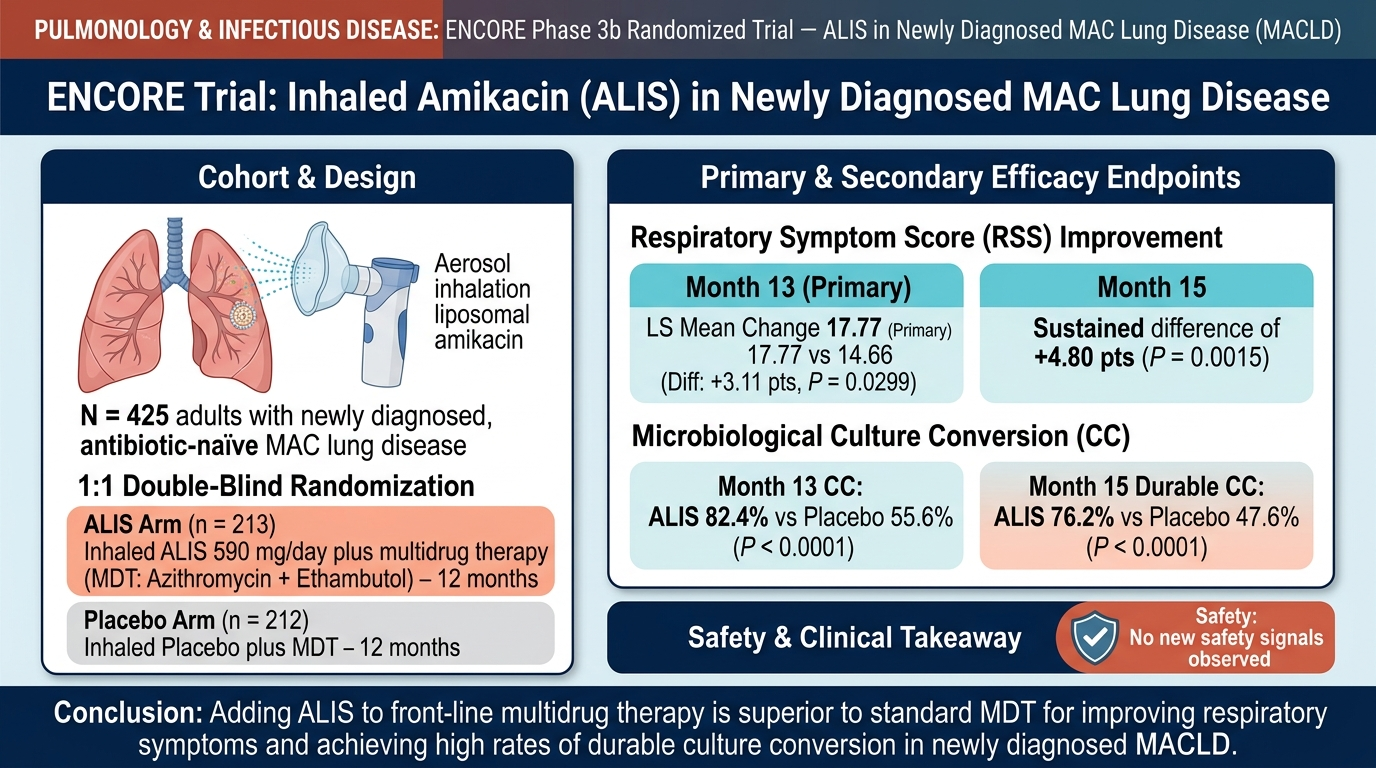
A total of 425 adult patients with confirmed MACLD were randomized in a 1:1 ratio to receive either ALIS (590 mg via inhalation once daily) plus MDT (azithromycin 250 mg and ethambutol 15 mg/kg daily) or placebo plus the same MDT regimen for 12 months. The study assessed outcomes at 13 months (1 month post-treatment) and included follow-up at 15 months to evaluate durability.
The primary endpoint was change in Respiratory Symptom Score (RSS) from baseline to month 13. Secondary endpoints included culture conversion (CC) to negative sputum cultures at predefined time points and durable culture conversion (DCC) maintained at month 15. Safety monitoring was performed throughout the study to detect any adverse events or new safety signals.
Participant Demographics
The median age of participants was 68 years, with a predominance of females (79.3%) and majority identifying as White (62.8%). Baseline disease characteristics were balanced across treatment arms.
Results
Patients receiving ALIS plus MDT experienced significantly greater improvements in respiratory symptoms compared to the placebo plus MDT group. At one month post-therapy (month 13), the least squares mean change in RSS was 17.77 points for the ALIS group versus 14.66 points for placebo, representing a treatment difference of 3.11 points (P=0.0299). This improvement persisted at month 15, approximately three months after stopping therapy, with a difference of 4.80 points (nominal P=0.0015).
From a microbiological perspective, the ALIS group demonstrated a markedly higher rate of culture conversion: 82.4% of patients achieved CC by month 13 compared to 55.6% in the comparator arm. Additionally, durable culture conversion at month 15 was observed in 76.2% of the ALIS group versus 47.6% with placebo (both P<0.0001), indicating sustained eradication of the mycobacteria.
Regarding safety, the addition of ALIS did not result in new or unexpected adverse effects. The safety profile aligned with previous findings, supporting the tolerability of inhaled amikacin in this patient population.
Discussion
The ENCORE study provides robust evidence that incorporating ALIS into initial multidrug therapy for MACLD significantly improves respiratory symptoms and accelerates culture conversion compared to MDT alone. These findings are particularly important since early effective treatment may prevent disease progression and improve quality of life in patients newly diagnosed with MACLD.
Respiratory symptoms often profoundly impact patients’ daily functioning; therefore, the demonstrated symptomatic improvement is clinically relevant. Moreover, higher and durable culture conversion rates suggest better disease control, which could translate into fewer relapses and reduced transmission risk.
ALIS delivery via inhalation ensures high local drug concentrations directly to the lungs, potentially overcoming limitations associated with systemic antibiotic penetration into infected tissues. This targeted approach may also minimize systemic toxicity.
Clinical Implications
The integration of ALIS into frontline therapy offers a new paradigm for treating MACLD. Clinicians can consider early initiation of inhaled amikacin alongside standard multidrug regimens for appropriate patients, especially those at risk for poor outcomes with conventional therapy alone.
Continued monitoring of long-term efficacy and safety, as well as cost-benefit considerations, will be essential to refine treatment strategies and guidelines. Patient education regarding inhalation therapy technique and adherence remains critical to maximize clinical benefits.
Conclusion
The ENCORE phase 3b trial confirms that amikacin liposome inhalation suspension added to standard multidrug therapy is superior to standard therapy alone in improving respiratory symptoms and achieving sustained microbiological clearance in adults newly diagnosed with Mycobacterium avium complex lung disease. This advancement enhances therapeutic options and supports a shift towards targeted inhalation therapies in this challenging condition.
References
Daley CL, Morimoto K, Thomson R, Van Braeckel E, Hasegawa N, Griffith DE, Flume PA, Chalmers JD, Winthrop KL, Loebinger MR, Serrano D, van Ingen J, Yuen DW, Hassan M, Wu P, Nevoret ML, Mange K, O’Donnell AE, ENCORE Study Group. Amikacin Liposome Inhalation Suspension in Newly Diagnosed Mycobacterium avium Complex Lung Disease: A Phase 3b, Double-blind, Randomized Clinical Trial (ENCORE). American Journal of Respiratory and Critical Care Medicine. 2026 Sep 30. PMID: 42814876. Available from: https://pubmed.ncbi.nlm.nih.gov/42814876/

 By
No Comments
By
No Comments