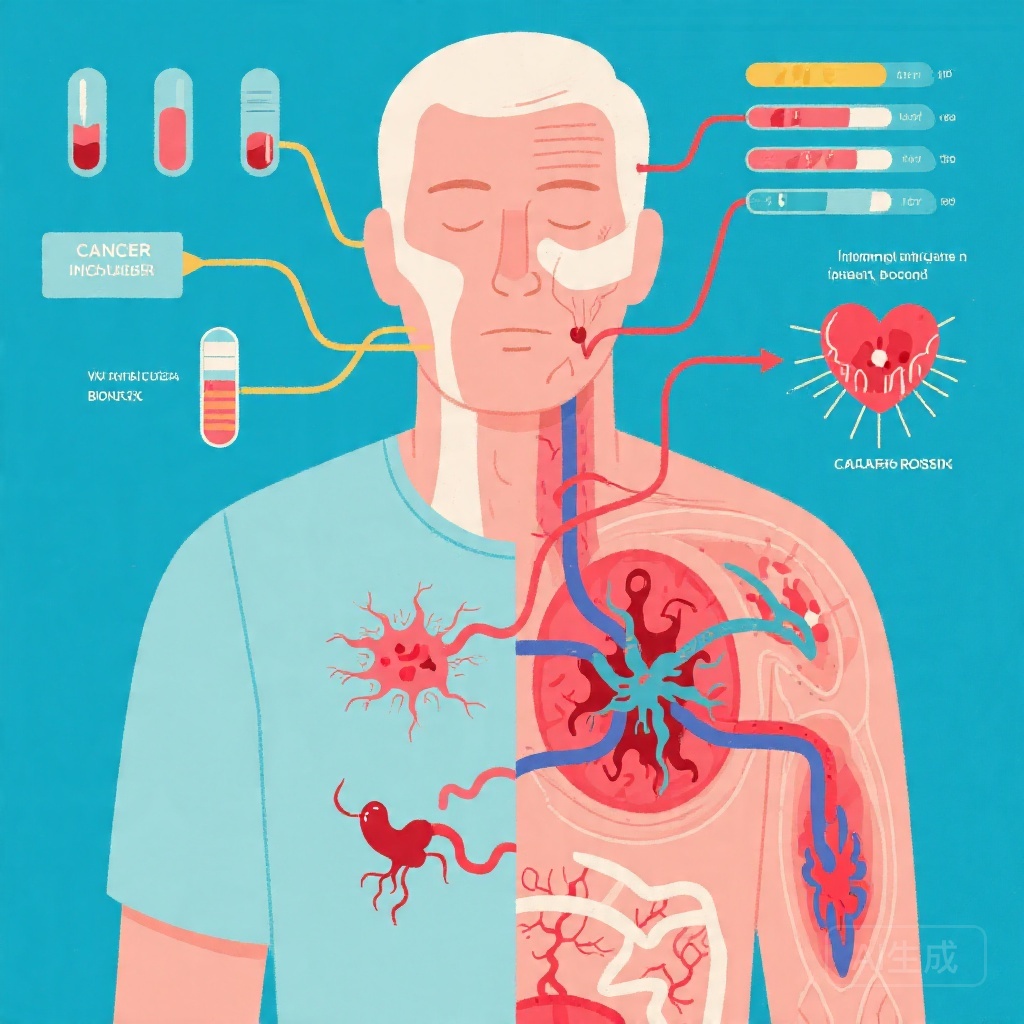
A comprehensive review of the ARIC study's identification of five unique proteomic markers—four novel—that specifically predict heart failure risk in patients with diabetes, offering new insights into lipid metabolism and inflammatory pathways.
This review synthesizes cutting-edge findings from multi-ethnic longitudinal cohorts using high-throughput proteomics to identify novel biomarkers and causal pathways for venous thromboembolism, moving beyond traditional clotting factors.
A large-scale multicenter study reveals that persistent high-level Epstein-Barr nuclear antigen 1 (EBNA-1) peptide antibody titers serve as a highly specific biomarker, effectively distinguishing Multiple Sclerosis from other neuroinflammatory mimics like MOGAD and NMOSD, even in seronegative cases.
This review synthesizes findings on how pregnancy biomarkers, particularly sFlt-1 and hs-cTnI, serve as early indicators of long-term maternal cardiovascular risk, offering a unique window for sex-specific prevention.
**Refining Content Structure**
I'm now deeply immersed in the content. I've drafted the introduction, designed to capture attention and set the scene. I am expanding on the key findings, including correlations, and the clinical implications. I am paying close attention to the structural integrity to ensure it adheres to professional standards and the tone of the target audience.
A landmark study reveals that skull bone marrow inflammation, measured via TSPO PET imaging, is significantly elevated in secondary progressive multiple sclerosis and correlates with clinical disability, suggesting a new paradigm for monitoring disease progression beyond traditional neuroimaging.
This review synthesizes evidence on the impact of kidney function, BMI, and anemia on plasma p-tau217 diagnostic accuracy, advocating for subgroup-specific cutoff strategies to improve clinical outcomes.
This review synthesizes findings from the Australian MoST program, demonstrating that genomically matched therapies significantly improve overall survival in advanced solid tumors only when supported by high-level prospective clinical trial evidence.
A large-scale cohort study identifies dpucMGP as a robust predictor of mortality and hospitalization in heart failure, revealing its role in mediating warfarin-associated risks and its association with systemic proteomic pathways including fibrosis and inflammation.
This multi-center study demonstrates that serial monitoring of plasma GFAP and NfL biomarkers can detect acute brain injury in pediatric ECMO patients before imaging diagnosis, significantly correlating with long-term survival and functional outcomes.
A prospective study demonstrates that rising levels of plasma GFAP and NfL precede neuroimaging-confirmed brain injury in children on ECMO. These biomarkers are also strongly associated with mortality and long-term functional impairment, offering a new window for neuroprotective monitoring.
A groundbreaking large-scale proteomic study identified 15 novel plasma markers for venous thromboembolism, highlighting biological pathways in extracellular matrix regulation and vascular senescence.
Researchers have developed the Liver Immune Frailty Index (LIFI), a biomarker-based tool using fractalkine and MMP3 to predict post-liver transplant mortality. With a C-statistic of 0.83, LIFI identifies high-risk candidates, potentially transforming preoperative risk stratification and perioperative management.
A Danish cohort study demonstrates that specific pregnancy biomarkers, particularly sFlt-1 and hs-cTnI measured at 29 weeks, significantly enhance the prediction of long-term cardiovascular disease risk in women, independent of traditional clinical factors and hypertensive disorders of pregnancy.
This systematic review confirms that Neurofilament Light Chain (NfL) in blood and CSF effectively distinguishes behavioral variant frontotemporal dementia from psychiatric disorders, offering a powerful tool for early and accurate diagnosis in clinical practice.
A comprehensive study explores how polygenic risk scores for late-onset Alzheimer’s disease (LOAD) influence early-onset (EOAD) cases. While these scores do not independently predict EOAD onset or cognitive decline, they reveal significant associations with synaptic damage markers like SNAP-25 and amyloid deposition.
Standard single cutoffs for plasma p-tau217 are significantly confounded by kidney function, BMI, and anemia. A new study demonstrates that subgroup-specific or double-cutoff strategies markedly improve diagnostic accuracy and cost-effectiveness in detecting amyloid-β pathology.
Researchers introduce the Mucin Quantitative Score (MUCQ), a novel metric combining mucin concentration and composition. Validated in the SPIROMICS cohort, MUCQ outperforms traditional total mucin measurements in identifying chronic bronchitis, offering a more precise tool for diagnosing and tracking muco-obstructive lung diseases.
This study identifies key plasma biomarkers—including NT-proBNP, FGF-23, and GDF-15—that predict heart failure hospitalization in patients with atrial fibrillation. Findings also reveal distinct pathophysiological pathways for HFrEF and HFpEF, highlighting the roles of inflammation and adipose metabolism.

A new serum cytokine-based risk score (CYTOscore) utilizing IL-8, CCL3, and CCL4 identifies ESCC patients likely to benefit from chemoradiotherapy combined with toripalimab, offering a non-invasive tool for personalized immunotherapy and precision oncology.
A large-scale proteomic analysis identifies VEGFR1 as a significant, independent predictor of 180-day mortality in patients with cardiogenic shock, offering incremental prognostic value beyond traditional markers like serum lactate and SAPS II scores.