Highlight
This landmark phase 3 clinical trial reveals that once-weekly subcutaneous semaglutide significantly reduces BMI in children aged 6 to under 12 with obesity, achieving a mean BMI reduction of 13.5% at 68 weeks versus a 2.7% increase in placebo. Moreover, 79% of semaglutide recipients shifted to a lower BMI category compared with 23% on placebo, with notable reductions maintained at 104 weeks. Adverse events, predominantly gastrointestinal, were common but generally manageable, and discontinuation was rare.
Study Background
Childhood obesity is a complex, chronic neurometabolic disorder characterized by excessive adiposity, which poses substantial long-term health risks including type 2 diabetes, cardiovascular disease, and psychosocial impairment. Despite the global rise in pediatric obesity prevalence, therapeutic options remain limited, particularly for younger children aged 6 to under 12 years. Lifestyle interventions alone often yield insufficient and short-lived effects, while pharmacologic treatments have historically lacked robust pediatric efficacy data or have been restricted to older adolescents. Semaglutide, a glucagon-like peptide-1 (GLP-1) receptor agonist, has demonstrated potent weight-reducing effects in adults and adolescents but has not been extensively studied in younger pediatric populations. This study addresses the critical unmet need by evaluating the efficacy and safety of semaglutide in this age group.
Study Design
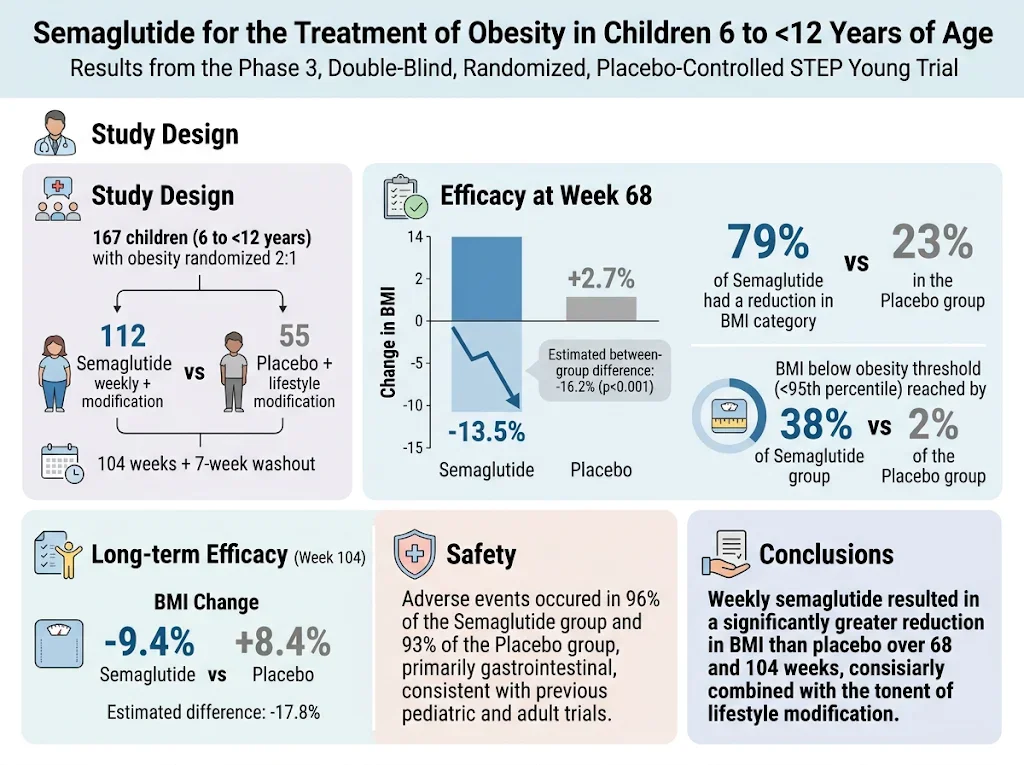
This rigorous phase 3 double-blind, randomized, placebo-controlled trial enrolled 167 children aged 6 to less than 12 years with obesity. Participants were randomized in a 2:1 ratio to receive once-weekly subcutaneous semaglutide or placebo for 104 weeks, followed by a 7-week washout period without treatment. Both groups concurrently received comprehensive counseling aimed at lifestyle modification to optimize weight management. The trial’s primary endpoint was the percent change in BMI from baseline to week 68. A key confirmatory secondary endpoint was the proportion of participants achieving a reduction in BMI category at week 68, defined by shift out of the obesity classification (≥95th percentile for age and sex). Safety assessments included adverse event monitoring throughout the study.
Key Findings
The trial’s results underscore the marked efficacy of semaglutide in lowering BMI among young children with obesity. At week 68, those receiving semaglutide had a mean BMI reduction of 13.5%, contrasting with a 2.7% increase in those on placebo (between-group difference: -16.2 percentage points; 95% CI, -19.4 to -12.9; P < 0.001). This effect remained robust at week 104, with a 9.4% BMI reduction in the semaglutide group versus an 8.4% increase in placebo (between-group difference: -17.8 percentage points; 95% CI, -22.2 to -13.3). Notably, 79% of semaglutide-treated children achieved a reduction in BMI category by week 68 compared to only 23% in the placebo group (odds ratio 7.8; 95% CI, 3.5 to 17.6; P < 0.001). Furthermore, 38% of children receiving semaglutide attained BMI values below the obesity threshold, a critical clinical milestone, whereas only 2% of the placebo group did so.
Safety analyses revealed that adverse events were common but largely consistent with known profiles of GLP-1 receptor agonists. Gastrointestinal events—nausea, vomiting, and diarrhea—were the most frequent and more prevalent in the semaglutide group, though only one participant discontinued treatment due to these effects. Overall adverse event rates were similar between groups (96% semaglutide vs. 93% placebo), reflecting the comprehensive monitoring protocols and the pediatric population’s susceptibility to minor complaints.
Expert Commentary
This study represents a pivotal advance in pediatric obesity treatment, establishing semaglutide as a potent pharmacologic option for children as young as six years old. The observed reductions in BMI are clinically meaningful and suggest potential for durable modification of obesity-related morbidity trajectories if sustained. The integration of lifestyle counseling is vital to reinforce therapeutic gains and optimize metabolic health. Safety findings align with existing adult and adolescent data, though long-term surveillance remains essential given the developmental considerations in this age group.
Some limitations merit consideration. The 2:1 randomization ratio introduced greater sample size discrepancy but facilitated more extensive semaglutide exposure data. The 7-week washout provides initial insight into the durability of treatment effects but longer post-treatment follow-up is needed to assess weight regain dynamics. Moreover, broader studies inclusive of diverse ethnicities and comorbidities will enhance generalizability. Nonetheless, the trial’s robust design and clinically relevant outcomes position semaglutide as a valuable therapeutic tool in managing early childhood obesity.
Conclusion
In children aged 6 to under 12 years with obesity, semaglutide administration over 68 weeks results in substantial and statistically significant reductions in BMI and shifts in obesity classification compared with placebo, with a manageable safety profile. These findings support the extension of semaglutide use to younger pediatric populations and suggest a transformative impact on childhood obesity treatment paradigms. Continued research should focus on long-term outcomes, integration with comprehensive lifestyle interventions, and assessment of psychosocial benefits.
Funding and Clinical Trials Registration
This trial was funded by Novo Nordisk. It is registered on ClinicalTrials.gov under the identifier NCT05726227.
References
1. Jastreboff AM, Harder-Lauridsen NM, Van Name M, et al. Semaglutide for the Treatment of Obesity in Children 6 to <12 Years of Age. N Engl J Med. 2026 Nov 16; PMID: 43037562.
2. Kelly AS, et al. Pharmacologic Approaches to Obesity in Pediatric Populations. Endocrinol Metab Clin North Am. 2022;51(1):129-145.
3. Skinner AC, et al. Prevalence and Trends in Obesity Among US Youths, 2015–2018. JAMA. 2021;325(7):696-698.
Specialty calculators
For clinical reference; use professional judgment.