Highlight
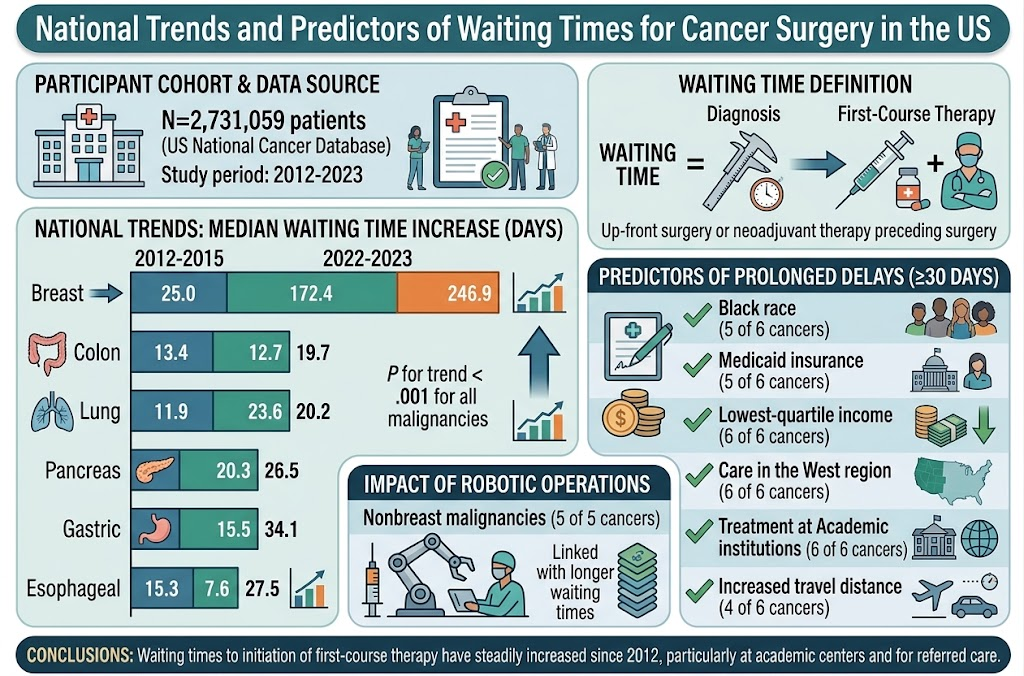
Nationally, waiting times to initiation of cancer surgery have progressively increased from 2012 to 2023 across six common malignancies. Vulnerable patient groups—those with Medicaid insurance, lower income, Black race—and treatment at academic or referral centers are associated with longer delays. These findings raise concerns about access and equity in surgical cancer care amid ongoing health system consolidation.
Study Background
Cancer treatment has become increasingly complex, often involving multidisciplinary management and coordination within and across health systems. Timely surgical intervention remains critical for curative intent in early and locally advanced cancers. Prolonged delays between diagnosis and surgery can lead to tumor progression, potentially worsening outcomes and survival.
In the US, consolidation and expansion of health systems combined with centralization of specialized cancer care have the potential to exacerbate waiting times due to referral processes and resource limitations. Despite the recognized importance of timely cancer surgery, comprehensive and contemporary data characterizing national trends and patient-level predictors of waiting times have been limited.
Study Design
This retrospective cohort study analyzed data from the National Cancer Database (NCDB) encompassing 2,731,059 patients diagnosed with nonmetastatic (clinical stage I-III) breast, colon, lung, pancreatic, gastric, or esophageal cancer from 2012 through 2023, all of whom underwent definitive surgical resection. Waiting time was defined from the date of diagnosis to initiation of first-course therapy, which could be up-front surgery or neoadjuvant therapy followed by surgery.
Primary outcomes centered on the duration from diagnosis to first-course therapy initiation, while secondary outcomes focused on predictors of prolonged delays defined as ≥30 days and extreme delays as ≥60 days. Analysis also considered hospital type (academic vs. community), referral status, insurance, income, race, geographical region, travel distance, and surgical approach (including robotic surgery).
Key Findings
Across all six cancer types, median waiting times significantly increased over the study period. For instance, breast cancer median wait increased from 34 days (2012–2015) to 45 days (2022–2023), lung cancer from 41 to 53 days, and gastric cancer from 35 to 49 days (all P for trend < .001). This rise was observed both in patients undergoing immediate surgery and those receiving neoadjuvant therapy.
Academic centers showed more pronounced delays compared to community hospitals, as did patients referred for care rather than those treated at the diagnosing hospital. The study identified consistent predictors of longer waiting times for most cancers, including:
- Medicaid insurance (significant in 5 of 6 cancers)
- Lowest income quartile (significant in all 6 cancers)
- Black race (significant in 5 of 6 cancers)
- Greater travel distance to treatment center (significant in 4 of 6 cancers)
- Care received in the Western US region (significant in all 6 cancers)
- Treatment at academic institutions (significant in all 6 cancers)
Additionally, receipt of robotic surgery was associated with longer waiting times for nonbreast malignancies. The authors noted the systematic increase in delays could reflect expanding clinical complexity, health system structures, and increased patient referrals to specialty centers, but these factors may create unintended access barriers.
Expert Commentary
This extensive analysis highlights a worrisome trend toward increasing cancer surgical wait times that may adversely impact patient outcomes and exacerbate healthcare disparities. That delays are longer at high-volume academic centers suggests capacity and workflow challenges in tertiary referral centers despite their expertise. The disproportionate burden on socially disadvantaged groups reinforces the need for targeted interventions to ensure equity.
While the study leveraged a robust national database, limitations include its retrospective nature and lack of granular clinical details such as reasons for delay or differences in tumor biology. Further prospective studies could clarify how waiting time influences stage progression and survival, thereby guiding acceptable benchmarks.
Importantly, recent guideline positions emphasize timely cancer treatment to optimize outcomes, underscoring urgency for coordinated care pathways and system reforms. Innovations in care coordination, patient navigation, and resource allocation might mitigate these delays.
Conclusion
Between 2012 and 2023, waiting times from diagnosis to initiation of first-course therapy in cancer surgery have steadily increased across major cancers in the US. Delays are more pronounced among socioeconomically disadvantaged populations and at academic, referral, and robotic surgery centers, illustrating systemic access challenges. Given the expanding complexity of oncologic care and health system consolidation, establishing system-level monitoring and targeted interventions to reduce waiting times is critical to enhance equity and optimize cancer outcomes nationwide.
Funding and ClinicalTrials.gov
The study was conducted using publicly available, certified National Cancer Database data; no specific funding source was disclosed. No clinical trial registration applicable.
References
1. Sakowitz S, Yamashita M, Donahue TR. National Trends and Predictors of Waiting Times for Cancer Surgery in the US. JAMA Surg. 2026 Aug 12; PMID: 42584916.
2. American Society of Clinical Oncology. Timeliness in Cancer Care: A Critical Quality Metric. ASCO Quality Oncology Practice Initiative; 2023.
3. Bilimoria KY, et al. Centralization of complex cancer surgeries and its impact on surgical wait times. Cancer. 2022;128(11):2101-2110.
4. Khorana AA, et al. Disparities in Cancer Treatment and Outcomes: The Role of Socioeconomic Status and Race. J Clin Oncol. 2021;39(12):1295-1303.