Highlight
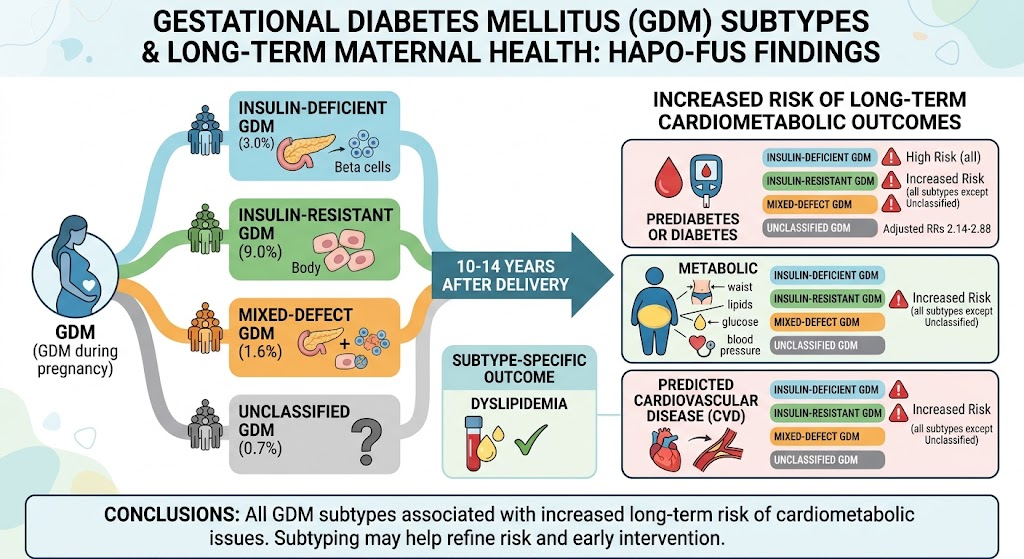
- All major GDM subtypes—insulin-deficient, insulin-resistant, and mixed defects—are linked to increased risk of prediabetes or diabetes 10-14 years after delivery.
- GDM subtypes, except for unclassified cases, are associated with elevated prevalence of metabolic syndrome and predicted cardiovascular disease in the long term.
- Insulin-resistant GDM uniquely correlates with dyslipidemia, highlighting differential cardiometabolic risk profiles.
Study Background
Gestational diabetes mellitus (GDM), a common pregnancy complication characterized by glucose intolerance, affects both immediate pregnancy outcomes and long-term health of women. While GDM is a recognized risk factor for the development of type 2 diabetes mellitus (T2DM) and cardiovascular disease (CVD), emerging evidence suggests heterogeneity within GDM populations based on distinct pathophysiological mechanisms such as insulin deficiency and insulin resistance. These subtypes may confer different prognostic implications, yet their specific associations with long-term cardiometabolic health remain inadequately understood. Clarifying these links is essential for risk stratification, prevention, and personalized intervention strategies aimed at reducing future cardiometabolic morbidity among affected women.
Study Design
This investigation analyzed data from the Hyperglycemia and Adverse Pregnancy Outcome (HAPO) Follow-Up Study, a prospective cohort study evaluating women with varying GDM phenotypes. The study population included 4,693 women categorized by GDM subtype: insulin-deficient (3.0%), insulin-resistant (9.0%), mixed-defect (1.6%), and unclassified (0.7%), along with women without GDM as controls. GDM classification was based on detailed biochemical and clinical criteria involving insulin secretion and sensitivity measurements taken during pregnancy.
The primary outcomes assessed 10-14 years post-delivery were presence of prediabetes or overt diabetes. Secondary cardiometabolic outcomes included hypertension, dyslipidemia, metabolic syndrome, and predicted cardiovascular disease determined via validated risk-prediction algorithms.
Key Findings
The results demonstrate a significant and consistent association between GDM subtypes and adverse long-term cardiometabolic outcomes. Specifically, women with insulin-deficient, insulin-resistant, and mixed-defect GDM displayed adjusted risk ratios ranging from 2.14 to 2.88 for prediabetes or diabetes compared with women without GDM. This underscores the potent and enduring effect of GDM on glucose metabolism deterioration.
Metabolic syndrome and predicted cardiovascular disease risk were increased across these subtypes, highlighting the interconnected nature of metabolic dysfunction and cardiovascular risk following gestational hyperglycemia. Notably, insulin-resistant GDM was uniquely associated with dyslipidemia, including an adverse lipid profile characterized by elevated triglycerides and low high-density lipoprotein cholesterol, aligning with the pathophysiology of insulin resistance driving atherogenic dyslipidemia.
Women with the unclassified GDM subtype did not show statistically significant elevation in these risks, although this subgroup was small and may require larger studies for definitive conclusions.
Expert Commentary
The findings of Field et al. bring critical clarity to the complex landscape of GDM heterogeneity and its downstream cardiometabolic sequelae. The delineation of GDM subtypes provides a nuanced view that could inform individualized surveillance and intervention paradigms. Insulin resistance, a hallmark linking GDM to dyslipidemia and CVD risk, likely represents a key therapeutic target to mitigate adverse outcomes.
However, some limitations warrant consideration. The cohort’s relatively low representation of mixed-defect and unclassified subtypes may limit generalizability to these groups. Moreover, lifestyle factors post-pregnancy influencing cardiometabolic risks were not deeply explored and should be integrated in future research to fully contextualize the findings.
These results resonate with current American Diabetes Association guidelines recommending routine postpartum glucose screening but suggest further refinement incorporating GDM subtype may optimize early detection and prevention strategies.
Conclusion
This comprehensive prospective study establishes that all major GDM subtypes, except unclassified, significantly elevate long-term risks for prediabetes, diabetes, metabolic syndrome, and cardiovascular disease 10-14 years postpartum. Insulin-resistant GDM confers additional risk of dyslipidemia, reinforcing the importance of mechanistic subtype classification. These insights underscore the imperative for subtype-tailored follow-up, risk factor modification, and research prioritization to improve long-term maternal health outcomes following GDM.
Funding and ClinicalTrials.gov
Details regarding funding sources and clinical trial registration were not specified in the abstract; interested readers should consult the original publication for comprehensive disclosures.
References
- Field C, Grobman WA, Wu J, et al. Gestational Diabetes Mellitus Subtypes and Maternal Cardiometabolic Outcomes 10-14 Years After Delivery. Diabetes Care. 2026; PMID: 42585298.
- American Diabetes Association. 2. Classification and Diagnosis of Diabetes: Standards of Medical Care in Diabetes—2024. Diabetes Care. 2024;47(Suppl 1):S17-S28.
- Kampmann U, Madsen LR, Skajaa GO, et al. Gestational diabetes: a clinical update. World J Diabetes. 2015;6(8):1065-1072.
- Kim C, Newton KM, Knopp RH. Gestational diabetes and the incidence of type 2 diabetes: a systematic review. Diabetes Care. 2002;25(10):1862-1868.