Introduction
Transthyretin amyloid cardiomyopathy (ATTR-CM) is an increasingly recognized form of cardiac amyloidosis characterized by the deposition of misfolded transthyretin (TTR) protein fibrils within the myocardial tissue. Recent therapeutic advances have brought transformative treatment options, including TTR stabilizers, gene-silencing therapies, and emerging genome-editing and amyloid-depleting strategies. Each of these therapies targets distinct biological mechanisms responsible for disease progression. However, the traditional approach to defining and monitoring disease progression predominantly relies on downstream clinical symptoms, biomarker levels, and functional assessments that do not directly reflect the underlying biological activity targeted by these treatments.
Moving Beyond Traditional Disease Monitoring
Historically, progression of ATTR-CM has been monitored through measures such as NYHA functional class, echocardiographic parameters, cardiac biomarker levels (e.g., NT-proBNP, troponin), and patient-reported symptoms. While these indicators provide valuable information on the clinical impact of the disease, they mainly capture the consequence of amyloid accumulation and cardiac dysfunction rather than the molecular and cellular processes leading to amyloid formation and deposition.
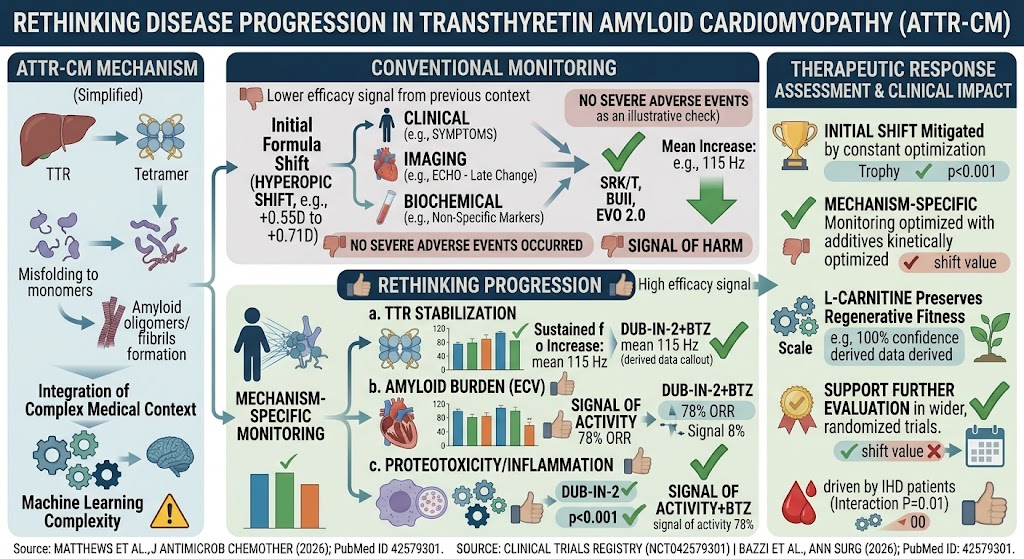
As therapies evolve to be mechanism-specific, it becomes essential to develop a refined framework that integrates the biology of ATTR-CM with therapeutic intervention strategies and tailored monitoring. This approach aims to improve precision in tracking disease activity, predicting prognosis, optimizing timing and selection of treatments, and evaluating therapeutic responses more accurately.
A Mechanism-Based Framework for Disease Progression
We propose a conceptual model that views disease progression in ATTR-CM through the interaction of three biologically distinct but interconnected domains:
1. Amyloid Precursor Protein Biology
This domain encompasses the production, molecular stability, and amyloidogenic potential of the precursor transthyretin protein. It is the fundamental source of ongoing amyloid fibril formation. Understanding the dynamics of TTR synthesis, post-translational modifications, and destabilization provides insights into the initiation and perpetuation of amyloid deposition.
2. Amyloid Burden
This represents the cumulative amount of insoluble amyloid fibrils deposited within cardiac and extracardiac tissues. Amyloid burden is not only a key determinant of prognosis but also a direct therapeutic target. Quantifying amyloid load through advanced imaging techniques such as nuclear scintigraphy with technetium-labeled tracers, cardiac MRI with T1 mapping, and emerging PET agents enables assessment of disease extent and response to amyloid-targeted therapies.
3. Organ Response
This domain involves the downstream consequences of amyloid deposition, including myocardial remodeling, neurohormonal activation, impaired cardiac and renal function, and clinical manifestations such as heart failure symptoms. Monitoring organ response through functional assessment, biomarker evaluation, and patient clinical status remains crucial for comprehensive disease management.
While these domains influence each other continuously during the disease course, distinguishing them conceptually allows alignment of monitoring methods and therapeutic strategies with their specific biological targets.
Implications for Therapeutic Monitoring and Response Assessment
The advent of therapies tailored to specific pathogenic processes highlights the inadequacy of relying solely on traditional clinical and functional metrics to evaluate treatment efficacy. For instance, TTR stabilizers such as tafamidis focus on preventing precursor protein misfolding, whereas gene-silencing therapies (inotersen, patisiran) reduce TTR production at the genetic level. Amyloid-depleting agents target the accumulated fibrils directly.
To comprehensively assess therapeutic impact, monitoring strategies should include:
– Biomarkers that reflect precursor protein biology, such as serum TTR levels, TTR tetramer stability assays, and genetic variant analyses.
– Quantitative imaging to measure changes in amyloid burden over time, aiding in real-time evaluation of amyloid clearance or stabilization.
– Functional and clinical assessments that capture organ response, including echocardiographic strain imaging, serial NT-proBNP measurements, renal function tests, and validated patient-reported outcome measures.
Future Directions and Challenges
Implementing this biologically grounded framework requires ongoing development and validation of sensitive biomarkers and imaging techniques that can discriminate among the three domains. Furthermore, integration of multimodal data will be essential to generate a comprehensive disease activity profile for each patient.
Technological advances such as machine learning and systems biology models may aid in synthesizing complex datasets to guide personalized therapeutic decisions. Clinical trials designed with mechanism-specific endpoints will better assess the potential of emerging treatments.
Conclusion
Transforming the paradigm of disease progression in transthyretin amyloid cardiomyopathy from a symptom-based model to a mechanistic, biology-driven framework promises improved precision in monitoring and therapy. Distinguishing the interrelated domains of precursor protein biology, amyloid burden, and organ response enables targeted biomarker development and therapeutic guidance. This approach aims to foster truly personalized care, ensuring that treatments are applied optimally according to disease biology, ultimately improving outcomes in patients living with this complex and challenging cardiac condition.
Reference:
Fontana M, Solomon SD, Hawkins PN, Gillmore JD. Rethinking Disease Progression in Transthyretin Amyloid Cardiomyopathy: Toward Mechanism-Specific Monitoring and Therapeutic Response Assessment. J Am Coll Cardiol. 2026 Aug 4:S0735-1097(26)07249-9. doi: 10.1016/j.jacc.2026.07.026. Epub ahead of print. PMID: 42584380.