Highlight
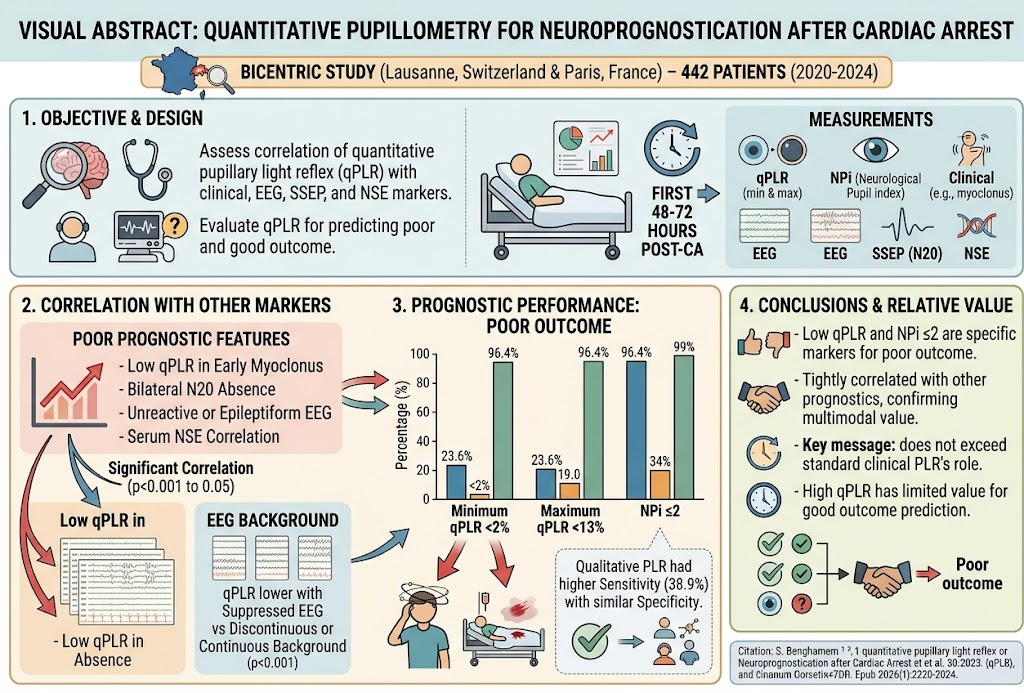
This bicentric study demonstrates that quantitative pupillometry light reflex (qPLR) strongly correlates with established neuroprognostic markers—EEG patterns, somatosensory evoked potentials (SSEPs), and neuron-specific enolase (NSE) levels—in patients comatose after cardiac arrest (CA). Low qPLR and Neurological Pupil index (NPi ≤2) are highly specific for unfavorable neurological outcomes, but their sensitivity does not surpass that of standardized clinical pupillary light reflex (PLR). Conversely, higher qPLR values only modestly predict favorable outcomes. These findings underscore the complementary, but not standalone, role of qPLR in multimodal prognostication after CA.