Highlight
This retrospective cohort study evaluated the individualized effect of preradiotherapy tooth extraction on the risk of osteoradionecrosis (ORN) among patients with head and neck cancer (HNC) using advanced causal machine learning techniques. The average treatment effect (ATE) was nonsignificant, indicating no uniform benefit or harm from prophylactic tooth removal before radiotherapy. However, substantial heterogeneous treatment effects (HTE) were observed, with some patients benefiting and others harmed. Key factors influencing benefit included Eastern Cooperative Oncology Group (ECOG) performance status and periodontal disease severity, while radiation dose showed a nonlinear relationship with treatment effect. These findings emphasize personalized decision-making to optimize ORN prevention strategies in clinical practice.
Background: Disease Burden and Clinical Context
Head and neck cancer (HNC) constitutes a significant oncological challenge globally, necessitating multimodal treatment approaches including surgery, chemotherapy, and radiotherapy. Radiotherapy plays a pivotal role but is associated with adverse effects, among which osteoradionecrosis (ORN) of the jaw is a debilitating complication. ORN results from radiation-induced hypovascularity, hypocellularity, and tissue hypoxia leading to bone necrosis, profoundly impacting quality of life through pain, infection, and impaired oral function.
To mitigate ORN risk, preemptive dental extractions have been routinely performed prior to radiotherapy, targeting teeth with poor prognosis or high risk for infection. Nonetheless, the efficacy of prophylactic tooth extraction remains controversial, partly due to variable patient factors and treatment-related heterogeneity. Conventional studies often assess average effects, potentially obscuring individual variation in responses. Consequently, precise estimation of individualized treatment effects is crucial to personalize care and avoid unnecessary extractions or missed prevention opportunities.
Study Design and Methods
This investigation was a retrospective cohort study involving 2,466 adult patients with HNC treated with curative-intent radiotherapy from 2011 to 2018. The cohort was followed prospectively with ascertainment of osteoradionecrosis occurrence, defined as ClinRad grade ≥1. The intervention was extraction of at least one tooth prior to initiation of radiotherapy.
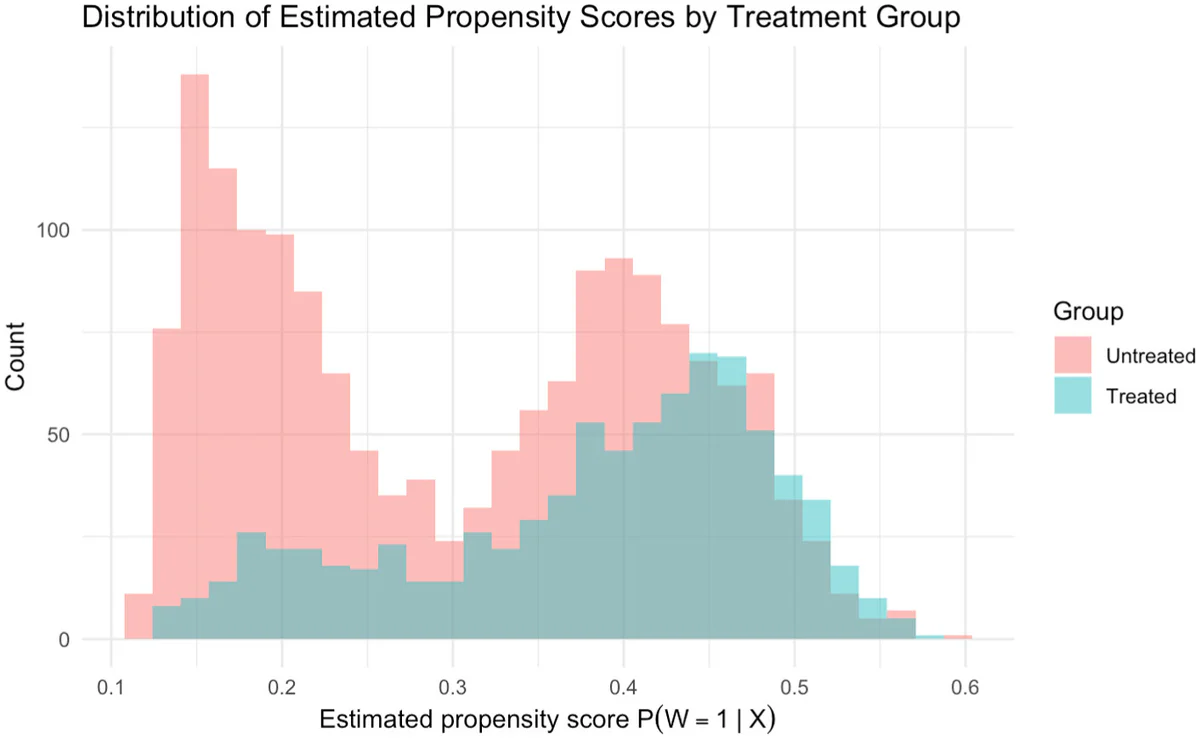
Comprehensive baseline data comprising 20 sociodemographic and clinical covariates were collected, including ECOG performance status, periodontal disease severity, radiation dose, and other treatment variables. A novel causal survival forest model was applied, targeting restricted mean survival time (RMST) differences to estimate both average treatment effect (ATE) and conditional average treatment effect (CATE), capturing heterogeneity in treatment outcomes.
The model was internally validated via 100 repetitions of 5-fold cross-validation. Calibration utilized out-of-fold augmented inverse probability weighting (AIPW) scores as pseudo-outcomes. Treatment prioritization was quantified using the rank-weighted average treatment effect (RATE), and a best linear projection regression identified key effect modifiers influencing benefit or harm.
Key Findings and Results
Among 2,466 patients, 810 underwent preradiotherapy tooth extractions, and 183 developed ORN during follow-up. The overall ATE of tooth extraction on ORN risk was -0.26 months difference in RMST (95% CI: -0.68 to 0.17), which was not statistically significant, indicating no clear advantage or disadvantage when applied uniformly across the population.
Crucially, examination of the CATE distribution revealed substantial heterogeneity: patients in the lowest quartile (Q1) experienced shorter RMST by a median of 1.47 months (indicating harm), whereas those in the highest quartile (Q4) gained a median RMST of 0.94 months (indicating benefit). This divergence underscores that a one-size-fits-all approach may obscure meaningful individual differences.
The positive RATE of 1.10 (95% CI: 0.04 to 2.15) confirmed that treatment prioritization based on individualized effect predictions can improve outcomes. The best linear projection regression identified two independent modifiers significantly associated with treatment benefit: ECOG performance status 1 to 4 versus 0 (β=2.68; 95% CI: 0.19 to 5.17) and periodontal disease grade III-IV versus 0 (β=4.33; 95% CI: 1.05 to 7.60). Radiation dose exhibited a nonlinear association with benefits from extraction.
These findings suggest that patients with poorer functional status and severe periodontal disease are more likely to benefit from preradiotherapy tooth extraction, while healthier individuals may be at risk of harm, possibly due to surgical trauma or delayed healing compounding radiation effects.
Expert Commentary
This study leverages cutting-edge causal machine learning methodology to dissect the complex relationship between preradiotherapy tooth extraction and ORN risk, overcoming limitations of traditional analytical approaches that focus solely on average effects. By revealing heterogeneous treatment effects and identifying clinically relevant modifiers, this work advances precision medicine paradigms in dental oncology care.
However, retrospective design and potential unmeasured confounders must temper interpretations. External validation in prospective cohorts is warranted to confirm generalizability and causal inference robustness. Additionally, integration of more granular dosimetric and radiobiological data alongside patient-specific factors may further refine predictions.
Current guidelines recommend evaluation of dental health prior to radiotherapy, but uniform extraction policies lack strong supporting evidence. This analysis advocates a tailored strategy incorporating patient performance status, periodontal health, and radiation dose considerations to optimize ORN prophylaxis while minimizing unnecessary extractions.
Conclusion
In patients with head and neck cancer undergoing curative radiotherapy, pre-treatment tooth extraction does not confer a uniform benefit or risk for osteoradionecrosis. Personalized assessment reveals meaningful heterogeneity, with some patients experiencing improved outcomes and others harmed. The adoption of causal machine learning allows individualized treatment effect estimation, supporting a precision dentistry approach.
Future clinical protocols should incorporate performance status and periodontal evaluation into decision-making and consider radiation dose implications. Prospective validation and implementation of predictive algorithms in multidisciplinary cancer care could enhance patient outcomes, reduce complications, and optimize resource use.
Funding and Trial Registration
The study did not report specific funding sources or clinical trial registrations.
References
- Moharrami M, Watson E, Singhal S, Huang SH, Yao C, Hosni A, Quinonez C, Glogauer M. Estimating the Individualized Effect of Tooth Extraction before Radiotherapy on Osteoradionecrosis Using Causal Machine Learning. J Dent Res. 2026 Dec;105(12):1564-1573. PMID: 41816918.
- Chen AM, Vaughan A, Farwell DG, Yom SS. Osteoradionecrosis of the jaw: overview of pathophysiology and management. J Clin Oncol. 2021;39(14):1568-1575.
- Nguyen-Tan PF, et al. Impact of dental status and care on osteoradionecrosis in head and neck cancer patients receiving radiotherapy: systematic review. Oral Oncol. 2022;129:105832.
- Huang SH, et al. The prognostic implications of ECOG performance status and periodontal disease in head and neck cancer. Oral Oncol. 2024;135:106187.
Specialty calculators
For clinical reference; use professional judgment.