Patient Information
This case series included 113 adult female patients presenting with symptomatic pelvic organ prolapse (POP). All had current or prior experience with pessary use or previously unsuccessful pessary fittings. Patients were enrolled across 18 clinical sites in Canada between February 2024 and September 2025. The cohort primarily consisted of women reporting persistent or recurrent prolapse symptoms despite standard pessary management, indicating suboptimal outcomes or intolerance to standard devices.
Diagnosis
Pelvic organ prolapse was diagnosed clinically based on patient symptoms and pelvic examination findings. Patients exhibited varying degrees of prolapse, with symptoms including vaginal bulge sensation, pelvic pressure, and discomfort. The diagnosis conformed to established definitions in urogynecology, with consideration for prolapse severity and impact on quality of life. The presence of unsuccessful standard pessary use or fitting attempts confirmed the need for alternative management approaches.
Differential Diagnosis
Other causes of pelvic or vaginal symptoms, such as vaginal atrophy, pelvic floor muscle dysfunction, urinary incontinence, or vaginal masses, were considered. However, the clinical presentation and examinations substantiated POP as the principal diagnosis. Differential exclusions were informed by patient history, physical examination, and prior evaluations that supported the diagnosis of prolapse rather than other pelvic pathologies.
Treatment and Management
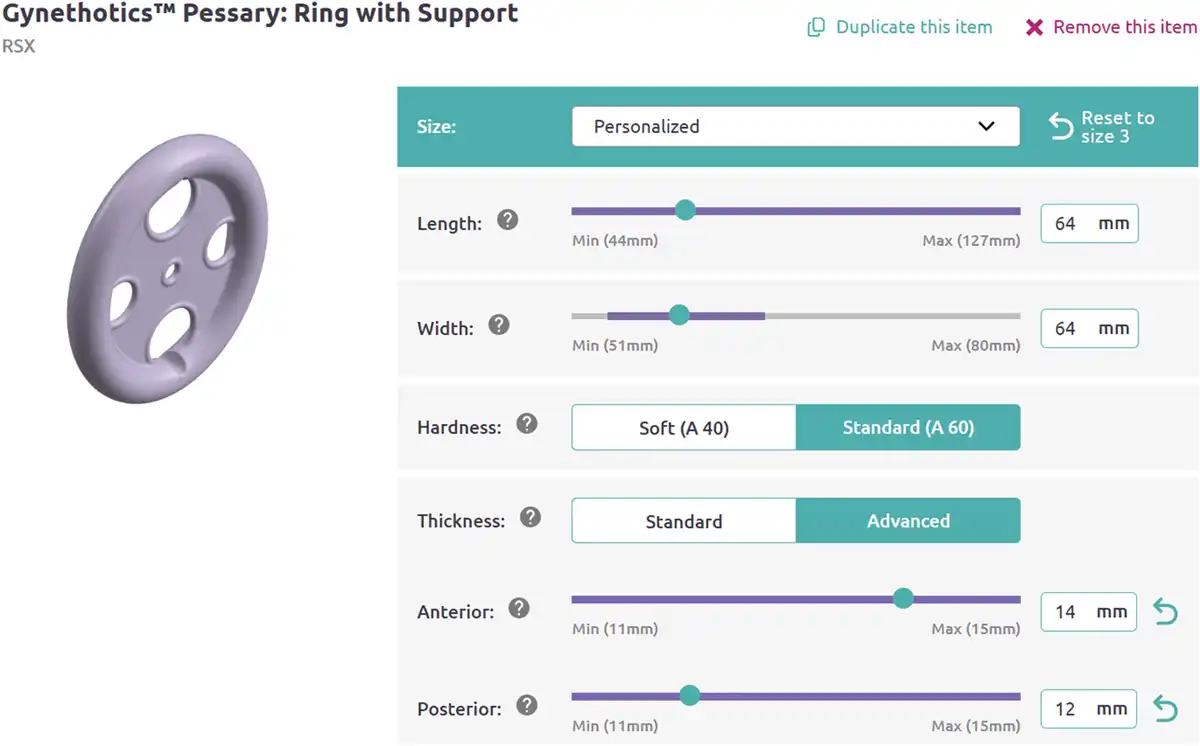
The intervention consisted of fitting patient-specific pessaries designed and customized for individual pelvic anatomy and symptomatology. Each patient underwent up to two rounds of fitting, with clinicians able to design and iterate on up to two pessary devices per session. The customization process utilized a centralized cloud-based platform to document design selection and adjustment details, facilitating personalized fitting.
Initial pessary fitting aimed to achieve a device that was retained comfortably and effectively alleviated prolapse symptoms. Patients then underwent a 4-week home trial period to evaluate real-world use and tolerability. Those who did not achieve success in the first fitting round were offered a second fitting iteration. Successful use was defined by the patient’s decision to retain and continue pessary use after fitting and home trial.
Outcome and Prognosis
Initial success, defined as effective pessary fitting with device retention, was achieved in 87 of 113 patients (77.0%, 95% CI: 68.5-83.7%). Of those, 69 patients (79.3%, 95% CI: 69.7-86.5%) chose to continue using the pessary following the home trial. Among the 26 patients (23.0%) not successfully fitted initially, seven pursued a second fitting round, resulting in four achieving successful fitting and three continuing device use during follow-up.
Overall, 72 patients (63.7%, 95% CI: 54.5-72.1%) retained and continued use of their patient-specific pessaries at final follow-up, demonstrating sustained adherence and benefit. These outcomes suggest improved tolerability and effectiveness compared with prior standard pessary experiences.
Discussion
Pelvic organ prolapse is a common and impactful condition affecting a significant proportion of women, with pessary use being a cornerstone nonsurgical management option. However, standard pessaries often encounter fitting challenges, patient intolerance, and discontinuation, limiting their clinical utility. This multicenter case series highlights the potential benefits of patient-specific pessaries to address these limitations.
The high initial fitting success rate (77%) and continuation rates (63.7%) observed contrast with historical data on standard pessary use, where continuation can be as low as 50-60%. Patient-specific devices tailored to individual anatomical variation may improve comfort, retention, and symptom relief, fostering higher adherence.
Moreover, the iterative fitting process with up to two design attempts per patient allowed clinicians to fine-tune pessaries, optimizing outcomes even for patients with prior unsuccessful experience. The use of a centralized cloud-based platform facilitated standardized documentation and potentially rapid design modifications, an advancement compared to traditional pessary fitting practices.
These findings support the clinical utility of personalized pessary design as a viable nonsurgical treatment for challenging pelvic organ prolapse cases. Incorporation of patient-specific devices may enhance prolapse management, reduce need for surgical intervention, and improve quality of life.
Future prospective controlled studies are warranted to compare patient-specific pessaries against standard devices more rigorously, evaluating long-term effectiveness, cost-benefit considerations, and patient-reported outcomes.
References
1. Hong CX, Sham D, Zhang S, McDougall C, Ameri G. Patient-Specific Pessaries After Suboptimal Outcomes With Standard Pessary Use. Obstet Gynecol. 2026 Oct 1;148(4):547-555. doi: 10.1097/AOG.0000000000006287. Epub 2026 Jun 18. PMID: 42314178; PMCID: PMC13574345.