Introduction
In pediatric oncology, advances in treatment continually strive to improve survival while reducing toxicity. Such progress is primarily driven by rigorous clinical trials introducing novel regimens that ultimately become new standards of care. However, an ethically challenging scenario arises when parents decline these advanced, evidence-based therapies for their children, favoring existing but comparatively less optimal treatments. This predicament involves balancing parental authority, clinical beneficence, and trust within the therapeutic relationship. This article critically examines these issues grounded on the perspectives discussed in the 2025 American Society for Bioethics and Humanities Meeting and the publication by Unguru et al. in Pediatrics (2026).Clinical Context and Ethical Challenges
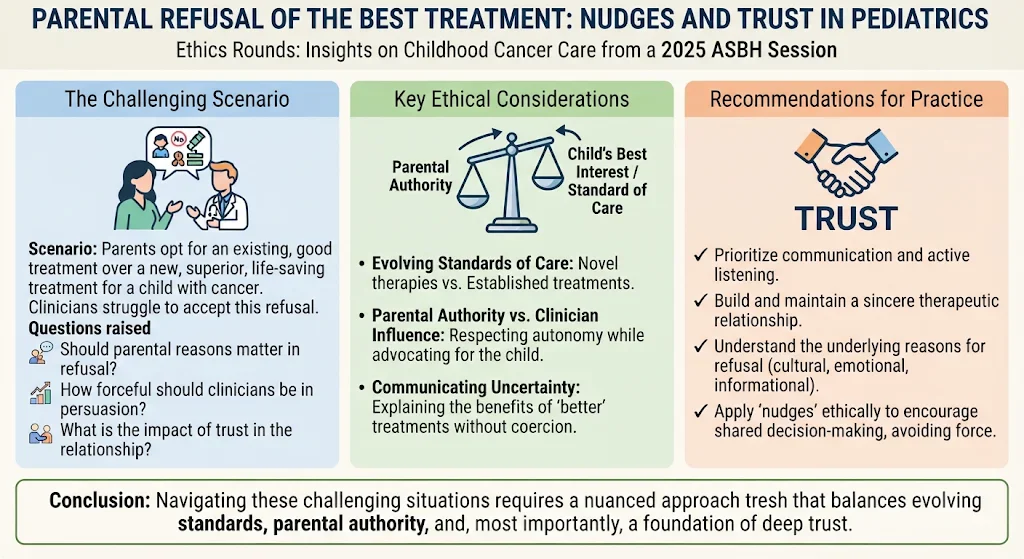
Childhood cancers represent life-threatening conditions where rapid, effective intervention significantly impacts outcomes. New treatment protocols developed through clinical trials often provide better survival rates or reduced adverse effects. Despite these advances, parents may refuse the best available therapy for various reasons, including concerns about side effects, mistrust in novel interventions, or cultural beliefs. Clinicians face ethical tensions in these situations. The primary clinical goal is to offer the best possible therapy to maximize the child’s chance of cure or remission. Conversely, respecting parents’ decision-making rights—rooted in legal and ethical principles—particularly when children are minors, demands careful consideration. This tension raises questions: Should clinicians be more assertive, even coercive, in persuading parents? Do parental motivations for refusal affect clinical responses? What role does the quality of trust and communication play?Insights from the Ethics Roundtable
Unguru and colleagues synthesize diverse views from pediatric clinicians, bioethicists, philosophers, and educators. They contend that the evolving landscape of pediatric cancer treatment necessitates nuanced approaches that transcend binary judgments about parental refusal. Rather than confrontational persuasion, they advocate for relational ethics centered on sincere dialogue and active listening. Key points include: 1. Respecting Parental Authority and Reasons: The reasons parents give for refusal—whether emotional, cultural, or experiential—are ethically relevant and warrant empathetic engagement. Dismissing these motivations risks undermining trust. 2. Trust as a Therapeutic Cornerstone: Trust shapes parental openness to clinician recommendations. Strengthening the therapeutic relationship through transparency, honesty, and acknowledgement of parental concerns can facilitate shared decision-making. 3. Nudging with Caution: Nudging, defined as subtly guiding decisions without restricting choice, can be ethically appropriate if it promotes welfare without coercion. However, misuse or insensitivity can damage trust. 4. Communication Strategies: Active listening and culturally competent communication are vital. Acknowledging the emotional and cognitive burden on families enables tailored discussions that respect parental autonomy while conveying clinical imperatives.Application in Clinical Practice
Clinicians should adopt a patient- and family-centered approach that recognizes parents as partners in care. Practical steps may include: – Thoroughly exploring parents’ understanding, fears, and values related to their child’s treatment options. – Providing clear, accessible information about novel therapies’ benefits, risks, and uncertainties. – Engaging multidisciplinary support, including ethics consultants, social workers, and cultural liaisons. – Considering incremental persuasion techniques, including framing information in a way that aligns with parental priorities without coercion. – Documenting decision-making processes transparently to maintain ethical and legal standards. When trust is strong, parents are more likely to reconsider refusals. Conversely, aggressive persuasion or disregard for parental perspectives can provoke conflict, delay treatment, and harm the therapeutic alliance.Expert Commentary and Perspectives
The discussion by Unguru et al. aligns with broader bioethical frameworks emphasizing relational autonomy and shared decision-making in pediatrics. Current pediatric oncology guidelines underscore the importance of balancing beneficence with respect for family values. However, limitations exist. Clinicians may struggle with emotional distress or implicit biases affecting communication quality. Furthermore, systemic issues—such as disparities in healthcare access or cultural mismatches—can complicate these delicate negotiations. Future research may explore structured interventions to enhance communication, assess outcomes of nudging strategies, and develop ethical guidelines tailored for pediatric oncology contexts.Conclusion
Parental refusal of superior pediatric cancer treatments presents complex ethical and clinical challenges tightly interwoven with trust and communication. Rather than adopting forceful approaches, clinicians should prioritize respectful engagement, understanding parental reasons, and fostering therapeutic relationships grounded in honesty and empathy. Ethically appropriate nudging can support adoption of best care but requires careful calibration to preserve trust. This balanced approach ultimately enhances both clinical outcomes and family satisfaction in the vulnerable context of pediatric oncology care.References
1. Unguru Y, Diekema D, Barby JB, Johnson LM. Parental Refusal of the Best Treatment: Nudges and Trust in Pediatrics. Pediatrics. 2026 Nov 1;158(5). PMID: 42833660. 2. Ross LF, Nelson RM. Children, families, and health care decision making. Oxford University Press; 2010. 3. Mack JW, Wolfe J. Allowing children to plan their end-of-life care. Pediatrics. 2006;117(5):e767-e774. 4. Kesselheim AS, Riggs KR. The ethics of nudging in clinical care. JAMA. 2017;317(9):923-924.Specialty calculators
For clinical reference; use professional judgment.