Highlight
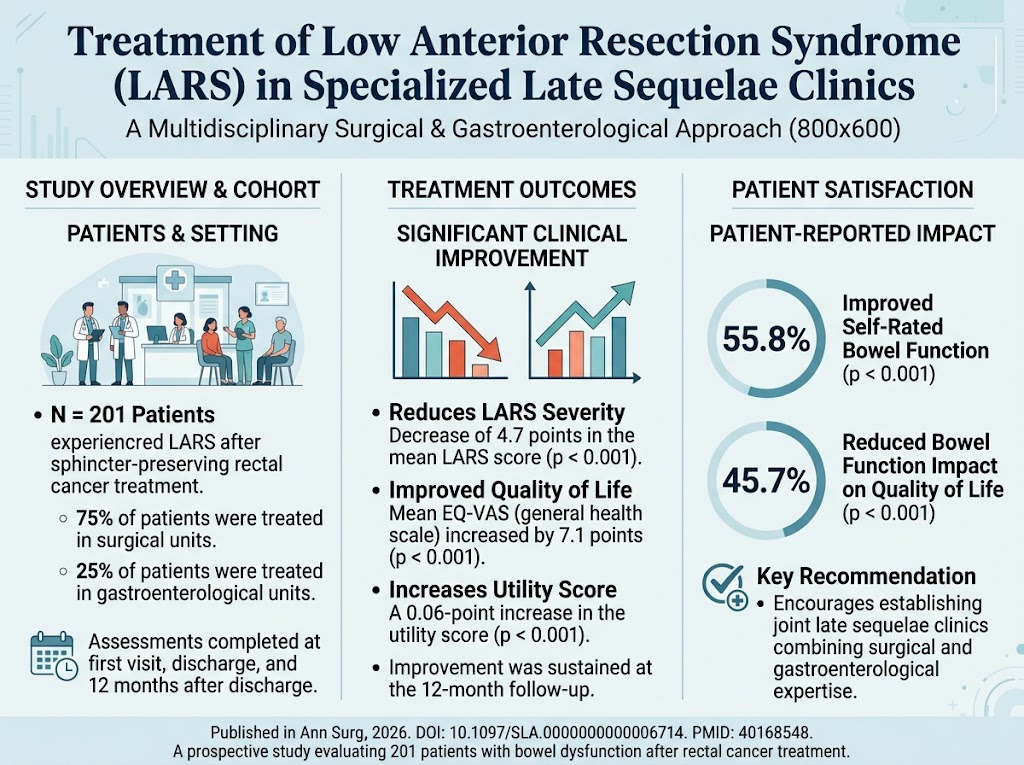
This prospective cohort study evaluates the impact of multidisciplinary late sequelae clinics—including surgical and gastroenterological specialties—on managing Low Anterior Resection Syndrome (LARS) in rectal cancer survivors. The intervention led to significant clinically relevant improvements in bowel function scores, reduction in individual LARS symptoms, and enhanced quality of life measures, sustained at one year post-treatment.