Highlight
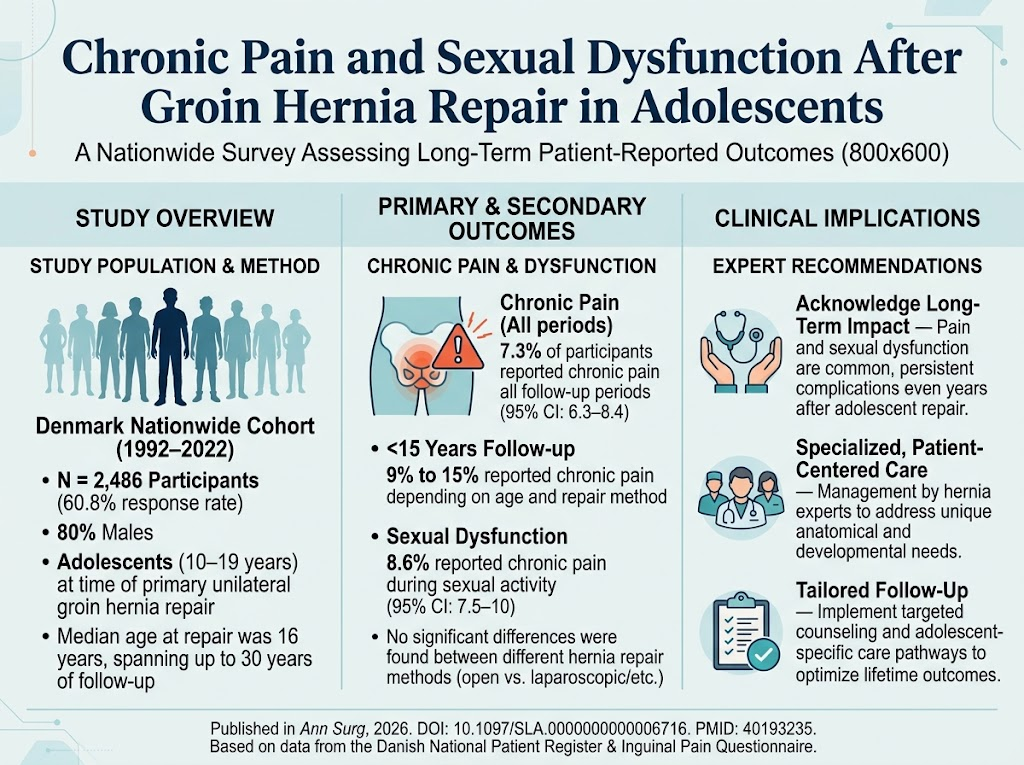
1. Approximately 7.3% of adolescents report chronic pain long-term following groin hernia repair, with rates rising to between 9% and 15% within 15 years of surgery.
2. Chronic pain during sexual activity affects 8.6% of these patients, highlighting underrecognized postoperative complications.
3. No significant differences in chronic pain or sexual dysfunction rates were found between different surgical repair methods.
4. These findings emphasize the necessity of specialized, patient-centered surgical management for the adolescent population undergoing groin hernia repair.
Study Background
Groin hernia repair is common in both adult and adolescent populations. However, adolescents present unique clinical challenges because of their dynamic anatomical development and differing physiological responses to surgery compared to adults. Despite technical advances and tailoring of surgical approaches to minimize complications, chronic pain and sexual dysfunction remain concerns with potential lifelong impact, especially given the young age at intervention. There is a paucity of robust data on patient-reported outcomes, including long-term pain and sexual function, following groin hernia repair in this demographic. Understanding these outcomes is critical for guiding surgical decision-making, counseling patients and families, and developing targeted strategies to optimize postoperative quality of life.
Study Design
This study was a comprehensive nationwide survey conducted in Denmark, leveraging linkage between patient self-reported outcomes and national health registers, including the Danish National Patient Register and Civil Registration System. The cohort comprised individuals who underwent primary unilateral groin hernia repair during adolescence (defined as ages 10 to 19 years) over a 30-year span from 1992 to 2022. The primary outcome measured was chronic pain, assessed using the short-form Inguinal Pain Questionnaire (IPQ), a validated instrument designed to quantify post-hernia repair inguinal discomfort. Secondary outcomes included chronic pain evaluated by the Activities Assessment Scale and sexual dysfunction measured via the Sexual Inguinal Hernia Questionnaire. A total of 2486 participants completed the survey, achieving a response rate of 60.8%. The vast majority (approximately 80%) were male, and the median age at repair was 16 years.
Key Findings
The study revealed that 7.3% (95% CI: 6.3-8.4) of all respondents reported chronic pain persisting long-term after groin hernia repair. When considering a shorter duration of follow-up (<15 years), chronic pain prevalence ranged between 9% and 15% depending on the patient’s age at the time of surgery and the surgical repair method utilized. Notably, chronic pain affecting sexual activity was reported by 8.6% (95% CI: 7.5-10) of participants, a clinically significant finding given the impact on quality of life and sexual health during young adulthood and beyond.
Importantly, the study did not find statistically significant differences in the prevalence of chronic pain or sexual dysfunction between different hernia repair techniques, suggesting that the choice of surgical method might not be the sole determinant of these complications in adolescents. Femoral hernia repairs were infrequently performed within this cohort, limiting conclusions about this subgroup.
Expert Commentary
These findings shed light on the substantial burden of persistent pain and sexual dysfunction following groin hernia repair in adolescents, a population often overlooked in outcome studies that typically focus on adults. Chronic postsurgical pain in the groin region can result from nerve injury, mesh-related complications, or scar tissue formation, but adolescents’ ongoing anatomical and physiological maturation may contribute unique risk profiles. The absence of significant differences between surgical techniques in this cohort calls for further exploration into patient-specific factors, surgical expertise, and perioperative management that may influence outcomes.
Given the sensitive nature of sexual dysfunction, its high prevalence signals a need for systematic assessment and targeted intervention strategies in postoperative care. Multidisciplinary approaches involving surgeons, pain specialists, and sexual health counselors might improve patient outcomes. Additionally, clinicians should counsel patients and families about these possible long-term risks preoperatively.
While the large, nationwide design and linkage to authoritative registries strengthen the data’s reliability and generalizability within Denmark’s healthcare system, some limitations exist. The response rate of 60.8% raises potential for response bias, possibly under- or overestimating prevalence rates. Self-reported outcomes, while invaluable, are subjective and may be influenced by recall bias. Furthermore, the lack of detailed data on specific surgical techniques or mesh types used restricts granular analysis.
Conclusion
In this extensive nationwide Danish survey, chronic pain and sexual dysfunction emerged as common and impactful long-term complications following groin hernia repair in adolescents, irrespective of surgical method. These outcomes underscore the importance of a tailored, patient-centered approach to hernia repair in this young and unique population. Optimization of outcomes may require referral to hernia experts familiar with adolescent anatomy and physiology, alongside enhanced perioperative counseling and long-term follow-up focused on pain and sexual health.
Future research should aim to delineate risk factors more precisely, explore preventive strategies, and evaluate interventions to mitigate chronic pain and sexual dysfunction after adolescent groin hernia repair. Such efforts hold promise for improving lifelong health and quality of life for this vulnerable group.
Funding and Trial Registration
No specific funding sources or clinical trial registration details were reported in the original publication.
References
Reistrup H, Fonnes S, Rosenberg J. Chronic Pain and Sexual Dysfunction After Groin Hernia Repair in Adolescents: A Nationwide Survey. Ann Surg. 2025 Apr 7;284(4):751-758. PMID: 40193235.
Additional relevant literature on chronic postoperative pain and sexual dysfunction after hernia repair was considered to contextualize findings but is not specifically cited here.