Highlights
- Low-carbohydrate intake (<175 g/day) in women with GDM is associated with modest improvements in glycemic control and birth weight centiles without increasing adverse perinatal outcomes.
- Very low carbohydrate intake (<120 g/day) correlates with reduced time above glucose targets but requires careful monitoring of micronutrient and fiber intake to maintain nutritional adequacy.
- Dietary patterns such as DASH and low-glycemic index diets show superior glycemic and perinatal outcome benefits compared to simple carbohydrate restriction alone.
- Evidence underscores the need for individualized dietary strategies in GDM management balancing carbohydrate reduction and nutrient sufficiency.
Background
Gestational diabetes mellitus (GDM) represents a growing public health challenge linked to increased maternal and neonatal morbidity. Nutritional therapy remains the cornerstone of GDM management, with a particular focus on carbohydrate intake due to its direct impact on postprandial glycemia. However, international guidelines exhibit variability regarding optimal carbohydrate requirements during pregnancy, with many advocating a minimum intake of 175 g/day to support maternal cerebral glucose demands and normal fetal neurodevelopment. Despite these recommendations, the extent to which low or very low carbohydrate diets affect glycemic control and perinatal outcomes in GDM is still debated. The Dietary Intervention in Gestational Diabetes Trial (DiGest) provides novel data addressing this clinical question alongside a growing body of literature assessing related dietary patterns.Key Content
Chronological and Thematic Synthesis of Evidence
1. DiGest Trial Secondary Analysis (Ahmad et al., 2026)
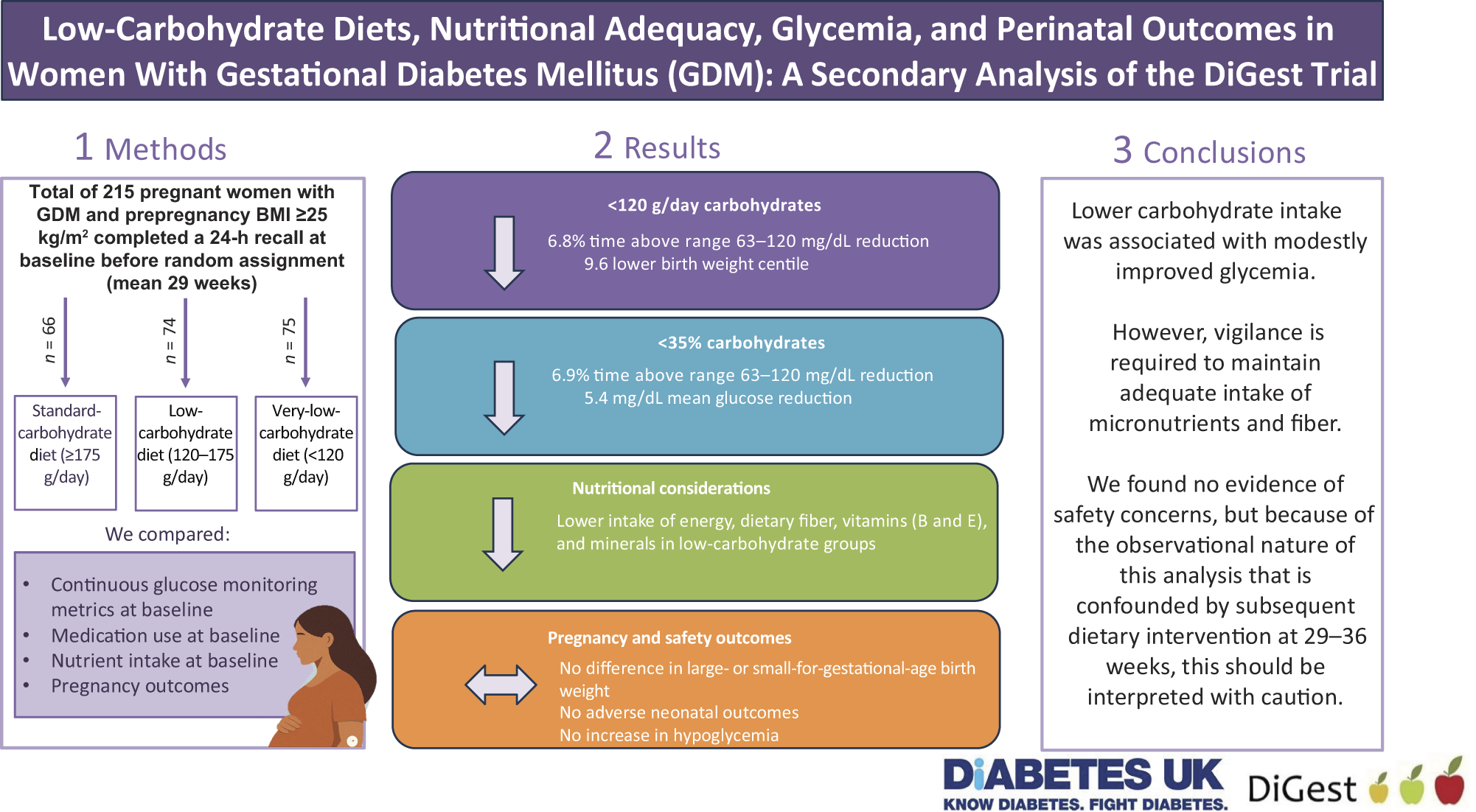
The DiGest trial performed a detailed secondary analysis investigating carbohydrate intake stratified as standard (≥175 g/day), low (120–175 g/day), and very low (120 mg/dL. Very low carbohydrate intake corresponded with a small but significant decrease in birth weight percentiles without altering risks of large- or small-for-gestational-age infants. Importantly, carbohydrate restriction correlated with reduced total energy, fiber, and micronutrient (vitamins B, E, and minerals) intakes, suggesting potential nutritional adequacy concerns.2. Meta-Analyses and Randomized Controlled Trials (RCTs)
Network meta-analysis by Ahmad et al. (2025) incorporating 28 RCTs (n=2666) identified that DASH and low-glycemic index (Low-GI) diets offered superior glycemic control (reductions in fasting blood glucose, postprandial glucose, and insulin resistance) and favored reduced adverse pregnancy outcomes including cesarean section and macrosomia. Low-carbohydrate dietary interventions demonstrated glycemic benefits but were less consistently linked to perinatal outcome improvements. Similarly, a systematic review and meta-analysis of 27 RCTs (n=1923) (2023) confirmed that diverse dietary patterns during pregnancy reduce birth weight, HbA1c levels, and macrosomia incidence, with low-GI and DASH diets producing the most significant benefits. Low-carbohydrate diets showed efficacy in lowering large-for-gestational-age incidence and HbA1c, affirming the potential of carbohydrate management. Earlier RCTs comparing low- versus standard-carbohydrate diets have generally shown no significant differences in insulin requirement or perinatal outcomes, highlighting variability in trial design and degree of carbohydrate restriction (e.g., 40% vs. 55% of energy intake). Notably, modest carbohydrate reduction (~135 g/day) did not raise ketone levels or adversely affect birth outcomes in a 2020 RCT, albeit challenges in achieving prescribed targets were observed.3. Nutritional Adequacy and Safety Concerns
The evidence stresses that very low carbohydrate consumption may compromise intake of dietary fiber and essential micronutrients (B vitamins, vitamin E, minerals), critical for maternal and fetal health. The DiGest analysis underscores the necessity of vigilant nutritional monitoring and possibly supplementation when adopting carbohydrate-restricted diets in GDM.Mechanistic Perspectives and Translational Implications
Carbohydrate restriction in GDM primarily aims to mitigate postprandial hyperglycemia, a major driver of fetal overgrowth and adverse outcomes. Lower carbohydrate intake reduces glucose excursions and insulin demand, as supported by objective markers like continuous glucose monitoring and HOMA-IR reduction. However, the glucose supply to the fetus, especially the developing brain, must be maintained within safe ranges. The balance between improved maternal glycemia and risk of nutrient insufficiency represents a clinical challenge, necessitating individualized dietary counseling. Diets with complex carbohydrates, high fiber, or low glycemic index (e.g., DASH) may improve insulin sensitivity and glycemic control without compromising micronutrient profiles, suggesting a superior approach to simple carbohydrate quantity restriction.Expert Commentary
The aggregate evidence indicates that carbohydrate intake below the traditionally recommended 175 g/day can be associated with mild glycemic benefits and reduced times above glycemic targets in women with GDM without clear evidence of harm in perinatal outcomes. However, the absolute effects on insulin use and cesarean rates remain inconsistent across studies. The DiGest secondary analysis importantly reveals that very low carbohydrate intake corresponds with decreased dietary fiber and essential micronutrients, highlighting potential risks of undernutrition and the need for careful dietary planning and monitoring. This nuance is critical for clinical practice, where dietary advice must balance glycemic control with nutritional sufficiency. Notably, dietary patterns such as the DASH and low-GI diets have shown robust benefits encompassing glycemic control and pregnancy outcomes through mechanisms involving improved insulin sensitivity, reduced inflammation, and favorable lipid profiles. These diets may mitigate the nutritional risks associated with carbohydrate restriction. Limitations in the evidence include heterogeneity in carbohydrate definitions, study designs, and small sample sizes in many trials. Long-term maternal and offspring metabolic outcomes remain inadequately studied. Furthermore, adherence to low-carbohydrate diets in pregnancy is challenging, emphasizing the role of structured nutritional support. Guidelines currently recommend a minimum of 175 g/day carbohydrates in pregnancy to meet fetal brain demands. The emerging evidence advocates flexibility in this threshold for women with GDM, provided that nutrient adequacy is maintained through diet quality and supplementation as needed.Conclusion
Dietary carbohydrate restriction below established guidelines in women with GDM is associated with modest improvements in glycemic control and a reduction in birth weight centiles without increasing adverse perinatal events. Maintaining adequate dietary fiber and micronutrient intake is essential to prevent nutritional deficits. Dietary patterns emphasizing low glycemic load and DASH principles may provide superior clinical benefits. Future research should focus on well-powered RCTs with longer-term follow-up assessing maternal and offspring metabolic and neurodevelopmental outcomes. Personalized nutrition interventions integrating carbohydrate quality and quantity, alongside micronutrient adequacy, will be critical to optimize GDM care.References
- Ahmad E, Dib S, Jones D, Oude Griep LM, Taylor R, Kusinski LC, Meek CL. Low-Carbohydrate Diets, Nutritional Adequacy, Glycemia, and Perinatal Outcomes in Women With Gestational Diabetes Mellitus: A Secondary Analysis of the DiGest Trial. Diabetes Care. 2026 Oct 20;PMID: 42900778.
- Wang XJ, Wang YL, et al. Comparative efficacy of dietary interventions for glycemic control and pregnancy outcomes in gestational diabetes: a network meta-analysis of randomized controlled trials. Front Endocrinol (Lausanne). 2025;16:1512493. PMID: 40458173.
- Li XY, et al. Effects of different dietary patterns during pregnancy on birth outcomes and glucose parameters in women with gestational diabetes mellitus: A systematic review and meta-analysis. Prim Care Diabetes. 2023 Aug;17(4):287-308. PMID: 37127452.
- Asemi Z, et al. Effects of a modestly lower carbohydrate diet in gestational diabetes: a randomized controlled trial. Am J Clin Nutr. 2020 Aug 1;112(2):284-292. PMID: 32537643.
- Roman ME, et al. Low-carbohydrate diet for the treatment of gestational diabetes mellitus: a randomized controlled trial. Diabetes Care. 2013 Aug;36(8):2233-8. PMID: 23564917.
- Medical Nutrition Therapy in Gestational Diabetes Mellitus. Cochrane Database Syst Rev. 2017 Feb 25;2(2):CD009275. PMID: 28236296.
- Cypryk K, et al. A comparison of the effectiveness, tolerability and safety of high and low carbohydrate diets in women with gestational diabetes. Endokrynol Pol. 2007 Jul-Aug;58(4):314-9. PMID: 18058723.
- Ruchat SM, et al. Women With Gestational Diabetes Mellitus Randomized to a Higher-Complex Carbohydrate/Low-Fat Diet Manifest Lower Adipose Tissue Insulin Resistance, Inflammation, Glucose, and Free Fatty Acids: A Pilot Study. Diabetes Care. 2016 Jan;39(1):39-42. PMID: 26223240.