Highlight
This large retrospective cohort study of 170 patients demonstrates 100% local tumor control for choroidal melanoma following palladium-103 (103Pd) plaque brachytherapy with sustained vision preservation in the majority at 15 to 20 years. Radiation retinopathy remains a key ocular morbidity but is manageable with anti-VEGF therapy and other modalities. Tumor proximity to the fovea and juxtapapillary location correlate with poorer long-term vision.
Study Background
Choroidal melanoma is the most common primary intraocular malignancy in adults and poses significant risks to vision and life expectancy. Conservative treatments such as plaque brachytherapy provide an opportunity for ocular preservation while controlling tumor growth. Among various isotopes, palladium-103 (103Pd) has distinct dosimetric properties that allow localized radiation delivery, potentially minimizing collateral damage to adjacent ocular structures. However, long-term data on visual outcomes and ocular health extending beyond a decade remain scarce. Understanding outcomes in the second and third decades after treatment is critical for patient counseling and optimizing therapeutic strategies.
Study Design
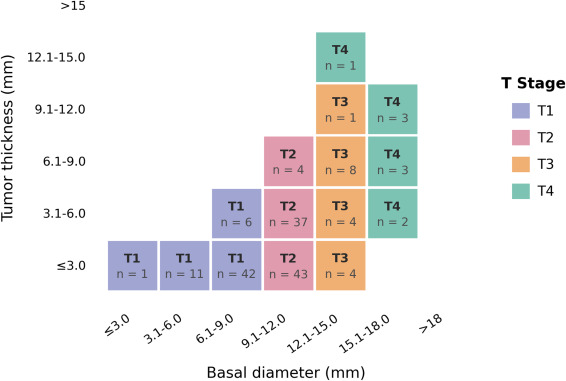
This retrospective cohort study included 170 patients treated at The New York Eye Cancer Center with 103Pd plaque brachytherapy for choroidal melanoma and followed continuously for at least 10 years. Clinical data collected comprised demographic details, tumor characteristics (size, location, AJCC clinical T-category), visual acuity measurements, treatment details for radiation-induced retinopathy, and long-term ocular comorbidities. The primary endpoints were local tumor control, globe conservation, and maintenance of functional visual acuity (defined as 20/200 or better). Secondary endpoints encompassed radiation-related complications and additional ocular interventions. Statistical analyses employed Kaplan-Meier survival curves, t-tests, Wilcoxon rank-sum tests, chi-square tests, and regression analyses to evaluate associations and survival probabilities.
Key Findings
Over a minimum 10-year follow-up, the cohort achieved 100% local tumor control, indicating excellent efficacy of 103Pd brachytherapy in preventing local recurrence. Only one eye (0.6%) underwent enucleation due to neovascular glaucoma and patient preference, underscoring high ocular conservation rates.
Visual acuity preservation was substantial, with Kaplan-Meier estimates showing 92.7% of patients maintaining vision of 20/200 or better at 12 years, decreasing to 87.0% at 15 years, and 63.7% at 20 years. These findings reveal progressive, yet relatively preserved functional vision over two decades after treatment.
Radiation retinopathy was the most frequent ocular complication, managed with a multimodal approach including anti-vascular endothelial growth factor (anti-VEGF) injections, intravitreal corticosteroids, and laser photocoagulation. Tumors located closer to the fovea induced higher radiation doses to this central retinal area, correlating with worse visual outcomes. Tumors involving juxtapapillary and circumpapillary regions showed the highest rates of vision loss, likely due to radiation exposure affecting critical optic nerve-related structures.
The study’s extensive follow-up period offers invaluable insight into the natural history of radiation-associated ocular morbidity and highlights the importance of timely intervention for retinopathy to optimize visual outcomes.
Expert Commentary
These findings represent the longest and largest cohort analysis to date using 103Pd plaque brachytherapy for choroidal melanoma, underscoring both efficacy and durable ocular preservation. Compared with historical data from other isotopes like iodine-125, 103Pd’s lower radiation energy profile offers theoretical advantages by limiting radiation scatter and toxicity, consistent with observed long-term visual retention.
Limitations include the retrospective design and potential referral bias, as the study population stems from a specialized tertiary center. Furthermore, while tumor control is excellent, late-onset radiation complications continue to impact vision beyond the first decade, reinforcing the need for ongoing surveillance.
Incorporation of contemporary adjunctive therapies for radiation retinopathy and advances in radiation planning may further enhance outcomes. Prospective studies are warranted to compare isotopes head-to-head and to refine personalized treatment approaches based on tumor location and patient factors.
Conclusion
Palladium-103 plaque brachytherapy provides excellent and sustained local tumor control for choroidal melanoma with promising long-term visual acuity preservation extending into the second and third decades post-treatment. Radiation-related ocular morbidity remains a clinical challenge but is manageable with current therapies. This comprehensive long-term data informs clinicians and patients alike, aiding in shared decision-making by balancing tumor eradication with ocular quality of life. Ongoing innovations in treatment and vigilant post-treatment monitoring are essential to further improve outcomes.
Funding and ClinicalTrials.gov
No specific funding was reported for this study. The trial was conducted under institutional research protocols at The New York Eye Cancer Center. No ClinicalTrials.gov identifier is available as this was a retrospective cohort analysis.
References
1. Finger PT, Kurli M. Radiation treatment of choroidal melanoma: Plaque brachytherapy using palladium-103. Expert Rev Anticancer Ther. 2005;5(2):211-219.
2. Collaborative Ocular Melanoma Study Group. The COMS randomized trial of iodine 125 brachytherapy for choroidal melanoma: visual acuity after 3 years of follow-up. Arch Ophthalmol. 2001;119(7):969-978.
3. Danesh-Meyer HV, et al. Treatment complications of plaque radiation therapy for juxtapapillary choroidal melanoma. Ophthalmology. 2008;115(12):2250-2257.
4. Finger PT. Radiation retinopathy is treatable with early anti-VEGF therapy. Indian J Ophthalmol. 2019;67(12):1915-1924.
5. Labkovich M, Finger PT. The Second and Third Decade After 103Pd Plaque Brachytherapy for Choroidal Melanoma. Ophthalmology. 2026 Oct 14. PMID: 42874810.