Background: The Challenge of Spinal Cord Injury
Spinal cord injury (SCI) represents one of the most devastating neurological insults, resulting in profound and often permanent changes to neuromuscular function, cardiovascular health, and metabolic homeostasis. Individuals living with SCI face a constellation of secondary complications that significantly impact quality of life and longevity. Among these, muscle atrophy develops rapidly below the level of injury, with some studies documenting losses of up to 30-50% of pre-injury muscle cross-sectional area within the first year. This dramatic decrease in skeletal muscle mass contributes to reduced basal metabolic rate, glucose intolerance, and the early onset of cardiometabolic disease.
Aerobic deconditioning further compounds these problems. The paralysis of large muscle groups, particularly in the lower extremities, severely limits the capacity for weight-bearing activity and systematic endurance training. Even with assisted exercise modalities, achieving meaningful cardiovascular adaptations in this population has proven challenging. Traditional exercise-based interventions alone typically produce modest improvements in aerobic capacity, leaving a substantial unmet need for strategies that can amplify the physiologic response to rehabilitation efforts.
Testosterone, a hormone with well-established anabolic and erythropoietic properties, has emerged as a potential adjunct to exercise therapy. However, whether testosterone can augment the adaptive response to multimodal exercise in individuals with SCI had not been systematically investigated prior to this trial.
Study Design
This investigation employed a randomized, placebo-controlled, double-blind design conducted across multiple academic medical centers. The trial enrolled 84 adults with chronic spinal cord injury, including 76 males and 8 females, ranging in age from 19 to 70 years. Participants had sustained injuries at neurologic levels from C4 to T12, with American Spinal Injury Association Impairment Scale (AIS) grades A through D, representing a broad spectrum of injury severity.
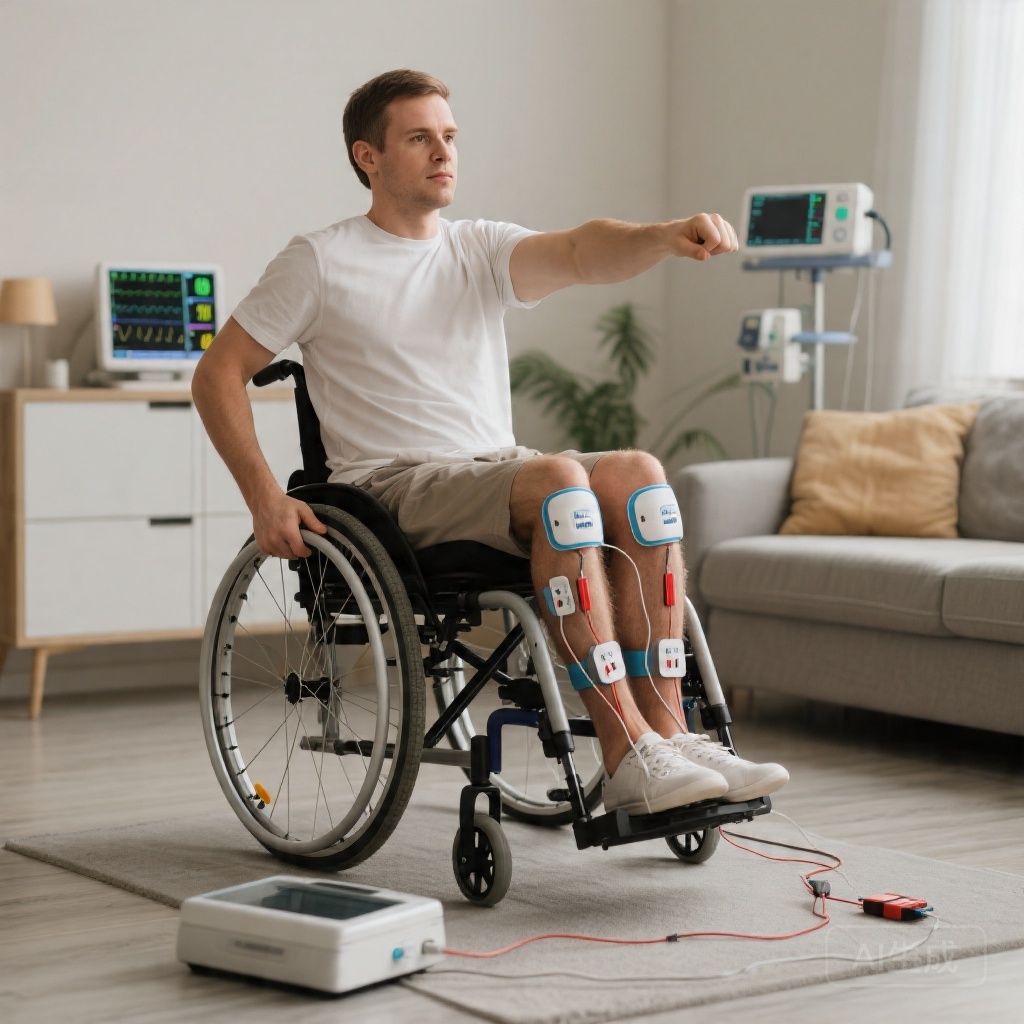
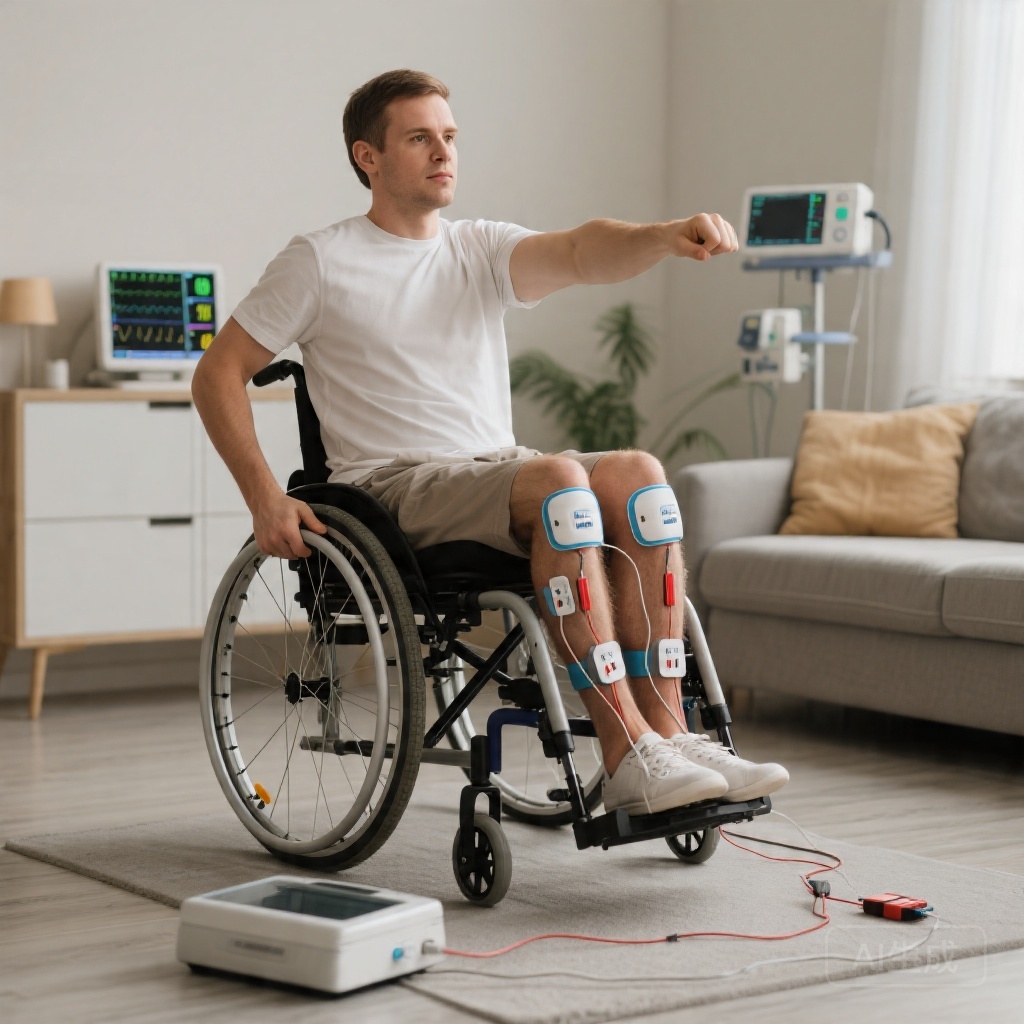
Participants were randomized in a 1:1 allocation to receive either the multimodality intervention or control treatment for a duration of 16 weeks. The active intervention consisted of home-based functional electrical stimulation-assisted leg cycling (FES-LC) combined with arm ergometry (AE), plus intramuscular testosterone undecanoate administered at protocol-defined intervals. The control group received identical exercise equipment and training with the addition of placebo injections. All participants, investigators, and outcome assessors remained blinded to treatment allocation throughout the study period.
The primary efficacy endpoint was change in aerobic capacity, measured as peak oxygen consumption (peak VO2) during arm ergometry cardiopulmonary exercise testing. Secondary endpoints included assessments of whole-body and regional lean mass via dual-energy X-ray absorptiometry, hemoglobin concentration, cardiometabolic biomarkers, and comprehensive safety monitoring including adverse event documentation.
Key Findings
Aerobic Capacity Outcomes
The primary analysis revealed that between-group differences in peak VO2 did not achieve statistical significance at the pre-specified alpha level. However, examination of within-group changes revealed a notable pattern. Participants in the multimodality group demonstrated an approximately 19% increase in peak VO2, corresponding to a mean change of 0.10 L/min (95% confidence interval: 0.02-0.18 L/min). In contrast, the control group showed a more modest approximately 6% improvement, with a mean change of 0.06 L/min (95% confidence interval: -0.01-0.13 L/min). While the confidence intervals overlapped and the between-group comparison was not statistically significant, the magnitude of improvement in the testosterone-augmented group suggests a potentially clinically meaningful trend that may have been underpowered to detect in this exploratory trial.
Body Composition
Significant between-group differences emerged in the secondary endpoint of lean mass accretion. The multimodality intervention group demonstrated substantially greater gains in whole-body lean mass compared to controls, with a difference of 1.84 kg (95% CI: 0.52-3.16 kg, P = 0.007). Lower extremity lean mass increased by 0.92 kg more in the testosterone group than in controls (95% CI: 0.38-1.45 kg, P = 0.001). These findings achieved statistical significance at conventional thresholds and represent clinically meaningful changes in muscle mass, particularly given the profound atrophy characteristic of chronic SCI.
Hematologic Parameters
An important secondary finding concerned the correction of anemia, a common complication in the SCI population. A greater proportion of participants in the multimodality group achieved resolution of anemia compared to controls, suggesting that the erythropoietic effects of testosterone provided meaningful benefit beyond what exercise alone could accomplish. This hematologic improvement carries potential implications for fatigue, functional capacity, and overall health outcomes in this vulnerable population.
Safety Profile
Adverse event rates were comparable between the testosterone-augmented and placebo groups throughout the 16-week intervention period. No unexpected safety signals emerged, and the combination of exercise therapy with testosterone replacement demonstrated an acceptable tolerability profile in this population of adults with chronic spinal cord injury. This safety finding is particularly relevant given historical concerns about the cardiovascular and hematologic effects of exogenous testosterone.
Expert Commentary
The findings from this trial represent an important contribution to the emerging literature on combined pharmacologic and exercise-based rehabilitation strategies for neurologic injury. While the primary outcome of aerobic capacity did not reach statistical significance, the robust within-group improvements observed in the multimodality arm warrant careful interpretation. The study may have been underpowered to detect modest between-group differences in peak VO2, and the 19% improvement within the active treatment arm compares favorably with historical data from exercise-only interventions in SCI populations, which typically report gains of 5-10%.
The magnitude of lean mass gains, exceeding 1.8 kg at the whole-body level and approaching 1 kg in the lower extremities, is particularly striking. These changes occur in a physiologic context where maintaining muscle mass is extraordinarily difficult due to the combination of flaccid paralysis, chronic inflammation, and anabolic resistance. The anabolic effect of testosterone appears to have shifted the balance toward net protein synthesis when combined with the mechanical stimulation of electrically evoked muscle contractions.
Several limitations merit acknowledgment. The relatively short 16-week duration may not capture the full trajectory of adaptations that might emerge with longer intervention periods. Additionally, the predominantly male sample limits generalizability, though this reflects the epidemiologic distribution of SCI. Future studies should explore dose-response relationships for testosterone and investigate whether benefits are sustained following intervention cessation.
The home-based nature of the exercise intervention enhances practical applicability and reduces burden on participants, who might otherwise face substantial barriers to facility-based rehabilitation. This pragmatic approach increases the potential for translation to real-world settings if efficacy is confirmed in larger trials.
Conclusion
This randomized controlled trial demonstrates that a home-based multimodality intervention combining functional electrical stimulation-assisted leg cycling, arm ergometry, and testosterone undecanoate is safe and associated with meaningful improvements in lean mass and hemoglobin levels in adults with chronic spinal cord injury. While aerobic capacity gains did not achieve statistical significance between groups, the observed within-group improvements suggest a potential augmentation effect of testosterone on exercise adaptations that merits further investigation.
These findings provide preliminary evidence supporting the concept of combined anabolic and mechanical stimulation for neuromuscular rehabilitation in neurologic injury. The significant gains in lower extremity lean mass, achieved despite chronic paralysis, represent a previously elusive therapeutic goal. Larger confirmatory trials with adequate statistical power for the primary aerobic endpoint, extended follow-up periods, and stratification by injury level and severity will be essential to establish the role of testosterone-augmented multimodal exercise in the clinical management of spinal cord injury.
Funding
This study was funded by the National Institutes of Health (NIH) and was registered on ClinicalTrials.gov (identifier: NCT02537969).