Study Background and Clinical Context
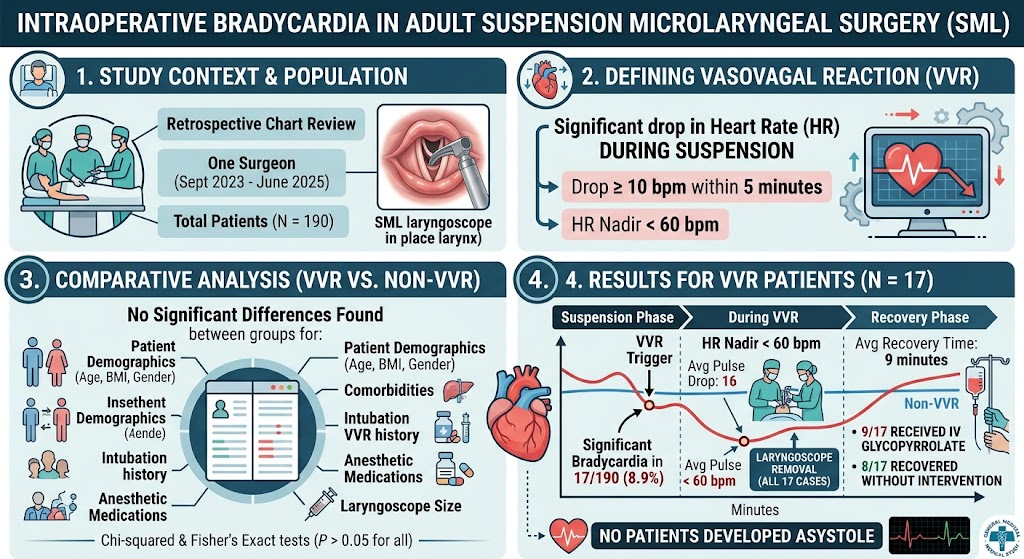
Suspension microlaryngoscopy (SML) is a commonly performed procedure in otolaryngology used to visualize and intervene in the larynx under general anesthesia. Despite its frequent use, intraoperative complications related to autonomic nervous system responses are not well characterized. Bradycardia during SML can be induced by vasovagal reflexes, potentially leading to significant morbidity if not promptly identified and managed. Understanding the incidence, risk factors, and effective treatment for vasovagal events (VVR) during SML is essential for improving patient safety and perioperative outcomes.