Highlights
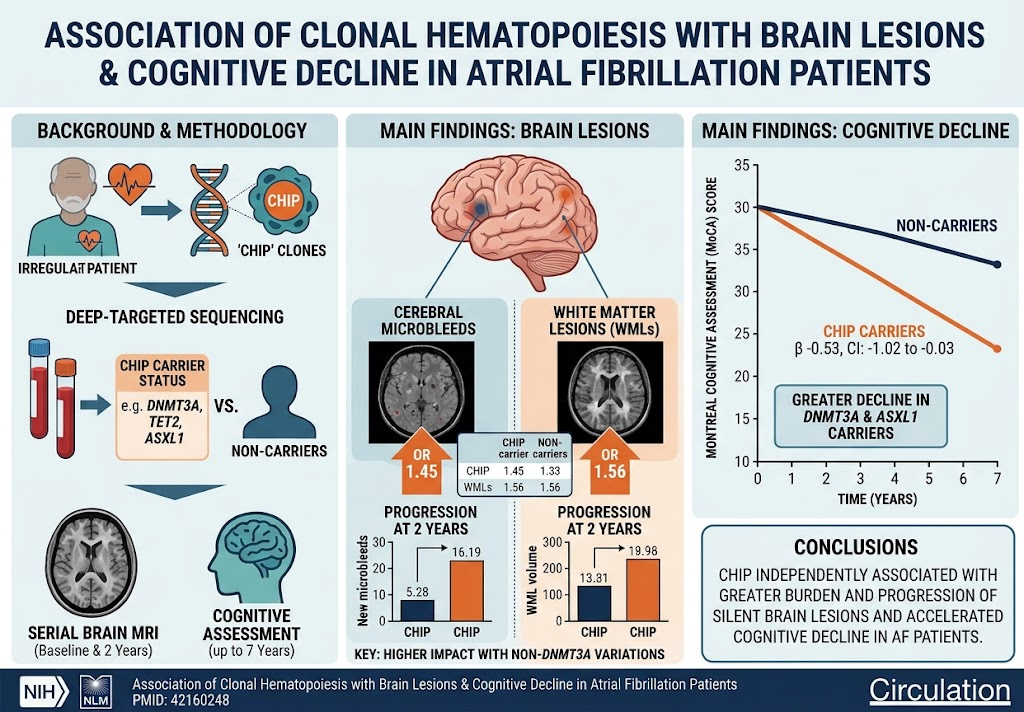
- Clonal hematopoiesis of indeterminate potential (CHIP) is prevalent in atrial fibrillation (AF) patients and strongly linked to silent brain lesions such as cerebral microbleeds and white matter lesions.
- Non-DNMT3A CHIP mutations, including TET2 and ASXL1, exhibit greater association with cerebrovascular silent lesions and cognitive decline, indicating mutation-specific pathogenic roles.
- Longitudinal data reveal that CHIP carriers experience accelerated progression of silent brain lesions and cognitive deterioration over 7 years, emphasizing CHIP as an independent neurovascular risk factor in AF.
- The findings corroborate and extend prior cardiovascular CHIP studies, suggesting potentially novel mechanisms linking hematopoietic clonal mutations, vascular pathology, and neurodegeneration in AF.
Specialty calculators
For clinical reference; use professional judgment.