Highlight
- Patients show limited baseline knowledge regarding ionizing radiation exposure in dental imaging.
- Cone-beam computed tomography (CBCT) is perceived by patients as more useful and trustworthy than conventional periapical radiography (PR) in endodontic diagnostics.
- CBCT significantly enhances patient confidence in treatment plans and trust in clinicians.
- Despite radiation concerns, most patients would consent to future CBCT imaging when clinically indicated.
Study Background
Endodontic diagnosis traditionally relies on two-dimensional imaging modalities like periapical radiography (PR), which have limitations in visualizing complex root canal anatomy and periapical pathology. Cone-beam computed tomography (CBCT), a three-dimensional imaging modality, provides superior anatomical detail that can influence treatment planning and outcomes. However, CBCT exposes patients to a higher dose of ionizing radiation compared to PR, raising concerns regarding radiation safety and patient awareness. Although clinical benefits of CBCT have been documented, less is known about patients’ perceptions of CBCT’s diagnostic value, the impact on their confidence in treatment, and their understanding of radiation risks. This knowledge gap hinders clinicians’ ability to optimize patient communication and informed consent in endodontic care.Study Design
This cross-sectional study conducted by Lee et al. enrolled 117 patients referred for endodontic assessment requiring diagnostic imaging. Each participant underwent evaluation using both conventional periapical radiography and CBCT. The study implemented a two-part questionnaire: initially administered after PR to evaluate baseline patient knowledge of ionizing radiation; followed by a second questionnaire post-CBCT to assess changes in patient perceptions, confidence in treatment plans, and acceptance of additional imaging. Descriptive statistics and chi-square tests were employed for data analysis, with a significance threshold set at P < .05.Key Findings
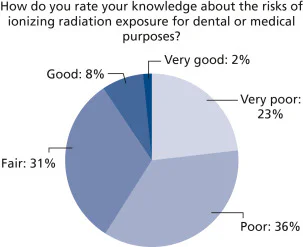
Analysis revealed a distinct lack of patient knowledge about radiation, with 59% self-reporting poor or very poor understanding after PR exposure. Despite this, diagnostic accuracy was prioritized by patients over concerns regarding radiation dose. After CBCT imaging, 79.5% of participants considered CBCT imaging more useful and helpful than PR for their diagnosis. Additionally, 60.7% reported increased confidence in their treatment plans, and 59.0% indicated heightened trust in their clinicians following CBCT imaging compared to PR alone. Notably, 89.7% expressed willingness to undergo CBCT in future dental care if clinically indicated. The statistically significant improvement in patient-reported outcomes with CBCT suggests that the enhanced anatomical visualization and diagnostic clarity afforded by three-dimensional imaging effectively translate into increased patient acceptance and reassurance. These results highlight an important patient-centered benefit of CBCT beyond objective diagnostic parameters.Expert Commentary
The findings align with growing evidence emphasizing the value of CBCT in complex endodontic cases for improved detection of root canal morphology, periapical lesions, and procedural complications. However, radiation exposure considerations remain paramount, especially in younger patients or repeated imaging scenarios. Clinicians bear the responsibility to balance diagnostic benefits against radiation risks. The revealed gap in patient radiation knowledge underscores the need for enhanced education during consent discussions, ensuring patients comprehend both benefits and risks of CBCT. Personalized communication strategies, including visual aids and decision-support tools, may facilitate this process. Limitations include the cross-sectional design and reliance on self-reported questionnaires, which may be subject to response bias. Longitudinal studies evaluating the lasting impact of CBCT on treatment outcomes and patient satisfaction are warranted.Conclusion
This study demonstrates that CBCT is highly valued by patients for its diagnostic clarity in endodontic care and substantially improves their confidence in treatment planning and trust in clinicians. Despite limited patient knowledge of radiation, the perceived diagnostic advantage of CBCT outweighs radiation concerns, emphasizing the modality’s role in modern endodontics. For optimal patient-centered care, clinicians should proactively address radiation risks and benefits during the consent process. Improved education on ionizing radiation will empower patients to make informed decisions regarding their diagnostic imaging options, ultimately enhancing shared decision-making and treatment adherence.Funding and Clinical Trials Registration
The original article did not report funding sources or clinical trials registration.References
1. Lee JJM, Al-Nuaimi N, Patel S. Cone-beam computed tomography in endodontics: patient perceptions, outcomes, and radiation awareness: A cross-sectional study. J Am Dent Assoc. 2026 Nov 13. PMID: 43023956. 2. Patel S, Durack C, Abella F, et al. Cone beam computed tomography in Endodontics–a review. Int Endod J. 2015;48(1):3-15. 3. European Society of Endodontology. Cone Beam Computed Tomography in Endodontics: Position Statement. Int Endod J. 2014;47(6):389-391. 4. Ludlow JB, Ivanovic M. Comparative dosimetry of dental CBCT devices and 64-slice CT for oral and maxillofacial radiology. Oral Surg Oral Med Oral Pathol Oral Radiol Endod. 2008;106(1):106-114.Specialty calculators
For clinical reference; use professional judgment.