Highlight
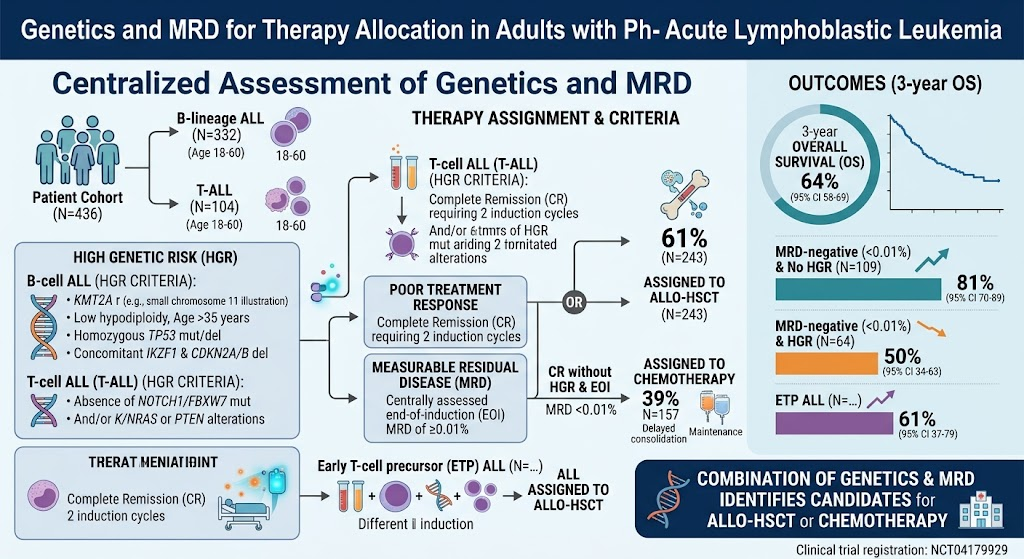
This study presents a robust approach to therapy allocation in adults with Philadelphia chromosome-negative acute lymphoblastic leukemia (Ph- ALL) by integrating genetic risk profiling with centrally assessed measurable residual disease (MRD). Key highlights include the identification of high genetic risk (HGR) markers specific to B-cell and T-cell ALL subtypes, the utilization of MRD at end-of-induction to guide treatment intensity, and the demonstration that this combined strategy accurately distinguishes candidates for allogeneic hematopoietic stem cell transplantation (allo-HSCT) versus chemotherapy alone, resulting in improved survival outcomes.