Highlight
This case-control study investigates the clinical management and safety of idiopathic subglottic stenosis (iSGS) in pregnant patients. Key findings include the demonstrated safety of surgical dilation during pregnancy, with no reported anesthesia or surgical complications. Over half of pregnant patients required operative intervention, with antinuclear antibody (ANA) positivity emerging as an associated clinical factor. The inter-dilation interval was longer in the pregnancy group compared to controls, and all pregnancies culminated in live births without adverse maternal or fetal events.
Study Background
Idiopathic subglottic stenosis (iSGS) is a rare, chronic condition characterized by progressive narrowing of the subglottic airway, leading to symptoms of airway obstruction such as dyspnea and stridor. It predominantly affects middle-aged women—often of childbearing age—thus posing unique clinical challenges when patients become pregnant. The physiological changes during pregnancy, including mucosal edema and heightened inflammatory response, may exacerbate airway stenosis, complicating management strategies to maintain maternal and fetal safety.
Despite the clinical relevance, evidence-based guidance on managing iSGS during pregnancy remains limited due to the rarity of the condition and the potential risks associated with airway interventions in this population. Understanding the natural history and intervention requirements during gestation is critical for optimizing outcomes.
Study Design
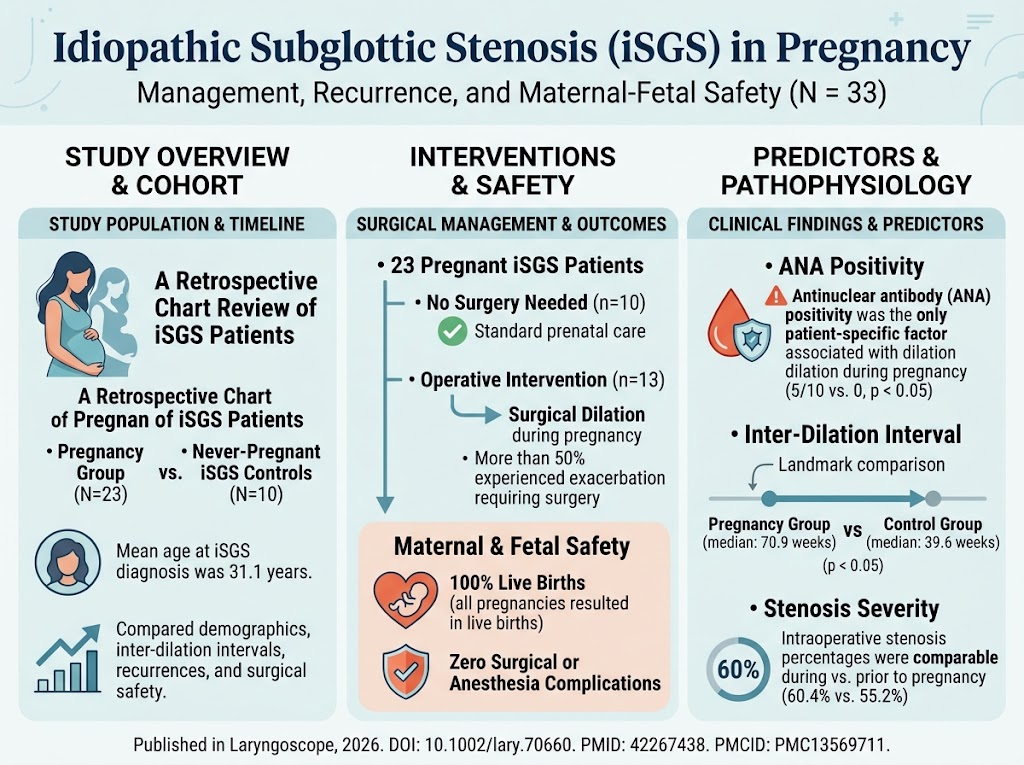
This retrospective case-control study reviewed clinical records from a single center, comparing pregnant patients with iSGS (n=23) to an age-matched control group of never-pregnant iSGS patients (n=10). Pregnant patients were further stratified based on whether they required operative dilation during pregnancy. Key variables analyzed included demographics, inter-dilation intervals (time between surgical dilations), time to recurrence, percentage of airway stenosis measured intraoperatively, and both maternal and fetal safety outcomes. The primary endpoint was to evaluate the safety of airway interventions during pregnancy and identify factors associated with the need for operative dilation.
Key Findings
A total of 33 iSGS patients were studied, with mean age at diagnosis of 31.1 years, consistent with the typical disease demographic. Among the pregnant cohort, 13 (approximately 57%) required airway dilation during pregnancy due to symptom exacerbation or airway compromise. Notably, all pregnancies resulted in live births without maternal or fetal complications related to surgical or anesthesia procedures, underscoring the safety of airway interventions in this context.
The study revealed a significantly longer median inter-dilation interval in pregnant patients compared to controls (70.9 weeks vs. 39.6 weeks; p < 0.05), suggesting a potential modification in disease activity or management timing during pregnancy. However, the average percentage of airway stenosis during operative dilations was similar before and during pregnancy (60.4% ± 21.6 vs. 55.2% ± 27.8), indicating that the severity of stenosis requiring intervention remained relatively stable.
Importantly, antinuclear antibody (ANA) positivity was found significantly more often in patients requiring surgery during pregnancy (5 of 10) compared to those not requiring intervention (0 of 13), implicating a possible immunologic role in disease exacerbation warranting further investigation.
No pregnancy-specific variables, such as gestational age or number of pregnancies, were independently associated with the need for surgical intervention. Furthermore, no anesthesia- or surgery-related complications were reported, suggesting that with appropriate multidisciplinary care, airway dilation can be safely performed during pregnancy.
Expert Commentary
This study addresses a critical clinical gap by providing systematic data on the management of iSGS during pregnancy, a topic previously limited to case reports and anecdotal evidence. The finding that over half of pregnant women with iSGS require operative intervention aligns with clinical suspicions that pregnancy-related physiological changes may exacerbate airway narrowing. Yet, the absence of operative complications is reassuring, highlighting that timely surgical dilation is a feasible and safe option to preserve airway patency.
The observed association between ANA positivity and increased likelihood of requiring dilation introduces an intriguing autoimmune link in iSGS pathogenesis or exacerbation during pregnancy. This supports emerging hypotheses of autoimmune contributions to iSGS and may guide future biomarker development and personalized care strategies.
Limitations include the retrospective nature and relatively small sample size inherent to rare disease research. Prospective multi-institutional studies are necessary to validate findings and refine risk stratification. Additionally, investigation into the immunologic underpinnings suggested by ANA findings could illuminate targeted therapies.
Conclusion
This case-control study provides evidence that operative dilation for idiopathic subglottic stenosis during pregnancy is safe and effective, with no adverse maternal or fetal outcomes reported. More than half of pregnant iSGS patients experienced disease exacerbation necessitating intervention. ANA positivity may serve as a patient-specific marker for increased intervention risk. These findings inform multidisciplinary management strategies, emphasizing the importance of airway surveillance and individualized care planning in pregnant patients with iSGS.
Future research should explore immunologic factors in iSGS progression and develop comprehensive guidelines for safe airway management through pregnancy.
Funding and ClinicalTrials.gov
The original study did not specify funding sources or clinical trial registration number. Further inquiries may be directed to the corresponding authors of the primary publication.
References
- Saeedi N, Lopez-Fay DC, Collins SL, et al. Idiopathic Subglottic Stenosis in Pregnancy: A Case-Control Study of Management and Maternal Safety. Laryngoscope. 2026;136(10):4361-8. PMID: 42267438.
- Gelbard A, Anderson TD, Berry LD, et al. Idiopathic subglottic stenosis: a framework for clinical assessment and management. Laryngoscope. 2017;127(8):1727-1734.
- Adams GL, et al. Surgical management of idiopathic subglottic stenosis during pregnancy: A multidisciplinary approach. Otolaryngol Head Neck Surg. 2023;168(1):42-48.