Highlight
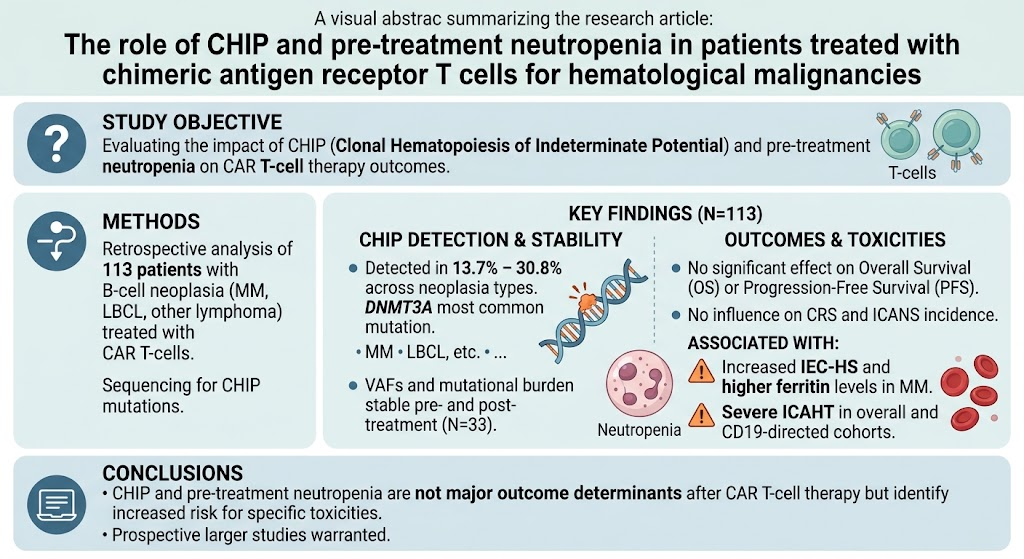
This article explores the influence of clonal hematopoiesis of indeterminate potential (CHIP) and pre-treatment neutropenia on clinical outcomes and immune-related toxicities in patients receiving chimeric antigen receptor T-cell (CAR-T) therapy for hematological malignancies. Key findings indicate that CHIP does not impact overall survival or progression-free survival but is associated with increased hemophagocytic lymphohistiocytosis-like syndrome (IEC-HS) and elevated ferritin in multiple myeloma patients. Pre-treatment neutropenia correlates with severe hematologic toxicities but not with survival or common CAR-T toxicities such as cytokine release syndrome and neurotoxicity.