Introduction
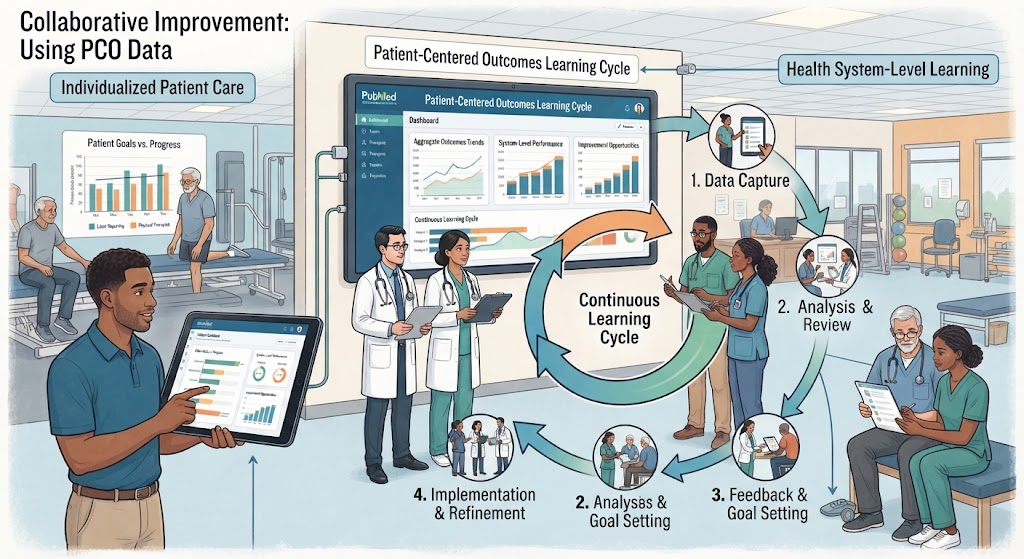
Patient-centered outcomes (PCO) data have become an essential component in advancing healthcare quality by enhancing individual patient care while simultaneously facilitating systemic improvements. In rehabilitation medicine, where patient needs and responses to therapy vary widely, leveraging these data effectively can substantially optimize functional outcomes and quality of life. This article provides a comprehensive overview of how PCO data can support a continuous, reciprocal learning cycle in rehabilitation care, highlighting key stakeholders, practical challenges, and potential solutions to maximize the impact of these data.Background and Clinical Context
Rehabilitation services address disabilities resulting from a range of neurological, musculoskeletal, and chronic conditions. Despite advances in rehab interventions, significant variability persists in patient outcomes and care quality. This variability reflects complex patient factors and systemic fragmentation, including siloed workflows and inconsistent communication among multidisciplinary team members. Integrating PCO data, which includes patient-reported knowledge such as functional status and quality of life, provides a direct measure of treatment impact from the patient’s perspective. Such data are critical for tailoring individual rehabilitation plans and informing broader quality improvement initiatives.Patient-Centered Outcomes Data: Definition and Utility
PCO data refer to health outcomes directly reported by patients, capturing dimensions like symptom burden, functional abilities, and psychosocial well-being. These data complement clinical assessments and provide unique insights into recovery trajectories and patient priorities. In rehabilitation, PCO data can inform:- Individualized care decision-making by tracking patient progress and response to therapy
- Health system learning through aggregation and analysis to identify best practices and gaps in care
- Enhanced communication among providers by aligning goals and expectations
- Patient engagement and self-management by providing feedback and empowering shared decision-making
Implementing Reciprocal Learning Using PCO Data
Reciprocal learning refers to a continuous, bidirectional exchange of information between patients, clinicians, and health systems aimed at refining care processes and outcomes. To operationalize this in rehabilitation, PCO data must be systematically collected, integrated, and transparently shared across stakeholders. Key components include:- Establishing clear objectives for data use at individual and aggregate levels
- Ensuring standardized, validated measurement tools relevant to rehabilitation domains
- Utilizing interoperable health information systems facilitating real-time data access
- Promoting collaborative interpretation of data within multidisciplinary teams
- Engaging patients as active partners in data collection and care planning
Key Stakeholders and Their Roles
Optimizing the use of PCO data requires coordinated involvement of multiple stakeholders:- Patients: Central to providing authentic outcomes data and guiding individualized care preferences.
- Healthcare providers: Use data to tailor treatments, monitor outcomes, and communicate effectively with patients and team members.
- Health system administrators: Analyze aggregated data to identify quality improvement targets and allocate resources.
- Researchers and policymakers: Leverage data to inform evidence-based guidelines and policy decisions.
- Information technology specialists: Ensure robust data platforms enable seamless integration and privacy compliance.
Challenges to Effective Use of PCO Data in Rehabilitation
Several barriers hamper optimal utilization of PCO data:- Fragmented workflows: Disconnected data collection systems create silos, limiting accessibility and sharing.
- Communication gaps: Inconsistent dialogue among team members about the purpose and interpretation of PCO data may reduce utility.
- Data burden: Excessive or poorly timed data collection may overwhelm patients and clinicians.
- Lack of standardization: Variable instruments and outcome measures hinder comparability.
- Privacy and ethical concerns: Ensuring patient confidentiality while sharing data broadly requires vigilance.
Potential Solutions and Best Practices
Addressing these challenges involves multi-level strategies:- Integrated platforms: Implement interoperable electronic systems that unify PCO and clinical data.
- Team education and alignment: Foster shared understanding of PCO data goals and analysis through regular meetings and training.
- Selecting relevant measures: Choose validated instruments aligned with patient and clinical priorities to streamline data collection.
- Patient engagement: Involve patients early to tailor data collection to their capacity and preferences.
- Governance frameworks: Develop policies ensuring ethical use, privacy protection, and data stewardship.
Case Example: Enhancing Stroke Rehabilitation Outcomes
Consider a rehabilitation unit implementing standardized PCO measures, such as the Stroke Impact Scale, collected routinely at key time points. Data are entered into a centralized platform accessible by therapists, physicians, and patients. Team meetings review aggregated and individual patient data to identify responders and non-responders early, adapt therapy protocols, and engage patients in goal setting. Over time, patterns in aggregated data reveal areas for practice improvement, such as the need for targeted cognitive rehabilitation. This real-world application exemplifies reciprocal learning enhancing both individual care and systemic quality.Conclusion
Patient-centered outcomes data are invaluable for transforming rehabilitation care through a reciprocal learning cycle that bridges individual patient management and broader health system improvement. Achieving this requires commitment to systematic data collection, transparent communication, and stakeholder engagement. Overcoming challenges necessitates integrated technology, education, and governance to realize the full potential of PCO data in optimizing functional recovery and patient quality of life. Future research should focus on refining outcome measures, enhancing data interoperability, and evaluating long-term impacts on care delivery.Funding and ClinicalTrials.gov
The referenced publication does not specify funding details or a clinical trial registration number. Readers are encouraged to access the original article for further administrative information.References
1. Beneciuk JM, Stern BZ, Rassu FS, et al. Using Patient-Centered Outcomes Data to Support Reciprocal Learning and Improve Rehabilitation Care. Arch Phys Med Rehabil. 2026 Oct 15. PMID: 42880654.2. Amtmann D, Cook KF, Jensen MP, et al. Development of a PROMIS item bank to measure pain interference. Pain. 2010;150(1):173-182.
3. Cieza A, Brockow T, Ewert T, et al. Linking health-status measurements to the international classification of functioning, disability and health. J Rehabil Med. 2002;34(5):205-210.
4. Greenhalgh J, Long AF, Flynn R. The use of patient reported outcome measures in routine clinical practice: lack of impact or lack of theory? Soc Sci Med. 2005;60(4):833-843.
5. Porter ME. What is value in health care? N Engl J Med. 2010;363(26):2477-2481.
—