Highlight
1. Use of GLP-1 receptor agonists (GLP-1 RAs) is rising among women of childbearing age, often necessitating contraception during treatment.
2. Limited observational data do not demonstrate a clear increase in adverse pregnancy outcomes following periconceptional GLP-1 RA exposure.
3. Evidence gaps exist regarding safety during pregnancy due to small study sizes and observational designs.
4. Individualized counseling is recommended for women with inadvertent exposure until more definitive data are available.
Study Background
Glucagon-like peptide-1 receptor agonists (GLP-1 RAs) have revolutionized the management of type 2 diabetes mellitus and obesity by improving glycemic control and promoting weight loss. Their use has expanded rapidly, including among women of reproductive age, often before or during attempts to conceive. Effective contraception is advised during GLP-1 RA therapy due to unknown safety profiles in pregnancy. However, inadvertent periconceptional and early pregnancy exposures are increasingly encountered in clinical practice. Despite the rising use of GLP-1 RAs in this population, data regarding their safety and impact on pregnancy outcomes remain sparse. This creates a clinical challenge for healthcare providers tasked with counseling women who have had exposure during these critical periods.
Study Design
This article presents a comprehensive narrative review of existing literature concerning GLP-1 RA exposure from preconception through pregnancy and postpartum periods. A non-systematic search of PubMed, Google Scholar, MEDLINE, and Embase was performed, focussing on original research articles, systematic reviews, and meta-analyses published in English from inception to 2026. Studies addressing preclinical safety, maternal and neonatal outcomes including congenital anomalies, hypertensive disorders, gestational diabetes, preterm birth, fetal growth abnormalities, stillbirth, and pharmacokinetics were included. The intent was to synthesize available evidence to guide clinical counseling and identify research gaps.
Key Findings
Preclinical Safety Data
Animal studies investigating GLP-1 RAs have provided important insights but remain insufficient for definitive conclusions. Some preclinical models indicated potential risks, such as developmental toxicity with high doses, though clinical relevance is uncertain given differing exposure levels compared to humans. Nevertheless, these studies inform precautionary approaches to human use during pregnancy.
Impact on Fertility and Metabolic Parameters
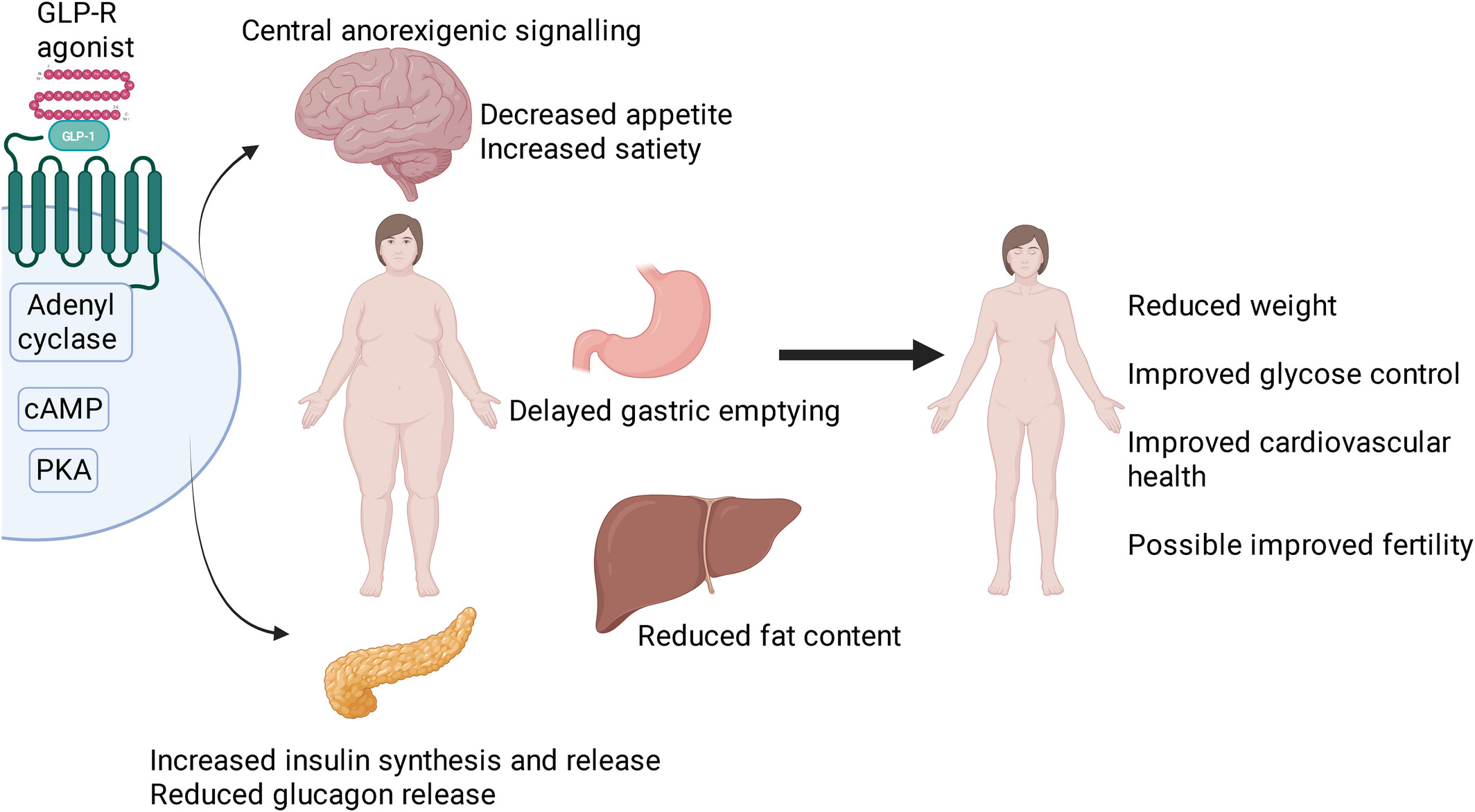
GLP-1 RAs improve weight management and glucose metabolism and may positively influence fertility outcomes, especially in women with obesity and polycystic ovary syndrome (PCOS). Improved endocrine profiles could theoretically enhance ovulation and pregnancy rates, suggesting a beneficial role preconceptionally. However, direct evidence remains limited.
Human Pregnancy Outcomes
Observational human data collected to date have not identified a clear safety signal for congenital malformations or major adverse perinatal outcomes following inadvertent periconceptional GLP-1 RA exposure. Key points include:
- Congenital Anomalies: No consistent evidence of increased risk; however, numbers studied are small.
- Hypertensive Disorders of Pregnancy: No clear association observed, though metabolic improvements mediated by GLP-1 RAs could theoretically reduce some risks.
- Gestational Diabetes Mellitus (GDM): GLP-1 RA treatment prior to conception might influence glycemic control, but their safety and efficacy in established pregnancy remain uncertain.
- Preterm Birth and Fetal Growth: No definitive link to adverse outcomes was reported, but data limitations persist.
- Stillbirth: Existing evidence does not indicate increased risk but remains inadequate to exclude it definitively.
Pharmacokinetics and Drug Washout
The pharmacokinetics of GLP-1 RAs vary by molecular structure and administration route; most have relatively short half-lives allowing for potential washout before pregnancy establishment. However, timing of last dose relative to conception is critical and not uniformly documented in studies, complicating risk assessments.
Limitations of the Evidence Base
Most data derive from small observational cohorts with potential for confounding, selection bias, and incomplete ascertainment of exposures or outcomes. The lack of randomized controlled trials and systematic registries hampers robust safety conclusions. Consequently, evidence gaps remain concerning long-term neurodevelopmental outcomes and rare adverse events.
Expert Commentary
While the expanding use of GLP-1 RAs among women of childbearing potential is driven by their metabolic benefits, the unknown pregnancy safety profile necessitates caution. Leading professional societies currently recommend discontinuation of GLP-1 RAs when pregnancy is planned or confirmed, and effective contraception for those not planning pregnancy. Emerging real-world data and pharmacovigilance efforts will be essential to inform future guidance. Clinicians should individualize discussions about inadvertent exposure, balancing theoretical risks and current evidence, and consider multidisciplinary support including endocrinology, maternal-fetal medicine, and pharmacology.
Conclusion
In summary, available observational data do not demonstrate a clear increased risk of adverse pregnancy or perinatal outcomes from inadvertent periconceptional exposure to GLP-1 receptor agonists. However, the evidence is preliminary, limited by methodological constraints, and insufficient to definitively exclude clinically significant risks. Until more robust prospective data and consistent pregnancy exposure reporting emerge, individualized counseling remains paramount. Women should be reassured that while definitive safety data are lacking, exposure is not established to be harmful. Clinicians should emphasize contraception during therapy and carefully weigh risks and benefits when managing pregnancies complicated by GLP-1 RA exposure.
Funding and Clinical Trials
No specific funding disclosures are reported for this review. Ongoing clinical trials and registries that include pregnancy outcome monitoring related to GLP-1 RA exposure should be closely followed.
References
1. Lau KGY, Chopra A, Mullins E, Agha-Jaffar R, Tan T, Sykes L, Yu CKH. Glucagon-Like Peptide-1 Receptor Agonists in Pregnancy: Periconception Exposure and Perinatal Outcomes. BJOG : an international journal of obstetrics and gynaecology. 2026 Oct 4; PMID: 42830218.
2. American Diabetes Association. Management of Diabetes in Pregnancy: Standards of Medical Care in Diabetes—2024. Diabetes Care. 2024;47(Suppl 1):S200-S210.
3. European Society of Endocrinology Clinical Practice Guidelines for the Management of Reproductive Disorders in Women with Obesity or Diabetes. Endocrine Reviews. 2023;44(6):987–1012.
4. Buse JB, et al. A review of the literature on GLP-1 receptor agonists and pregnancy outcomes. Diabetes Obes Metab. 2022;24(10):1802-1815.
5. Polyzos SA, et al. Safety of GLP-1 receptor agonists during pregnancy: a systematic review and meta-analysis. J Clin Endocrinol Metab. 2025;110(2):e600–e612.