Highlight
- Functional inspiratory muscle training (FIMT) combined with resistance exercise significantly improves functional capacity in individuals with obesity.
- Both FIMT and combined aerobic and resistance exercise enhanced cardiometabolic markers, body composition, and peripheral muscle strength.
- FIMT provided superior improvements in ventilatory responses and respiratory muscle performance compared to traditional aerobic and resistance exercise.
- This study supports FIMT as a feasible and beneficial addition to exercise-based obesity management programs.
Study Background
Obesity is a prevalent chronic condition linked to increased risk of cardiovascular, metabolic, and respiratory complications. Reduced functional capacity and impaired respiratory muscle performance are common in individuals with obesity, limiting exercise tolerance and quality of life. Exercise interventions, including aerobic and resistance training, have established benefits in improving cardiometabolic parameters and functional fitness. However, targeted therapies focusing on respiratory muscle function, such as inspiratory muscle training (IMT), remain underexplored in this population. Integrating functional inspiratory muscle training (FIMT) into exercise regimens could potentially augment respiratory efficiency and overall exercise capacity, thereby improving patient outcomes in obesity rehabilitation.Study Design
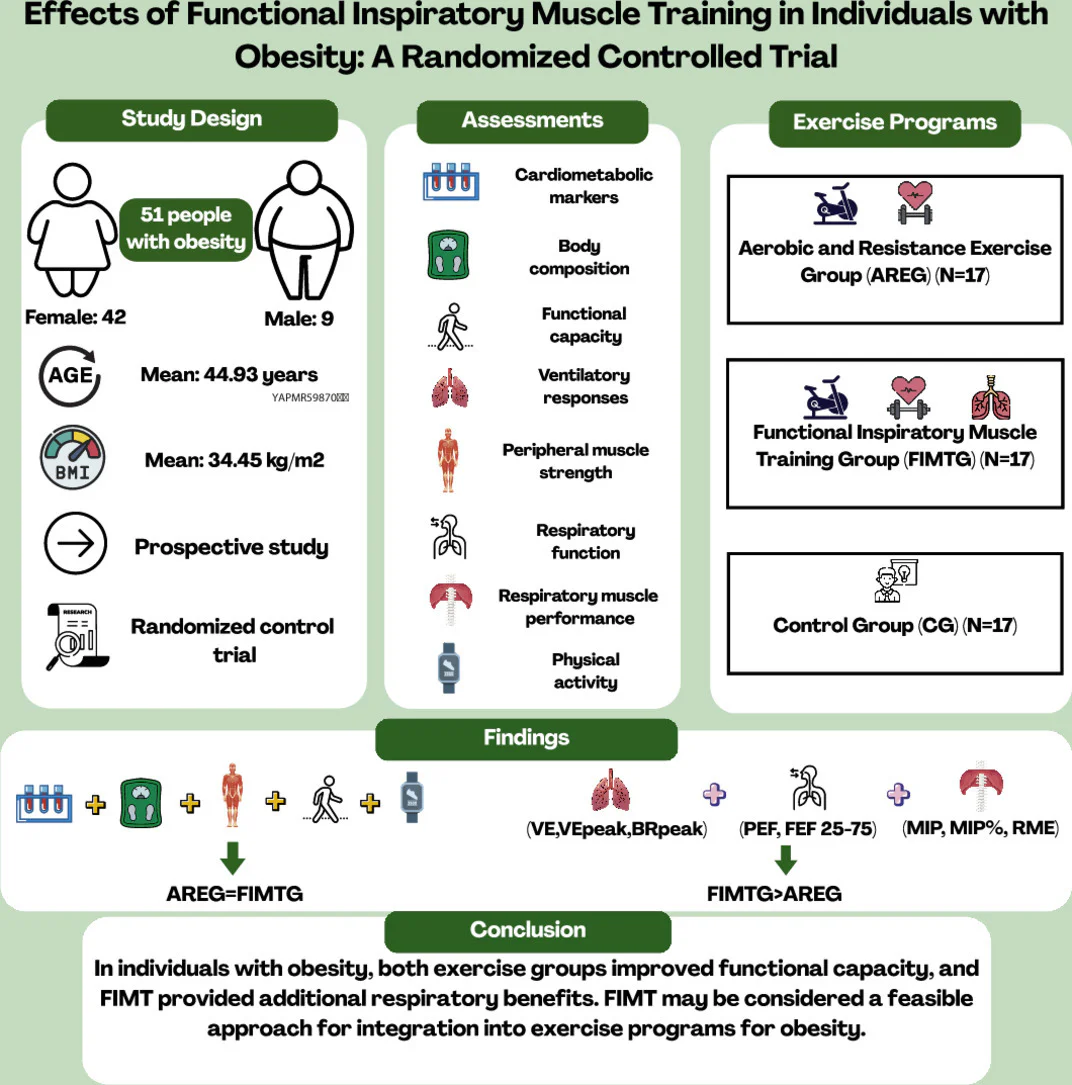
This single-blind, prospective, randomized controlled trial was conducted at a university-based rehabilitation unit. The study enrolled 51 adults with obesity (mean age 44.93 ± 9.73 years, mean BMI 34.45 ± 3.02 kg/m²). Participants were randomly assigned to one of three groups:- Aerobic and Resistance Exercise Group (AREG): Underwent a combined aerobic and resistance exercise program.
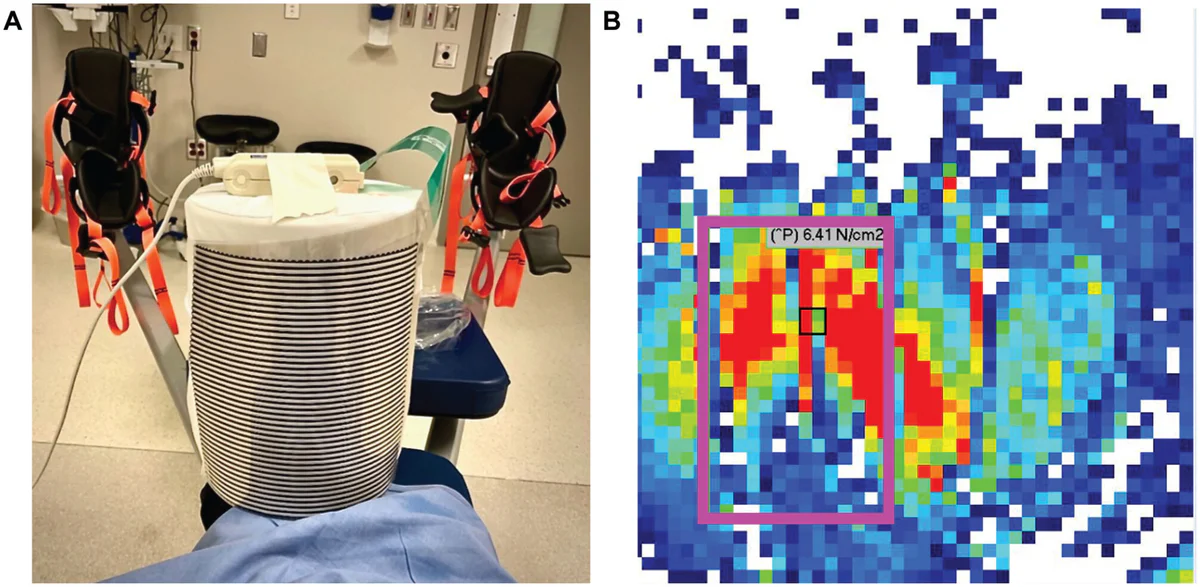
- Functional Inspiratory Muscle Training Group (FIMTG): Participated in resistance exercise combined with functional inspiratory muscle training, integrating IMT during aerobic sessions.
- Control Group (CG): Received no exercise intervention.
Key Findings
The study demonstrated that both exercise groups significantly improved functional capacity compared to control, without a significant difference between FIMT and AREG groups. Specifically, the mean between-group differences in 6MWD were:- 57.33 meters favoring AREG over CG (95% CI: 27.98 to 86.64; p < 0.001).
- 64.20 meters favoring FIMTG over CG (95% CI: 34.84 to 93.55; p < 0.001).
- No significant difference between FIMTG and AREG (6.87 m; 95% CI: -22.48 to 36.21).
- Improved minute ventilation (VE) and peak ventilation (VEpeak) indicating enhanced ventilatory capacity.
- Higher peak breathing reserve (BRpeak), suggesting increased ventilatory efficiency during exercise.
- Enhanced peak expiratory flow (PEF) and forced expiratory flow at 25-75% (FEF25-75%), reflecting improved airway function.
- Superior inspiratory muscle performance, as measured by maximal inspiratory pressures.
Expert Commentary
This trial contributes important evidence regarding the integration of respiratory muscle training within obesity rehabilitation frameworks. While aerobic and resistance exercises remain pillars of obesity management, the addition of FIMT appears to selectively enhance ventilatory parameters. This effect likely derives from targeted strengthening of inspiratory muscles, which could reduce dyspnea and improve exercise endurance. However, the absence of superior functional capacity gains compared to traditional exercise suggests that FIMT should complement rather than replace established modalities. It remains to be seen whether longer-term or varied dosing of FIMT could yield additive benefits on global functional outcomes. Further studies with larger samples and exploration of mechanistic correlates such as respiratory muscle fiber adaptations may elucidate the full potential of FIMT. Clinicians should consider patient-specific factors including respiratory symptoms, motivation, and access to training devices when implementing FIMT protocols.Conclusion
Functional inspiratory muscle training integrated with resistance exercise is a feasible and efficacious intervention for individuals with obesity, improving functional capacity comparably to combined aerobic and resistance exercise. Additionally, FIMT offers distinct advantages in ventilatory capacity and inspiratory muscle strength, which are critical for respiratory health and exercise tolerance. These findings support the incorporation of FIMT into multidisciplinary exercise programs aiming to optimize cardiometabolic and respiratory outcomes in obesity care.Funding and Clinical Trial Registration
The study’s funding sources were not disclosed in the abstract. Details regarding clinical trial registration or ethical approval are not provided but are presumably available in the full publication.References
1. Yigit S, Oral A, Akinci B. Effects of Functional Inspiratory Muscle Training in Individuals with Obesity: A Randomized Controlled Trial. Archives of physical medicine and rehabilitation. 2026; PMID: 42982319. 2. McConnell AK, Romer LM. Respiratory muscle training in healthy humans: resolving the controversy. Int J Sports Med. 2004;25(4):284-93. 3. Gething AD, et al. Exercise capacity and ventilatory response in obese adults. Chest. 2014;146(4):992-999. 4. American Thoracic Society/European Respiratory Society Statement on Respiratory Muscle Testing. Am J Respir Crit Care Med. 2002;166(4):518-624. 5. Guo D, et al. Effects of inspiratory muscle training combined with pulmonary rehabilitation in obese COPD patients: A randomized trial. Respir Med. 2020;160:105867. 6. World Health Organization. Obesity and Overweight Fact Sheet. 2021. Available at: https://www.who.int/news-room/fact-sheets/detail/obesity-and-overweight The reader is encouraged to consult the full paper for comprehensive methodology and detailed data.Specialty calculators
For clinical reference; use professional judgment.