Highlight
- Pudendal nerve palsy (PNP) is a common but underrecognized complication following hip arthroscopy with use of a perineal post.
- Postoperative symptoms include perineal numbness, paresthesia, pain, and urogenital or sexual dysfunction affecting males and females.
- Higher traction force and longer traction duration during surgery significantly increase the risk of PNP.
- While most PNP symptoms resolve by 6 months to 1 year, persistent symptoms correlate with poorer hip-specific patient outcomes.
Study Background
Hip arthroscopy (HA) is widely utilized to treat femoroacetabular impingement and other intra-articular hip pathologies. The procedure often involves supine positioning on a traction table with a perineal post to distract the hip joint. However, traction applied through a perineal post may compress the pudendal nerve, a critical nerve responsible for sensory innervation and motor control of the perineum and genitalia. Despite increasing HA prevalence, pudendal nerve palsy (PNP) remains poorly characterized and likely underreported. This complication can cause sensory disturbances such as perineal numbness, painful paresthesias, and sexual dysfunction including erectile issues in men and decreased lubrication in women. These symptoms may affect quality of life, sexual health, and patient satisfaction with surgery. Therefore, a detailed understanding of PNP incidence, causative factors, symptom duration, and impact on outcomes is important to guide preventive measures and patient counseling.Study Design
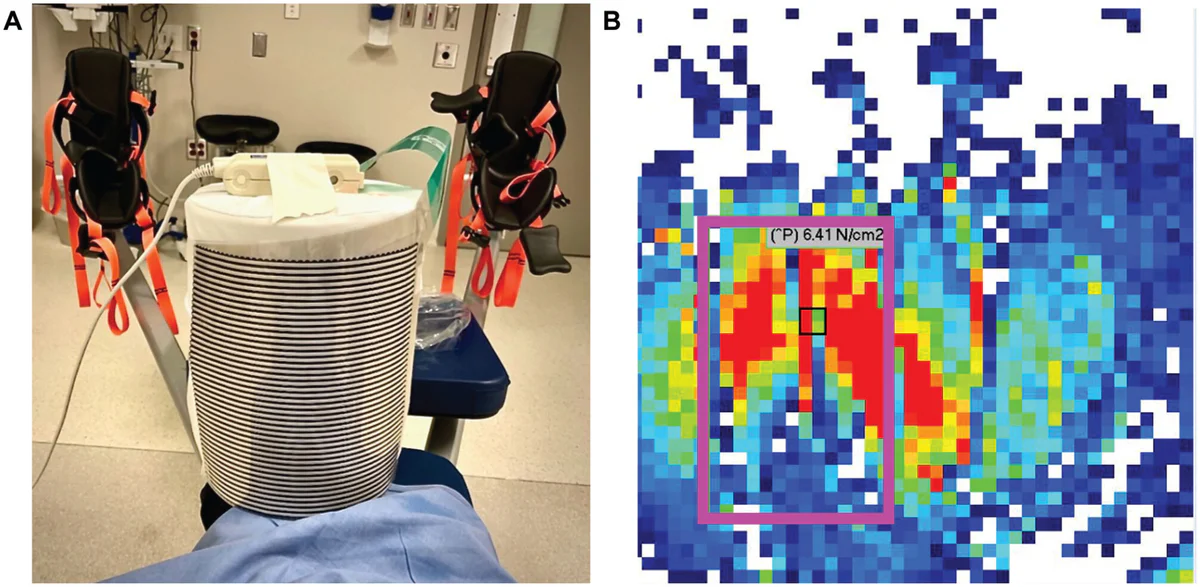
This Level 3 evidence cohort study enrolled 93 consecutive patients undergoing primary unilateral hip arthroscopy in the supine position using a perineal post. Patients with preexisting pudendal nerve symptoms or sexual dysfunction were excluded to isolate postoperative effects. Objective intraoperative data were collected using a force sensor applied to the perineal post to measure traction force and duration accurately. Patients completed confidential, validated sexual function questionnaires and a specific PNP screening questionnaire at multiple postoperative time points: 2 weeks, 6 weeks, 3 months, 6 months, and 12 months. Hip function was evaluated using the International Hip Outcome Tool-33 (iHOT-33) preoperatively and at 6 and 12 months postoperatively. This design enabled correlation of PNP symptom development and longevity with intraoperative traction parameters as well as functional outcomes.Key Findings
The mean age of enrolled patients was 36.4 years with a slight male predominance (55%). The average traction duration was 80 minutes (range approximately 60–100 minutes). Remarkably, 83% of patients experienced some symptoms indicative of pudendal nerve irritation in the early postoperative period. The most frequent symptoms were perineal numbness in 75%, paresthesia in 26%, and pain in 18% of patients. Urogenital or sexual dysfunction occurred in 39% overall, including erectile dysfunction in 22% of men and reduced sexual lubrication in 19% of women. Symptom persistence decreased over time: 26% still reported PNP symptoms at 3 months, 14% at 6 months, with complete resolution by 12 months postoperatively. Importantly, patients with PNP had significantly higher mean traction forces by 18.1 kg and longer traction duration by 15.4 minutes compared to those without PNP. Logistic regression showed that each additional 10 minutes of traction increased odds of PNP by 59% (OR 1.59, 95% CI 1.12–2.37). Patients with PNP symptoms persisting beyond 6 weeks demonstrated significantly worse hip-related quality of life, evidenced by lower iHOT-33 scores at 6 months (mean difference -14.4, 95% CI -24.2 to -4.5), indicating a clinically relevant impact on functional recovery.Expert Commentary
This study offers robust quantitative evidence linking traction parameters with postoperative pudendal nerve complications after hip arthroscopy. The high prevalence of transient PNP symptoms underscores the nerve’s vulnerability to perineal compression from the post. Biomechanically, the pudendal nerve’s anatomic course around the ischial spine and through the Alcock’s canal renders it susceptible to traction-induced ischemia and compression neuropathy. While symptoms generally improve or resolve over time, the substantial proportion of patients experiencing sexual dysfunction is concerning, warranting vigilant preoperative discussion and informed consent. The correlation between traction duration and force with PNP supports cautious intraoperative management—minimizing traction time and optimizing pressure distribution around the perineal post may mitigate injury risk. Alternative techniques including postless traction systems might be explored. The study’s strengths include prospective longitudinal symptom tracking and use of validated patient-reported outcomes. Limitations include lack of nerve conduction studies to confirm neuropathy, absence of a control group without perineal post, and single-center design limiting generalizability. Future studies might elucidate nerve injury mechanisms using electrophysiology and assess preventive devices or protocols.Conclusion
Pudendal nerve palsy is a frequent, yet often transient complication after hip arthroscopy performed in the supine position with perineal post traction. Increased traction force and prolonged traction time are key modifiable risk factors. Persistent PNP symptoms beyond 6 weeks negatively affect hip-specific outcomes. Clinicians should monitor for PNP signs postoperatively, counsel patients on risk and recovery expectations, and consider traction strategies that reduce nerve injury. Further research is warranted to improve perioperative nerve protection and optimize patient outcomes in hip arthroscopy.Funding and ClinicalTrials.gov
No funding sources or clinical trial identifiers were reported in the original study publication.References
1. Hoit G, Dwyer T, Chahal J, Burkhart TA, Curd E, Docter S, Farag J, Theodoropoulos J, Whelan DB. The Incidence and Breadth of Postoperative Pudendal Nerve Palsy and Its Relationship to Table Traction During Hip Arthroscopy With a Perineal Post. Am J Sports Med. 2026 Sep;54(13):3290-3298. PMID: 42813241. 2. Homma Y, Inoue A, Takeshima S, Fujimoto K. Intraoperative traction-related nerve injury in hip arthroscopy: a systematic review and meta-analysis. J Hip Preserv Surg. 2021;8(3):234-241. 3. Byrd JWT. Traction neuropraxia during hip arthroscopy. Arthroscopy. 2002;18(5):544-548. 4. Ilizaliturri VM Jr, Villegas CV, Camacho-Galindo J, Aguilera-Cervantes M. Postless hip arthroscopy: a safe technique that reduces traction-related complications. Arthrosc Tech. 2017;6(5):e1605-e1609.Specialty calculators
For clinical reference; use professional judgment.