Introduction
Cardiometabolic diseases—including obesity, hypertension, type 2 diabetes mellitus (T2DM), and dyslipidemia—are leading contributors to morbidity and mortality worldwide. Effective management of these chronic conditions hinges critically on patient self-management, particularly through lifestyle modifications such as diet, physical activity, and smoking cessation. However, many patients face challenges in adopting and sustaining these behaviors, especially those receiving care in community health centers (CHCs), where patient populations often experience low health literacy and socioeconomic barriers.
Physician communication style has been identified as a crucial factor influencing patient engagement and adherence. Patient-centered communication (PCC), which involves physicians actively listening, responding to patient concerns, and collaborating on treatment decisions, may enhance patients’ motivation and capacity to manage their health effectively. Yet, large-scale evidence on the role of PCC in promoting cardiometabolic self-management among CHC patients remains limited.
Objective
This nationwide study aimed to evaluate whether patient-centered communication by physicians in primary care visits at community health centers is associated with greater patient-reported cardiometabolic self-management behaviors. Understanding this relationship can guide interventions to improve chronic disease outcomes in underserved populations.
Methods
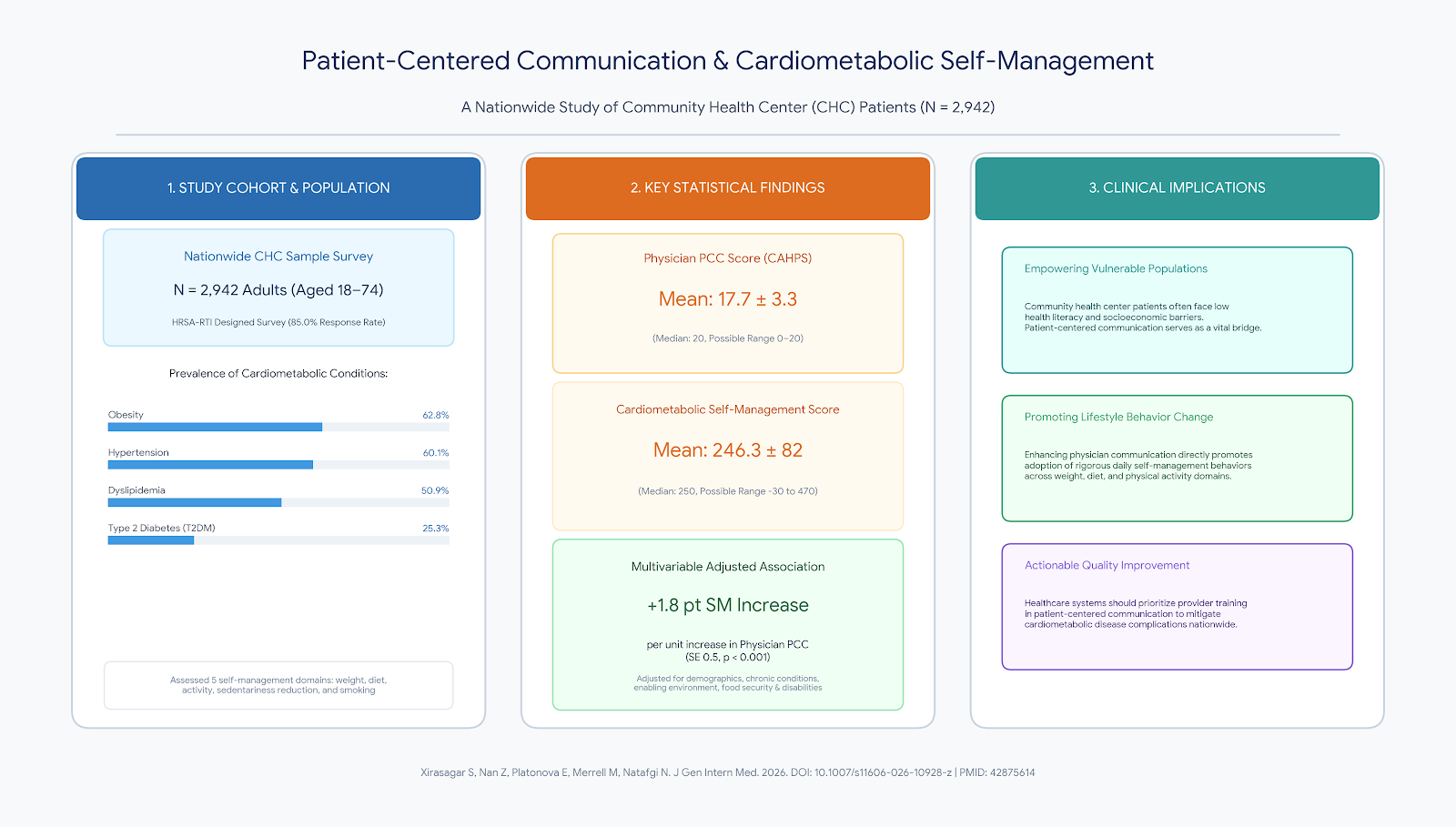
We analyzed secondary data from the 2022 nationally representative survey conducted by the Health Services and Resources Administration (HRSA) and Research Triangle International. The survey sampled 2,942 adults aged 18 to 74 years across the United States, all of whom had at least one cardiometabolic condition (obesity, hypertension, T2DM, or dyslipidemia) and had completed a primary care visit at a CHC.
Cardiometabolic self-management (SM) was assessed through five domains: weight management, dietary change, physical activity, reducing sedentary behavior, and smoking reduction. Patients reported their engagement in these behaviors, which were combined into a weighted score scaled from approximately -30 to 470 points, representing overall self-management intensity.
Physician communication was measured using an adapted version of the Consumer Assessment of Healthcare Providers and Systems (CAHPS) survey, focusing on five questions capturing patient perceptions of physician listening, explaining, respecting, spending enough time, and involving patients in decisions. Responses were rated on a Likert scale from 0 to 3 and aggregated into a PCC score ranging from 0 to 20.
Statistical models adjusted for demographic factors (age, sex, race/ethnicity), presence of multiple chronic conditions, and patient-reported enabling factors, including food security, environment conducive to physical activity, and physical and mental health disabilities.
Results
The average cardiometabolic self-management score was 246.3 (standard deviation 82; median 250), indicating moderate engagement across the five behavioral domains. Among participants, 25.3% had T2DM, 62.8% obesity, 60.1% hypertension, and 50.9% dyslipidemia; many had overlapping conditions.
The mean patient-rated PCC score was 17.7 out of 20, reflecting generally positive physician communication experiences.
After adjusting for relevant confounders, each unit increase in the physician PCC score was associated with a 1.8-point increase in the cardiometabolic self-management score (standard error 0.5, p < 0.001). This suggests that better patient-centered communication significantly predicts improved patient behaviors in managing cardiometabolic risks.
Discussion
Our findings underscore the critical role of effective, patient-centered communication in supporting self-management among patients with cardiometabolic conditions attending community health centers. Improved PCC may enhance patients’ understanding, trust, and empowerment, enabling them to implement lifestyle changes vital to prevent disease progression and complications.
This relationship remained robust even after considering social determinants such as food security and accessibility for physical activity, highlighting PCC as an actionable target for clinicians and health systems seeking to reduce disparities in chronic disease outcomes.
Health literacy challenges common in CHC populations may be partially mitigated by physicians who tailor communication to patient needs, encourage dialogue, and foster shared decision making. Training programs emphasizing these skills could be integrated into primary care workflows and quality improvement initiatives.
Limitations
Our study relied on patient-reported measures which might be subject to recall or social desirability biases. Also, the cross-sectional design limits inference about causality between PCC and self-management behaviors. Longitudinal studies are needed to confirm these findings and explore mechanisms underpinning these associations.
Conclusion
Effective patient-centered communication by physicians at community health centers is significantly associated with better self-management of cardiometabolic diseases. Prioritizing this communication style may offer an impactful strategy to enhance health outcomes for vulnerable populations coping with chronic cardiometabolic risks.
Implications for Practice
Primary care physicians should receive support and training to strengthen patient-centered communication skills, particularly when counseling patients with cardiometabolic risks. Tailoring communication, ensuring patient comprehension, and involving patients actively in care decisions can promote sustainable lifestyle changes and improve disease management.
Health policymakers and administrators should consider integrating communication quality metrics into CHC performance monitoring and incentivize practices demonstrating strong PCC to advance equitable chronic disease care.