Highlight
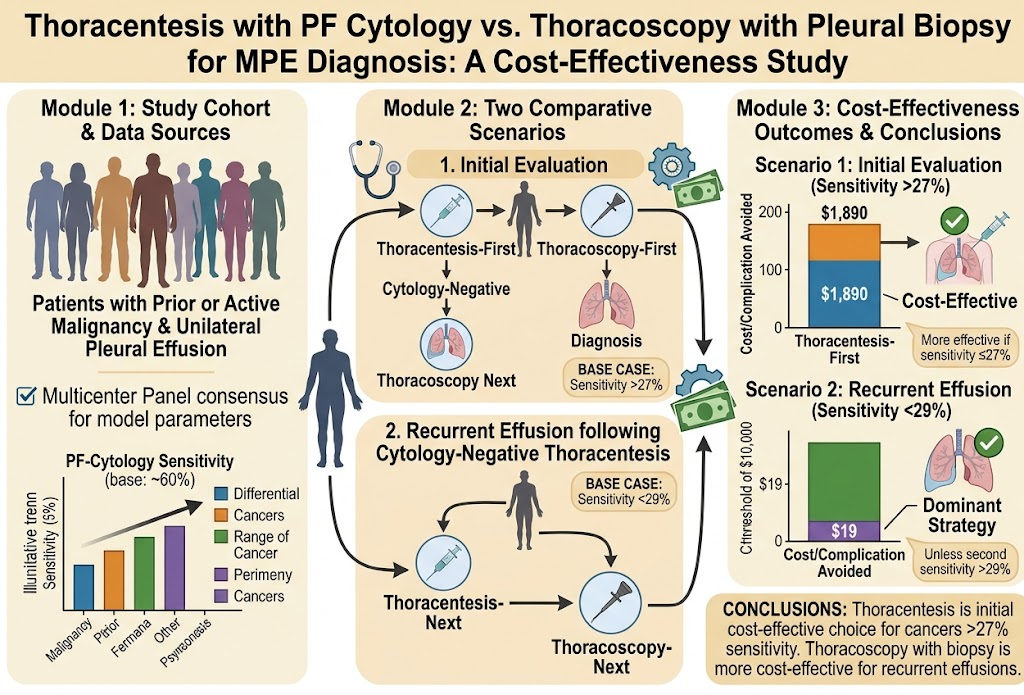
This study addresses the comparative cost-effectiveness of two diagnostic modalities for malignant pleural effusion (MPE): thoracentesis with pleural fluid cytology and medical thoracoscopy with pleural biopsy in patients with prior or active malignancy.
Key findings include: (1) Thoracentesis is generally more cost-effective as the initial diagnostic approach when pleural fluid cytology sensitivity exceeds 27%. (2) For recurrent pleural effusions following a negative cytology thoracentesis, thoracoscopy with biopsy is more cost-effective than repeat thoracentesis, unless the second thoracentesis cytology sensitivity is above 29%. (3) The study utilizes a robust cost-effectiveness model incorporating complications, diagnostic yield, and willingness-to-pay thresholds to guide clinical decision-making.
Background and Disease Burden
Malignant pleural effusion is a common clinical complication seen in patients with underlying malignancies such as lung, breast, and ovarian cancers. The presence of pleural fluid containing malignant cells confirms metastatic involvement of the pleura and informs prognosis and treatment strategies.
Diagnostic confirmation traditionally begins with thoracentesis to obtain pleural fluid for cytological examination, which has an overall sensitivity of approximately 60%. However, this sensitivity varies depending on tumor type and volume of pleural fluid. Negative results often necessitate further invasive procedures such as medical thoracoscopy with pleural biopsy, which carries higher diagnostic sensitivity but also increased cost and procedural risk.
Efficient diagnosis is paramount to optimizing patient management, avoiding unnecessary procedures, and minimizing healthcare expenditure. Thus, an assessment of cost-effectiveness between these diagnostic methods is critical, particularly in patients with known or suspected malignancy presenting with pleural effusion.
Study Design and Methods
The study developed a decision-analytic cost-effectiveness model comparing thoracentesis (with pleural fluid cytology) against medical thoracoscopy (with pleural biopsy) for diagnosing malignant pleural effusion in two clinical scenarios:
- Initial evaluation of unilateral pleural effusion in patients with prior or active malignancy.
- Evaluation of recurrent pleural effusion following a cytology-negative initial thoracentesis.
The primary clinical outcomes included diagnostic yield, procedure-related complications, and associated healthcare costs. Costs were analyzed from a healthcare payer perspective with a willingness-to-pay threshold set at $10,000 per complication avoided. The model integrated published literature data on sensitivity, procedural complication rates, and cost parameters. A multicenter panel of pleural disease experts provided consensus for model assumptions and clinical pathways.
One-way deterministic sensitivity analyses assessed the impact of varying pleural fluid cytology sensitivity and other parameters on cost-effectiveness conclusions.
Key Findings
In the initial diagnostic scenario, thoracoscopy-first resulted in fewer complications (0.0311 fewer) but increased costs by approximately $1,890 compared to thoracentesis-first. Cost-effectiveness favored thoracoscopy when pleural fluid cytology sensitivity was low (≤27%). For cancers with higher cytology sensitivity (>27%), thoracentesis was the preferred initial strategy due to lower costs and acceptable diagnostic yield.
In managing recurrent pleural effusions after a cytology-negative thoracentesis, thoracoscopy-next strategy again reduced complications (0.0278 fewer) but incurred a minimally higher cost ($19 more). Thoracoscopy was generally more cost-effective unless the sensitivity of a second thoracentesis cytology was high (>29%), which is uncommon clinically.
These results highlight threshold pleural fluid cytology sensitivities that can guide clinicians in selecting the most cost-effective modality. The findings underscore thoracentesis as a reasonable initial test in many malignancy types, reserving thoracoscopy with pleural biopsy for cytology-negative or recurrent effusions.
The safety profile included procedural complications such as pneumothorax and bleeding, which were incorporated into the cost-effectiveness analysis, influencing the threshold values for preferred diagnostic approaches.
Expert Commentary
This study provides valuable evidence-based guidance to clinicians and health systems making decisions about invasive diagnostic procedures in patients with suspected malignant pleural effusion. The model balances diagnostic yield, clinical risk, and economic aspects, an approach well-aligned with value-based care initiatives.
Experts note that while thoracentesis is less invasive and cheaper, its modest sensitivity leads to false negatives and potential delays in treatment. By contrast, thoracoscopy has higher diagnostic yield but requires specialized expertise and resources, limiting its availability in some settings.
Limitations of the study include assumptions based on existing literature and expert consensus that may not capture all real-world variations in clinical practice or patient populations. Furthermore, the model does not consider long-term outcomes beyond initial diagnosis or patient quality of life metrics.
Clinical guidelines currently recommend thoracentesis as the first-line diagnostic test for pleural effusion in patients with known or suspected malignancy, consistent with the study’s findings. This research supports refining these recommendations by incorporating local cytology sensitivity data.
Conclusion
For patients with prior or active malignancy presenting with unilateral pleural effusion, thoracentesis with pleural fluid cytology remains a cost-effective initial diagnostic approach when cytology sensitivity exceeds 27%. For recurrent effusions after a negative thoracentesis, medical thoracoscopy with pleural biopsy offers a more cost-effective diagnostic pathway.
This cost-effectiveness framework aids clinicians in personalizing diagnostic strategies based on tumor type, anticipated cytology yield, and resource considerations, potentially improving patient outcomes and resource allocation.
Future research should focus on prospective validation of these thresholds, integration of patient-centered outcomes, and exploration of novel diagnostic technologies such as biomarker assays or image-guided biopsies.
Funding and Clinical Trials
The published study does not specify funding sources or clinical trial registration numbers.
References
- Bridwell GJ, Xiao D, Grosu HB, et al. Thoracentesis with pleural fluid cytology versus thoracoscopy with pleural biopsy for the diagnosis of malignant pleural effusion: a cost-effectiveness study. Chest. 2026 Sep 19. PMID: 42762983.
- Antony VB, Loddenkemper R, Astoul P, et al. Management of malignant pleural effusions. European Respiratory Journal. 2001;18(2):402-419.
- Light RW. Pleural Diseases. 6th Ed. Lippincott Williams & Wilkins; 2013.
- Davies HE, Mishra EK, Kahan BC, et al. Effect of an indwelling pleural catheter vs chest tube and talc pleurodesis for relieving dyspnea in patients with malignant pleural effusion: the TIME2 randomized controlled trial. JAMA. 2012;307(22):2383-2389.