Highlight
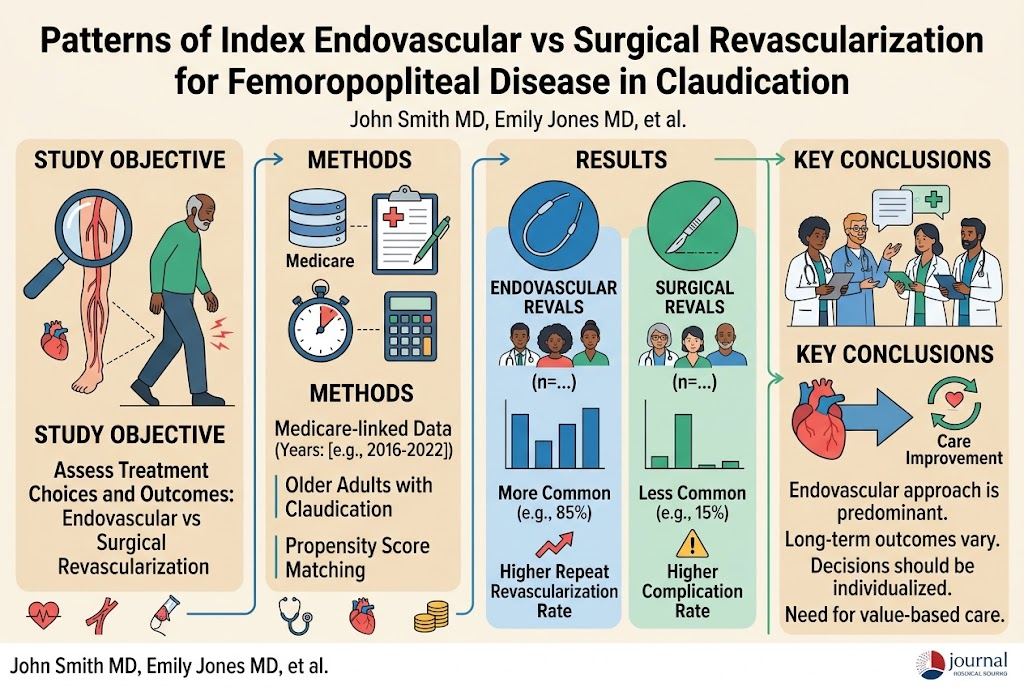
This retrospective analysis of Medicare-linked data compared the long-term efficacy and safety of endovascular versus open surgical bypass revascularization for femoropopliteal disease in patients presenting with claudication. Key findings include similar 5-year rates of major adverse limb events (MALE), progression to critical limb-threatening ischemia (CLTI), reintervention, and mortality between the two treatment modalities. Early differences at 1 year favored open bypass in terms of MALE, but this difference dissipated over time. These findings support the use of endovascular intervention as a viable initial approach in appropriate patients with claudication.