Highlight
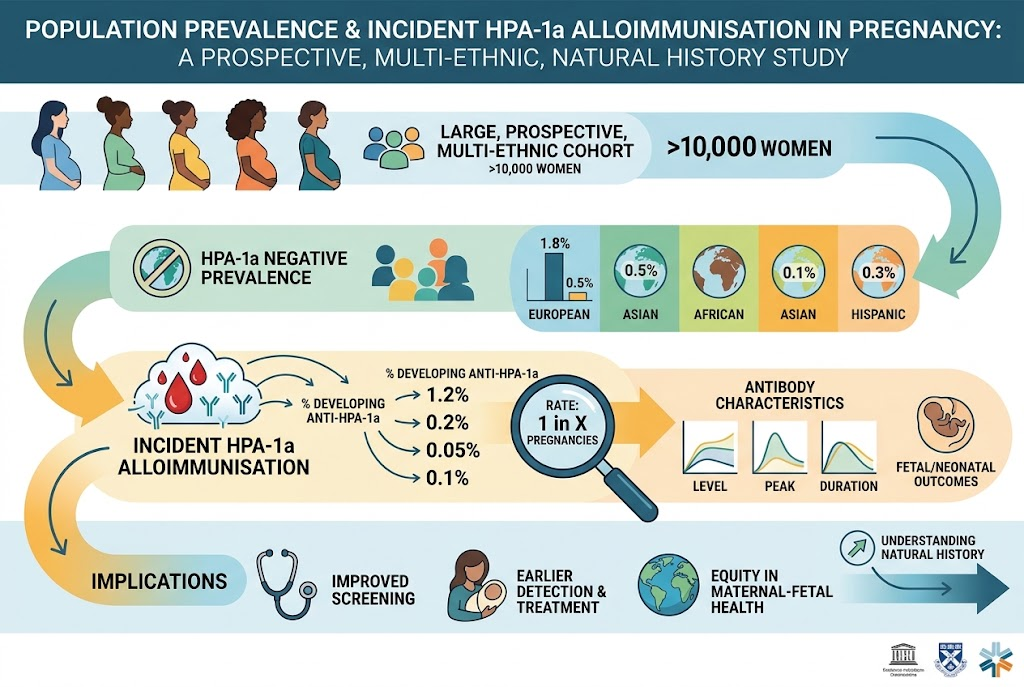
- This large, prospective, multi-ethnic study confirms the rarity of the higher-risk group for HPA-1a alloimmunisation among pregnant women.
- Genetic factors such as HPA-1b/1b genotype and HLA-DRB3*01:01 allele status influence the risk for foetal-neonatal alloimmune thrombocytopaenia (FNAIT).
- The study elucidates ethnic and geographic variations in risk prevalence, including data from Black and Asian populations.
- It establishes a rigorous, sequential maternal and foetal screening methodology that could guide population-based risk assessment and future preventative strategies.
Study Background
Foetal-neonatal alloimmune thrombocytopaenia (FNAIT) is a rare but potentially severe condition that occurs when maternal alloantibodies target foetal platelet antigens, leading to thrombocytopaenia and increased risk of bleeding, including intracranial haemorrhage. The most common cause involves alloimmunisation against the human platelet antigen (HPA)-1a. Maternal immunisation against HPA-1a poses a critical risk, particularly in first pregnancies where prior exposure is not evident, complicating prediction and early intervention. The disease burden, while low in population terms, carries significant morbidity and mortality consequences, prompting the need for effective screening strategies to identify at-risk pregnancies across diverse populations.
Study Design
This was a prospective, longitudinal, non-interventional natural history study conducted across 28 sites in North America and Europe. Pregnant women aged 18 years or older with no prior history of FNAIT were enrolled early in gestation (10–14 weeks). Blood samples were collected for a sequential screening algorithm including maternal HPA-1a/1b genotyping, assessment for the HLA-DRB3*01:01 allele—which plays a role in alloimmune response presentation—and screening for anti-HPA-1a antibodies.
Foetal HPA-1 genotype was also determined to identify pregnancies carrying the HPA-1a antigen at risk of alloimmunisation. The main endpoint was the identification and frequency of women at higher risk (HPA-1b/1b genotype, HLA-DRB3*01:01 positive, anti-HPA-1a antibody negative at screening, and foetal HPA-1a positive) who subsequently developed alloimmunisation.
Key Findings
Among 14,114 pregnant participants, 1.7% carried the HPA-1b/1b genotype. This prevalence differed by race and geographical region, highlighting the importance of ethnically diverse cohorts in alloimmunisation risk assessment. Of the subset identified as higher risk (n=24), five were lost to follow-up before post-partum alloantibody assessment.
Among the remaining 19 higher-risk women, 2 (11%; 95% CI: 1.3%, 33.1%) developed detectable anti-HPA-1a antibodies by 10 weeks post-partum, confirming the immunogenic potential in this group. The majority (17/19) remained antibody negative, indicating alloimmunisation is not inevitable even among higher-risk genotypes.
Additionally, 18 other women with the HPA-1b/1b genotype and HLA-DRB3*01:01 positive status were found to have pre-existing anti-HPA-1a antibodies at screening, suggesting prior sensitisation possibly from earlier pregnancies or transfusions.
The results validate the rarity of women at elevated risk for HPA-1a alloimmunisation. Moreover, the study was able to describe the distribution of risk across ethnicities, including Black and Asian populations, groups often underrepresented in FNAIT research.
Expert Commentary
This study adds significant value to understanding the epidemiology and immunogenetics of FNAIT. The use of a rigorous, sequential screening algorithm that integrates maternal and foetal genotyping alongside immunological assays sets a benchmark for risk stratification.
The low incidence of alloimmunisation even in higher-risk profiles underscores the complex interplay of immunological tolerance and sensitisation mechanisms. Notably, detection of pre-existing anti-HPA-1a antibodies in some participants highlights the need to consider prior exposure history in risk assessments.
Ethnic and geographical variability in HPA-1b/1b prevalence and HLA-DRB3*01:01 positivity suggest genetically tailored screening approaches may be necessary. Given the serious potential consequences of FNAIT, expanding access to such precision diagnostics could improve antenatal surveillance and inform prophylactic or therapeutic interventions.
Limitations include loss to follow-up and the currently non-interventional nature of the study, which precludes correlation of alloimmunisation with clinical outcomes like neonatal thrombocytopaenia severity. Ongoing, larger studies linking genotypic and immunologic data with clinical phenotypes will be essential to translate these findings into practice.
Conclusion
This large prospective study clarifies the prevalence and incidence of HPA-1a alloimmunisation risk in a racially and ethnically diverse pregnant population. The data affirm the rarity of the at-risk group, provide critical insight into ethnic variability, and establish a robust methodology for early risk detection.
As potential prophylactic treatments and screening programs for FNAIT evolve, such population-level data will be key to guiding targeted approaches and optimizing maternal-fetal outcomes. Future research should focus on the natural history of alloimmunisation, its clinical impact, and the development of standardized protocols for screening and intervention.
Funding and ClinicalTrials.gov
Details regarding funding sources and clinical trial registration were not provided in the abstract.
References
1. Sitras V, Vander Haar E, Miller R, et al. Population Prevalence and Incident HPA-1a Alloimmunisation in Pregnancy: A Prospective, Multi-Ethnic, Natural History Study. BJOG. 2026; DOI: https://pubmed.ncbi.nlm.nih.gov/42733297/
2. Killie MK, Kjeldsen-Kragh J, Eide MB, et al. Alloimmune thrombocytopenia in pregnancy: Clinical characteristics and laboratory findings. Transfus Med Hemother. 2020;47(1):15-23.
3. Peyruchaud O, Guerreiro N, Giazitzoglou E, et al. Fetal and neonatal alloimmune thrombocytopenia: pathogenesis, diagnosis, and management. Front Pediatr. 2019;7:16.
4. Radder CM, Porcelijn L, Oepkes D. Pathogenesis and prevention of fetal/neonatal alloimmune thrombocytopenia. Am J Obstet Gynecol. 2017;216(4):336-345.