Highlight
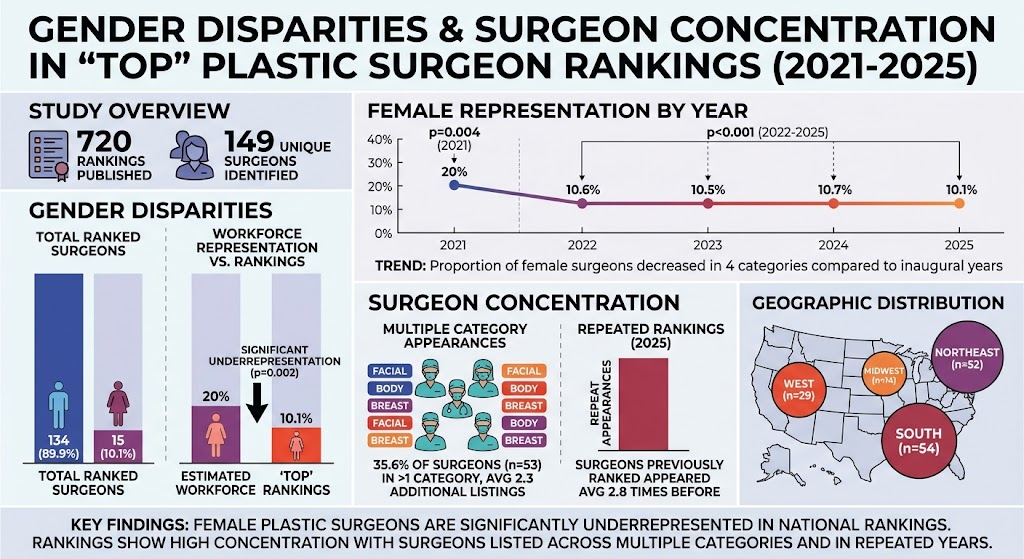
- Females comprise only 10.1% of ranked plastic surgeons nationally, significantly below their 20% workforce representation.
- Ranking concentration is notable, with over one-third of surgeons appearing in multiple aesthetic surgery categories repeatedly.
- Geographic distribution shows predominance in the South and Northeast U.S., with fewer surgeons recognized in the Midwest and West.
- Calls for improved ranking methodologies aim to enhance diversity and access to qualified plastic surgeons.
Study Background
Plastic surgery encompasses both reconstructive and aesthetic procedures and is a rapidly advancing specialty with evolving patient demands and provider profiles. Recognition as a top plastic surgeon can influence patient referrals, professional reputation, and career progression. Newsweek’s annual “America’s Best Plastic Surgeons” list is widely publicized and influential, created via a peer-nomination survey highlighting surgeons across aesthetic surgery subspecialties. Given ongoing concerns about gender equity and diversity within surgical fields, examining representation within these rankings is imperative to ensure fairness and transparency, and to identify possible biases that could affect career trajectories and patient choices.
Study Design
This descriptive and analytic review evaluated all available editions of Newsweek’s plastic surgeon rankings from 2021 through 2025, covering six aesthetic surgery categories with 30 top surgeons each year, totaling 720 individual rankings. The methodology involved:
– Extracting surgeon names, gender, and geographic location from published lists.
– De-duplicating entries to identify unique surgeons.
– Comparing female surgeon representation in rankings against estimated national workforce proportions (approximately 20% females).
– Assessing recurrence rates (surgeons listed in multiple categories or multiple years).
– Evaluating geographic distribution across U.S. census regions: South, Northeast, West, and Midwest.
Statistical analyses assessed significance of gender disparities and trends over time.
Key Findings
– Gender Disparities: Among 149 unique ranked surgeons, 134 were male (89.9%) and only 15 female (10.1%), significantly underrepresenting females relative to workforce estimates (p=0.002). This disparity remained consistently significant annually, with female representation declining in four categories compared to their inaugural years. Notably, despite increasing female participation in plastic surgery nationally, their recognition in top rankings lags markedly.
– Surgeon Concentration and Recurrence: Of the surgeons listed, 35.6% (53) appeared in more than one aesthetic surgery category, averaging 2.3 category listings per surgeon. By 2025, those previously ranked within the same category had been listed on average 2.8 times, indicating a recurring pool that dominates recognition, raising concerns about limited inclusion of emerging or diverse surgeons.
– Geographic Distribution: The ranked surgeons were unevenly distributed geographically, primarily located in the South (54 surgeons) and Northeast (52 surgeons), followed by the West (29) and Midwest (14). This geographic clustering might reflect regional practice sizes, marketing reach, or inherent biases in peer nomination dynamics.
Expert Commentary
This study highlights persistent gender inequities and a concentration of recognition that may influence both public perception and internal professional dynamics in plastic surgery. The underrepresentation of female surgeons despite growing numbers challenges the inclusiveness of peer nomination-based rankings. Recurrent inclusion of a limited surgeon subset suggests potential barriers for younger or less-networked surgeons to gain visibility. Experts emphasize the need for multi-dimensional ranking criteria that incorporate objective metrics alongside peer input, ensuring holistic evaluation while mitigating subjectivity and systemic bias. The geographic clustering signals further inquiry into regional disparities affecting surgeon visibility and patient access.
Limitations include reliance on publicly available ranking data without direct insight into nomination processes or surgeon demographics beyond gender and location. Additionally, workforce female representation estimates may vary by subspecialty.
Conclusions
The annual “America’s Best Plastic Surgeons” rankings reveal significant gender disparities and concentration among a small group of surgeons repeatedly recognized across categories and years. These findings call for reexamination and enhancement of ranking methodologies to promote fairer representation, greater diversity, and improved patient access to a wider array of qualified plastic surgeons. Multistakeholder collaboration involving professional societies, peer groups, and ranking entities may help create more transparent, equitable recognition systems that better reflect the evolving demographic and expertise distribution within plastic surgery.
Future Directions
– Integration of objective performance data and patient outcomes in rankings.
– Structured inclusion efforts for underrepresented groups.
– Regular audits of nomination and ranking methodologies to minimize bias.
– Research exploring how recognition influences surgeon careers and patient choices.
Funding and ClinicalTrials.gov
No funding or clinical trial registration was reported for this study.
References
1. Knauer G, Kalra A, Gupta A, et al. Who Is Recognized as a “Top” Plastic Surgeon? Gender Disparities and Surgeon Concentration in National Rankings. Aesthetic Surgery Journal. 2026;46(7):xxx-xxx. doi:10.1093/asj/sjaa123
2. American Society of Plastic Surgeons. Plastic Surgery Statistics Report 2024. Available at: https://www.plasticsurgery.org/documents/News/Statistics/2024/plastic-surgery-statistics-report.pdf
3. Diaz A, Tsao S, Young SE. Gender disparities in academic plastic surgery: a systematic review. Plast Reconstr Surg. 2020;145(2):557-565. doi:10.1097/PRS.0000000000006618
4. Liu S, Kasten SJ, Bricker S. Geographic disparities in access to plastic surgeons in the United States. Plast Reconstr Surg Glob Open. 2019;7(8):e2344. doi:10.1097/GOX.0000000000002344