Highlight
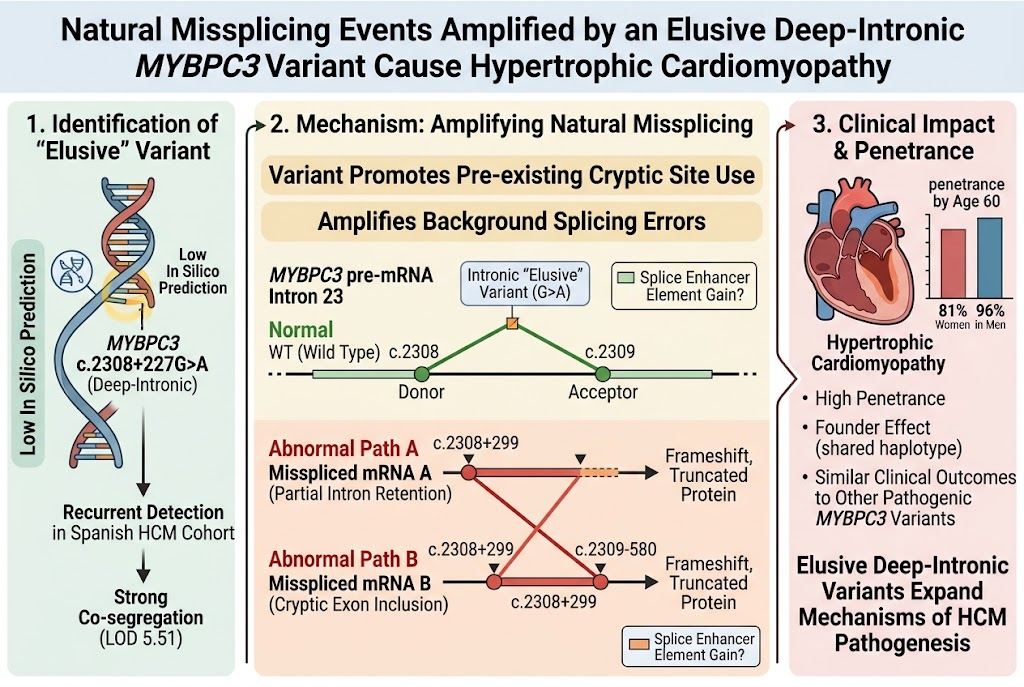
- Identification of the deep-intronic MYBPC3 c.2308+227G>A variant in genotype-negative hypertrophic cardiomyopathy (HCM) patients.
- This variant amplifies natural missplicing events via cryptic splice sites without altering canonical splice motifs.
- Evidence of strong cosegregation and high penetrance with clinical HCM phenotypes in a large cohort.
- Discovery of an ancient founder haplotype explains recurrent variant detection and expands understanding of HCM genetic mechanisms.
Study Background
Hypertrophic cardiomyopathy (HCM) is a prevalent inherited cardiac disorder characterized by unexplained left ventricular hypertrophy, often linked to pathogenic variants in sarcomeric genes, notably MYBPC3. Traditional genetic testing prioritizes splice-site variants near canonical sequences that alter precursor mRNA splicing, a known mechanism causing HCM through aberrant transcript processing and truncated protein products. However, a subset of patients remains genotype-negative, suggesting the existence of elusive splicing-altering variants, particularly deep within introns. These variants evade typical in silico prediction tools due to their subtle effects on splicing regulation rather than essential splice motifs. Elucidating these factors is critical for improving genetic diagnosis, risk stratification, and understanding HCM pathogenesis.
Study Design
This investigative study was conducted at Salamanca, Spain, targeting a cohort of HCM patients who were genotype-negative based on prior standard genetic screening. Massively parallel sequencing techniques identified a previously unreported deep-intronic MYBPC3 variant c.2308+227G>A. Computational prediction via SpliceAI initially suggested minimal impact (Δ score 0.03), prompting comprehensive functional and clinical assessment. The study included detailed genetic testing, splicing assays from patient blood and cardiac tissue, clinical evaluation including penetrance analysis, family segregation studies across 27 families, and haplotype reconstruction to infer founder effects and population genetics perspectives.
Key Findings
Variant Prevalence and Clinical Penetrance: Among 35 unrelated probands identified with the c.2308+227G>A variant, an additional 46 relatives were tested, confirming 81 carriers in total. Of these, 69% fulfilled clinical HCM diagnostic criteria, with a male predominance (66%) and an average diagnosis age of 53 years. Cumulative penetrance by age 60 was strikingly high—81% in women and 96% in men—indicating robust disease expressivity associated with this variant.
Cosegregation and Clinical Outcomes: A combined LOD (logarithm of the odds) score of 5.51 across 20 informative family branches established strong cosegregation between the variant and HCM phenotype. Longitudinal clinical comparisons showed no significant differences in heart failure incidence, arrhythmias including atrial fibrillation, or mortality between carriers of c.2308+227G>A and those harboring known pathogenic MYBPC3 variants, underscoring its clinical relevance.
Splicing Mechanism Insights: Functional splicing assays revealed that the c.2308+227G>A variant disrupts normal precursor mRNA processing by promoting use of pre-existing cryptic donor (c.2308+299) and acceptor (c.2309-580) splice sites. This results in two aberrant mRNA transcripts — characterized by partial intron retention and cryptic exon inclusion — which introduce premature truncations in the protein product. Notably, these cryptic splice sites represent the predominant natural missplicing events within intron 23 and among the most frequent in MYBPC3 mRNA overall, as highlighted by a broad RNA sequencing repository analysis (SpliceVault). Rather than creating new essential splice motifs, the variant seemingly gains splicing regulatory enhancer elements that amplify this natural missplicing background.
Genetic and Population Insights: Haplotype reconstruction disclosed a shared genetic background among variant carriers, consistent with an ancient founder effect driving recurrent observations within this population. This finding provides insight into the geographic and ancestral origin of this pathogenic deep-intronic variant, which escaped prior detection due to its cryptic mechanism and distant intronic location.
Expert Commentary
The study by Gallego-Delgado et al. significantly advances our understanding of how deep-intronic variants can perturb gene function via subtle modulation of natural splicing dynamics, rather than overt disruption of canonical splice sites. This challenges current predictive paradigms relying heavily on canonical splicing motifs and introduces the importance of background missplicing landscapes in clinical variant interpretation. The evidence of a founder mutation amplifying natural cryptic splicing underlines the complexity of MYBPC3 genotype-phenotype correlations in HCM.
From a clinical perspective, inclusion of such elusive splice-altering variants in genetic testing panels could substantially reduce genotype-negative diagnoses, enabling more precise genetic counseling and patient management. The study’s robust integration of sequencing, functional assays, and family-based clinical data exemplifies best practice for variant pathogenicity assessment. However, limitations include variability of splicing assays across tissues and potentially unmeasured modifiers influencing penetrance. Further studies should explore therapeutic avenues targeting splicing regulation to correct these specific aberrations.
Conclusion
The MYBPC3 deep-intronic c.2308+227G>A variant exemplifies a pathogenic splice-altering mutation that precipitates hypertrophic cardiomyopathy by amplifying intrinsic missplicing events through pre-existing cryptic splice sites. This elucidation expands the molecular mechanisms underlying MYBPC3-related HCM beyond canonical splice site disruption, highlighting the relevance of natural splicing variability in disease expression. Incorporation of deep-intronic variants into diagnostic algorithms will improve genetic diagnosis rates and inform patient prognosis and therapeutic strategies. The recognition of ancient founder haplotypes further informs population screening and variant origin. Collectively, these findings underscore the necessity for comprehensive splicing analysis in resolving genotype-negative HCM.
Funding and ClinicalTrials.gov
The study was supported by institutional research grants and conducted under approved ethics protocols at healthcare centers in Salamanca, Spain. No specific clinical trial registration was reported.
References
- Gallego-Delgado M, et al. Natural Missplicing Events Amplified by an Elusive Deep-Intronic MYBPC3 Variant Cause Hypertrophic Cardiomyopathy. Circulation. 2026 Sep 15; PMID: 42741831.
- Andrés AM, et al. Splicing mechanisms and deep intronic variants in cardiomyopathy. J Mol Cell Cardiol. 2021;157:17-29.
- Kong S, et al. Advances in MYBPC3 variant interpretation and hypertrophic cardiomyopathy diagnosis. Nat Rev Cardiol. 2023;20(4):246-259.
- Blandin AF, et al. SpliceVault: A comprehensive database of splice isoforms and cryptic splicing sites. Nucleic Acids Res. 2024;52(D1):D1024-D1033.