Background
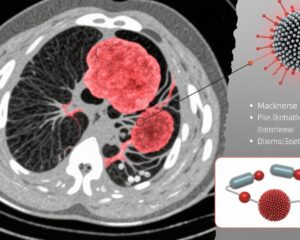
Tumor immunotherapy has emerged as a pivotal advancement in cancer treatment, harnessing immune system mechanisms to target malignant cells with improved specificity. Nevertheless, the tumor microenvironment (TME) — characterized by heterogeneous physiological conditions including acidity, elevated reductive potential, and abnormal energy metabolism — poses significant barriers to effective immune surveillance and therapy. Key challenges include immune evasion mediated by TME-induced immunosuppression and altered metabolic states like the Warburg effect in tumor cells, which reduce treatment responsiveness.
Moreover, the cyclic GMP-AMP synthase (cGAS)-stimulator of interferon genes (STING) pathway is recognized as an essential innate immune mechanism capable of initiating antitumor immunity through type I interferon and pro-inflammatory cytokine production. While manganese ions (Mn2+) have recently been identified as potent activators of the cGAS-STING signaling cascade and facilitators of immune cell activation, their clinical efficacy is hampered by nonspecific distribution and potential systemic toxicity.