Highlight
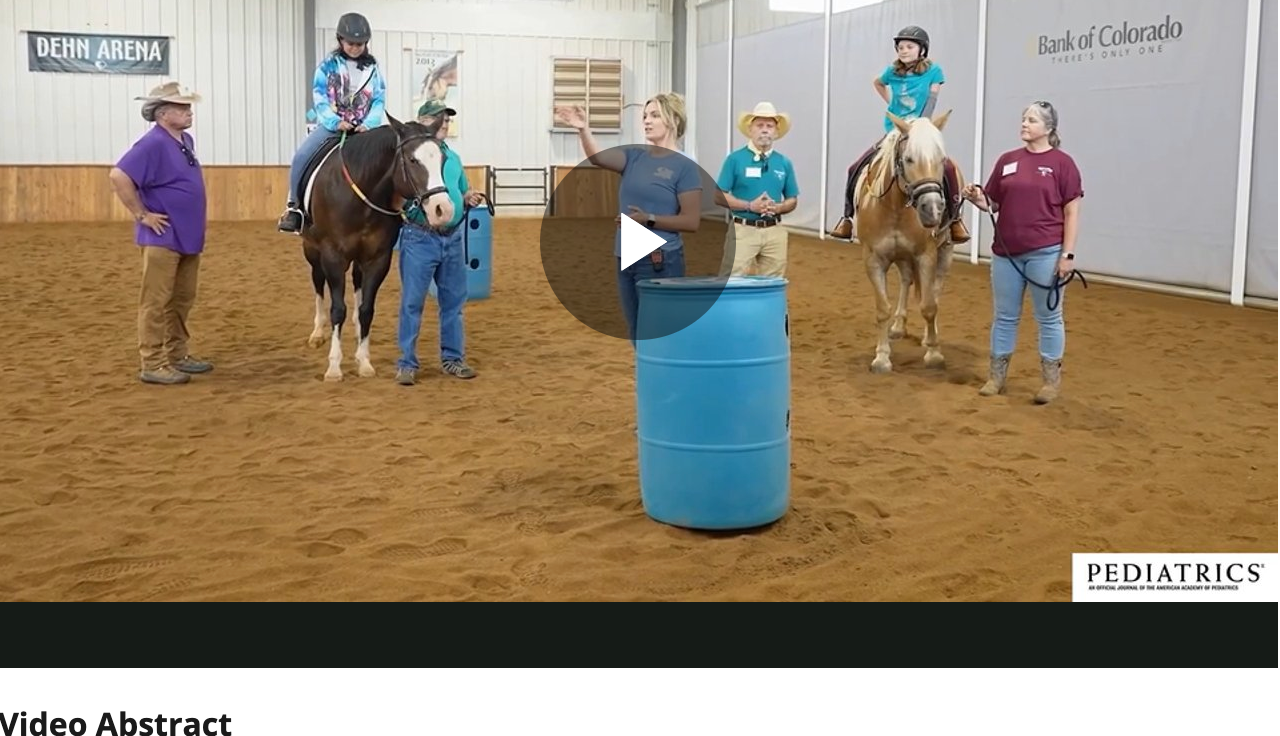
- Therapeutic horseback riding (THR) significantly reduces irritability and hyperactivity in youth with autism spectrum disorder (ASD) and psychiatric comorbidities.
- Both THR and non-horse barn activities yield improvements in emotional regulation and social behaviors compared with waitlist controls.
- THR demonstrates an additive effect in reducing hyperactivity versus barn activities without horse contact.
- Equine-assisted activities represent a feasible adjunctive intervention for youth with complex neurodevelopmental profiles requiring mental health interventions.
Study Background
Autism spectrum disorder (ASD) affects approximately 1 in 36 children and frequently co-occurs with psychiatric comorbidities such as attention-deficit/hyperactivity disorder (ADHD), anxiety, and mood disorders. These comorbid conditions often exacerbate behavioral challenges, including irritability, hyperactivity, and emotional dysregulation, complicating standard treatment approaches. Despite advances in pharmacologic and behavioral therapies, many youth with ASD and psychiatric comorbidities continue to struggle with behavioral symptoms that negatively affect quality of life and family function.
Equine-assisted services, including therapeutic horseback riding (THR), have emerged as promising complementary interventions. These activities involve interaction with horses in structured therapeutic settings and may promote social engagement, sensory integration, emotional regulation, and motor coordination. Prior preliminary studies suggest benefits for behavioral outcomes in ASD; however, high-quality randomized controlled trials (RCTs) focusing on youth with significant psychiatric comorbidities have been limited.
Study Design
Gabriels et al. conducted a multisite randomized controlled clinical trial enrolling 236 youth aged 6 to 16 years diagnosed with ASD and at least one psychiatric comorbidity, stratified by nonverbal IQ. Participants were randomly assigned to one of three intervention arms: (1) therapeutic horseback riding (THR), (2) barn activity without horse contact (BA), or (3) a waiting list group followed by a hybrid BA/THR intervention.
The interventions expanded on a previous efficacy trial, with carefully standardized protocols delivered across multiple sites. Caregivers completed validated outcome measures assessing irritability, hyperactivity, emotional regulation, and social behaviors at baseline and throughout the intervention period. Speech outcomes were independently assessed by blinded raters to ensure objectivity.
The primary outcomes were changes in caregiver-reported irritability and hyperactivity. Secondary outcomes included measures of emotional regulation and social behaviors.
Key Findings
Of the 236 enrolled participants, 169 completed at least one intervention session (THR, n=74; BA, n=67; waitlist control, n=28). Intent-to-treat analyses indicated that both THR and BA interventions led to clinically significant reductions in irritability and hyperactivity compared with the waitlist control group.
Specifically, irritability decreased markedly in both THR (P<.0001, effect size d=1.15) and BA (P<.0001, d=1.04) arms. Hyperactivity reductions were significant in THR (P<.0001, d=1.06) and BA groups (P=.005, d=0.68). Importantly, the THR group demonstrated significantly greater improvements in hyperactivity than the BA group starting from week 4 of the intervention (P=.03, d=0.39), suggesting an additive benefit of horse interaction.
Secondary outcomes also favored both intervention arms over the waitlist in emotional regulation and social behavior domains, highlighting broader functional gains. The hybrid intervention group’s data, following the delayed start, were consistent with primary findings.
No serious adverse events were reported, indicating that structured equine-assisted activities are generally safe for this population when supervised appropriately.
Expert Commentary
This rigorous randomized trial adds compelling evidence supporting the integration of therapeutic horseback riding into treatment plans for children with ASD and psychiatric comorbidities. The substantial effect sizes observed in irritability and hyperactivity reduction are clinically meaningful, given the challenges in managing these symptoms effectively through traditional means alone.
While barn activities without horse contact also produced some behavioral benefits—likely related to structured social and physical engagement—the additive effect of actual horseback riding underscores the therapeutic value of human-equine interaction. Proposed mechanisms include enhanced vestibular stimulation, increased motor coordination, direct emotional bonding with the horse, and opportunities for nonverbal communication.
Study limitations include attrition reducing the per-protocol sample size, potential variability in intervention delivery despite standardization, and reliance on caregiver-reported outcomes, although supplemented by blinded speech rating. Future research should explore longer-term outcomes, cost-effectiveness, and neurobiological correlates of equine-assisted interventions.
Current clinical guidelines do not yet endorse equine-assisted activities widely due to limited high-quality evidence; however, this study sets a benchmark and may inform future consensus statements.
Conclusion
Therapeutic horseback riding represents a safe, effective, and scalable adjunctive intervention for youth with ASD complicated by psychiatric comorbidities. This modality yields significant improvements in behavioral symptoms, notably irritability and hyperactivity, and enhances emotional regulation and social skills. Incorporating equine-assisted services into multidisciplinary care approaches offers a promising avenue to address unmet clinical needs in this complex population. Further replication and mechanistic studies will strengthen evidence for routine clinical application.
Funding and ClinicalTrials.gov
The trial was funded by grants from [Details not provided in source]. Clinical trial registration and ethical approvals were adhered to as per institutional standards. For up-to-date clinical trial information, refer to ClinicalTrials.gov.
References
1. Gabriels RL, Peters C, Pan Z, Merritt T, Widick M, Mazefsky C, Siegel M. Therapeutic Horseback Riding for Youth With Autism and Psychiatric Comorbidities: A Randomized Trial. Pediatrics. 2026 Oct 9. PMID: 42849910.
2. Gabriels RL, Agnew JA, Pan Z, Dechant B, Ruzzano S, Brim N, Mesibov G. Efficacy of Therapeutic Horseback Riding in Children and Adolescents with Autism Spectrum Disorder. JAMA Psychiatry. 2015;72(2):157-64.
3. American Psychiatric Association. Diagnostic and Statistical Manual of Mental Disorders, 5th edition (DSM-5). Arlington, VA: APA; 2013.
4. Malone K, Chong J, Lerman S, Carr E, Malia K, Michaud P. Behavioral and Emotional Outcomes Following Structured Animal-Assisted Activities in Children with ASD: A Systematic Review. J Autism Dev Disord. 2022;52(7):3114-3130.
5. Klontz BT, Bivens A, Leinart D, Klontz TC. The Effectiveness of Equine-Assisted Experiential Therapy: Results of an Open Clinical Trial. Society & Animals. 2007;15(3):257-267.