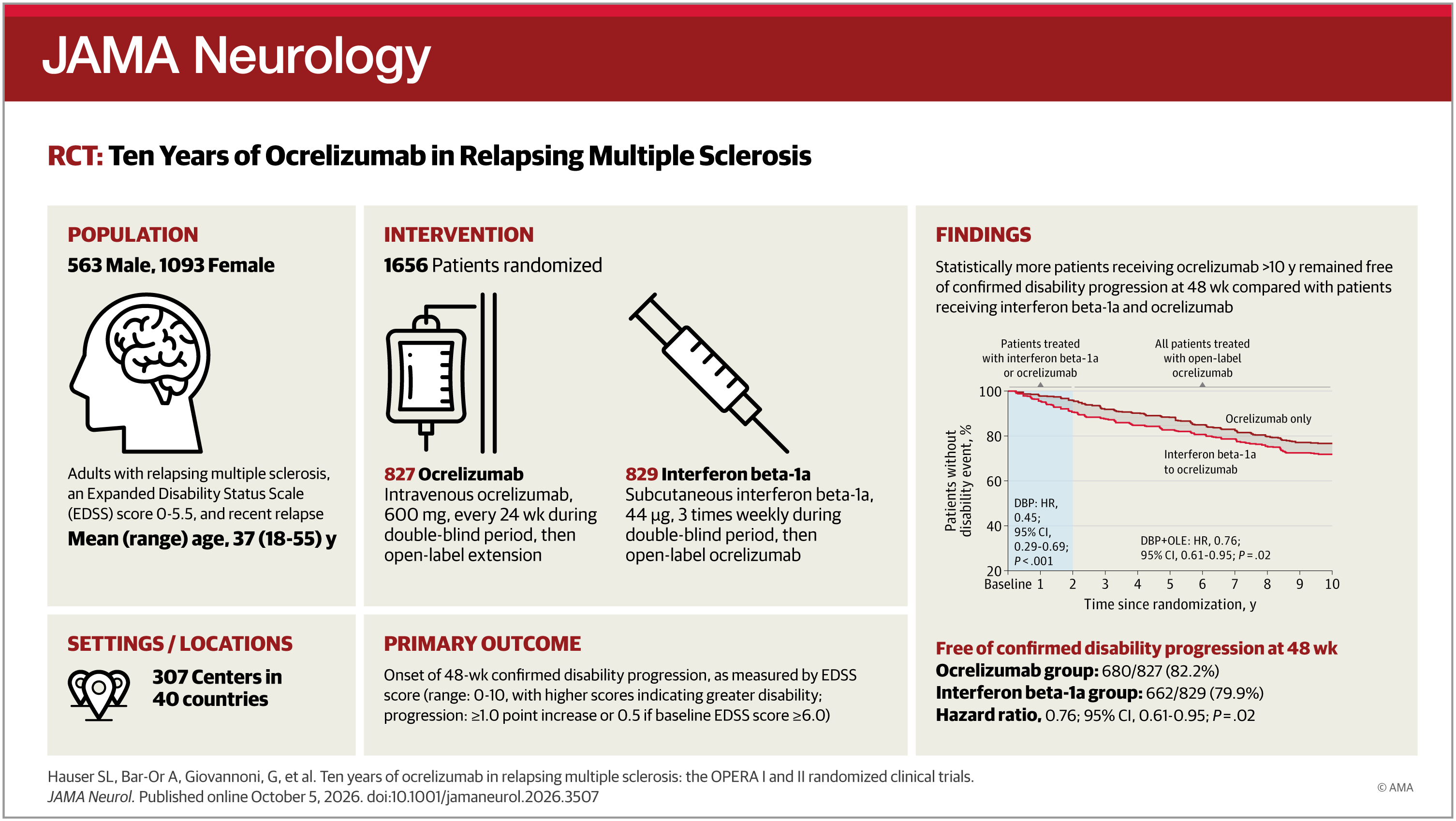
Ten years of continuous ocrelizumab (OCR) therapy in relapsing multiple sclerosis (RMS) provides durable suppression of disability progression and relapse activity, outperforming delayed initiation after interferon beta-1a (IFN) treatment.
Early OCR treatment preserves functional independence with significant delay in reaching critical Expanded Disability Status Scale (EDSS) milestones (scores 4.0 and 6.0), evidenced through OPERA I and II trials and their long-term extensions.
Ocrelizumab demonstrates a stable long-term safety profile without increasing adverse events (AEs) or serious infections, supporting sustained use as first-line high-efficacy therapy.
Emerging personalized dosing strategies and biomarker-guided treatment intervals may optimize ocrelizumab therapy and maximize its benefit-risk ratio in RMS management.