Highlight
- SOAT1 is markedly upregulated in hepatocellular carcinoma (HCC) and correlates with tumor aggressiveness and immune evasion.
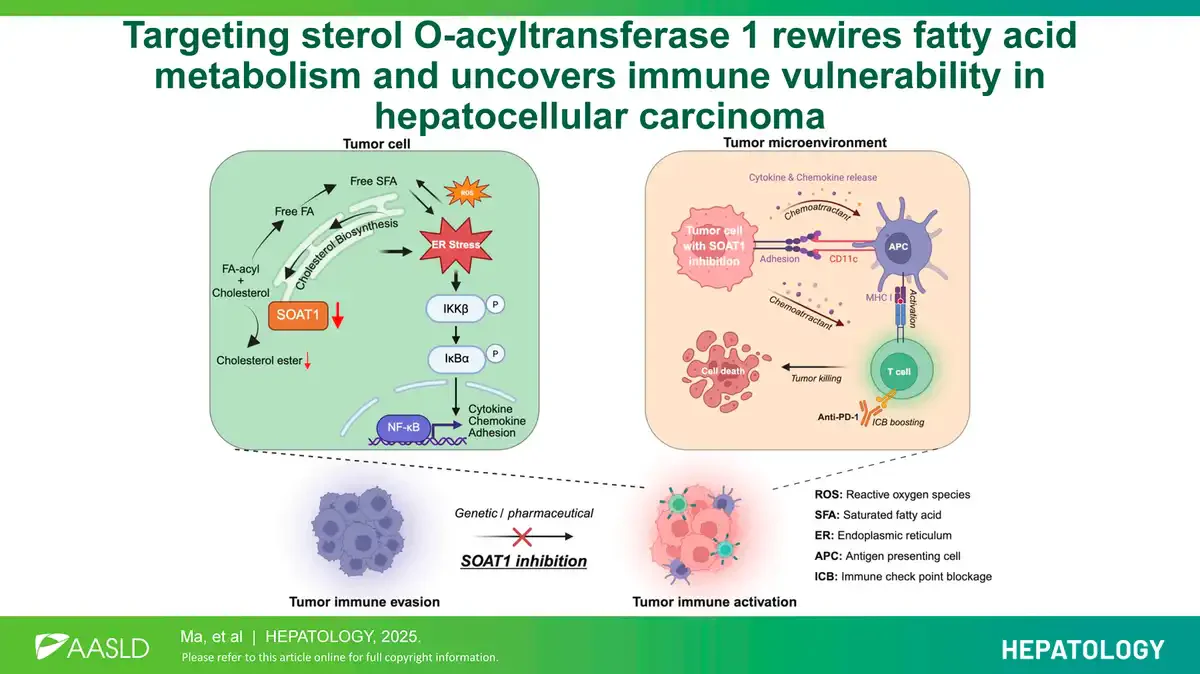
- Inhibition of SOAT1 disrupts lipid homeostasis, increasing saturated fatty acids and triggering oxidative and endoplasmic reticulum stress.
- These stresses activate NF-κB signaling, promoting pro-inflammatory cytokine production and recruitment of antigen-presenting and cytotoxic T cells into tumors.
- Combining SOAT1 inhibition with PD-1 immune checkpoint blockade synergistically reduces tumor burden in preclinical models.
Study Background
Hepatocellular carcinoma (HCC) remains a leading cause of cancer-related mortality globally, with limited effective therapeutic options, especially for advanced stages. The tumor’s metabolic rewiring and immune evasion mechanisms contribute critically to its progression and resistance to treatment. Sterol O-acyltransferase 1 (SOAT1), an enzyme catalyzing cholesterol esterification, has emerged as a key player in tumor metabolism but its precise role in HCC tumor biology and immune interactions has not been fully elucidated. Addressing this gap is crucial for developing targeted therapies that exploit HCC metabolic vulnerabilities while potentially enhancing anti-tumor immunity.
Study Design
This comprehensive experimental study employed genetic knockout and pharmacological inhibition of SOAT1 across multiple models, including HCC cell lines, patient-derived organoids, and mouse tumor models. Tumor-immune interactions were evaluated using co-culture assays, flow cytometry, and immunohistochemistry. Multi-omics analyses (likely including lipidomics, transcriptomics, and proteomics) were applied to uncover mechanistic insights into metabolic and immune changes. Finally, the antitumor efficacy of SOAT1 inhibition alone and combined with anti-PD1 immunotherapy was assessed in vivo, providing preclinical evidence for translational potential.
Key Findings
SOAT1 was significantly upregulated in HCC tumor tissues compared to adjacent normal liver, correlating with higher tumorigenicity indices and markers of immune suppression.
Functional inhibition or deletion of SOAT1 led to profound disruption in lipid homeostasis, specifically resulting in an accumulation of saturated fatty acids. This metabolic stress was accompanied by increased reactive oxygen species and endoplasmic reticulum (ER) stress within tumor cells.
Consequently, the nuclear factor kappa-light-chain-enhancer of activated B cells (NF-κB) pathway was activated, which played a pivotal role in upregulating pro-inflammatory cytokines and adhesion molecules. This molecular milieu enhanced the recruitment of CD11c-positive antigen-presenting cells and cytotoxic CD8-positive T lymphocytes into the tumor microenvironment, effectively reversing immune evasion.
In vivo, SOAT1 knockout markedly reduced tumor burden. Importantly, combining SOAT1 inhibition with anti-PD1 therapy exhibited synergistic antitumor activity, surpassing either modality alone. This finding highlights the potential to sensitize HCC tumors to immunotherapy through metabolic modulation.
Expert Commentary
The study by Ma et al. skillfully integrates metabolic and immunological perspectives to identify SOAT1 as a dual-function target in HCC. The demonstrated link between impaired cholesterol esterification and enhanced antitumor immune response is particularly compelling, supporting the emerging concept that tumor metabolism profoundly shapes immune landscape. This work aligns with growing evidence that metabolic enzymes can be exploited to overcome immune checkpoint resistance.
However, clinical translation requires careful consideration. The safety and pharmacodynamics of SOAT1 inhibitors in humans remain to be established, and tumor heterogeneity might influence responsiveness. Additionally, the long-term effects on systemic lipid metabolism and immunity should be monitored. Combining SOAT1 inhibition with PD-1 blockade thus represents a promising, yet still exploratory, therapeutic avenue warranting early-phase clinical trials.
Conclusion
This study identifies SOAT1 as a critical mediator of fatty acid metabolism and immune regulation in HCC. Targeting SOAT1 disrupts tumor lipid homeostasis, induces cellular stress responses, and fosters an immune-permissive microenvironment. The synergistic efficacy observed with SOAT1 blockade plus PD-1 checkpoint inhibition offers a novel therapeutic strategy to enhance immunotherapy outcomes in HCC. Further clinical evaluation and mechanistic studies are needed to validate these findings and optimize combination regimens.
Funding and ClinicalTrials.gov
Details on funding sources and clinical trial registrations were not provided in the abstract. Future studies should disclose this information to support transparency and facilitate clinical translation.
References
- Ma H, Zhang VX, Tsui YM, et al. Targeting sterol O-acyltransferase 1 rewires fatty acid metabolism and uncovers immune vulnerability in hepatocellular carcinoma. Hepatology. 2025;84(5):1286-1302. PMID: 41066331.
- EXTRA: Additional literature supporting the roles of SOAT1 in cancer metabolism and immunotherapy response can be found in peer-reviewed journals such as Cancer Research, Journal of Hepatology, and Clinical Cancer Research.
Specialty calculators
For clinical reference; use professional judgment.