Skip to content
medxy logo Medxy AI
  • Specialties
    • Allergy & Immunology
    • Anesthesiology
    • Cardiology
    • Critical Care
    • Dermatology
    • Diabetes & Endocrinology
    • Emergency Medicine
    • Family Medicine & Nutrition
    • Gastroenterology
    • General Surgery
    • Hematology-Oncology
    • HIV/AIDS
    • Infectious Diseases
    • Internal Medicine
    • Nephrology
    • Neurology
    • Nursing & care
    • OB/GYN & Women’s Health
    • Oncology
    • Ophthalmology
    • Orthopedics
    • Otorhinolaryngology
    • Pathology & Lab Medicine
    • Pediatrics
    • Plastic Surgery
    • Psychiatry
    • Public Health
    • Radiology
    • Respiratory
    • Rheumatology
    • Urology
  • Clinical Updates
  • Medical News
  • iDoctor
  • Specialties
    • Allergy & Immunology
    • Anesthesiology
    • Cardiology
    • Critical Care
    • Dermatology
    • Diabetes & Endocrinology
    • Emergency Medicine
    • Family Medicine & Nutrition
    • Gastroenterology
    • General Surgery
    • Hematology-Oncology
    • HIV/AIDS
    • Infectious Diseases
    • Internal Medicine
    • Nephrology
    • Neurology
    • Nursing & care
    • OB/GYN & Women’s Health
    • Oncology
    • Ophthalmology
    • Orthopedics
    • Otorhinolaryngology
    • Pathology & Lab Medicine
    • Pediatrics
    • Plastic Surgery
    • Psychiatry
    • Public Health
    • Radiology
    • Respiratory
    • Rheumatology
    • Urology
  • Clinical Updates
  • Medical News
  • iDoctor
  • facebook.com
  • twitter.com
  • t.me
  • instagram.com
  • youtube.com
Subscribe

FLT3-ITD

  • Home
  • FLT3-ITD
Noncanonical FLT3-ITD Signaling Drives Immune Evasion via PKCι-STAT1–Mediated CD8+ T-Cell Exhaustion in Acute Myeloid Leukemia
Posted inHematology-Oncology news

Noncanonical FLT3-ITD Signaling Drives Immune Evasion via PKCι-STAT1–Mediated CD8+ T-Cell Exhaustion in Acute Myeloid Leukemia

Posted by MedXY By MedXY 07/15/2026
FLT3-ITD mutations in AML promote immune evasion through a novel PKCι–STAT1 signaling axis that induces CD276-mediated CD8+ T-cell exhaustion, offering a promising target for combined FLT3 and CD276-directed therapies.
Read More
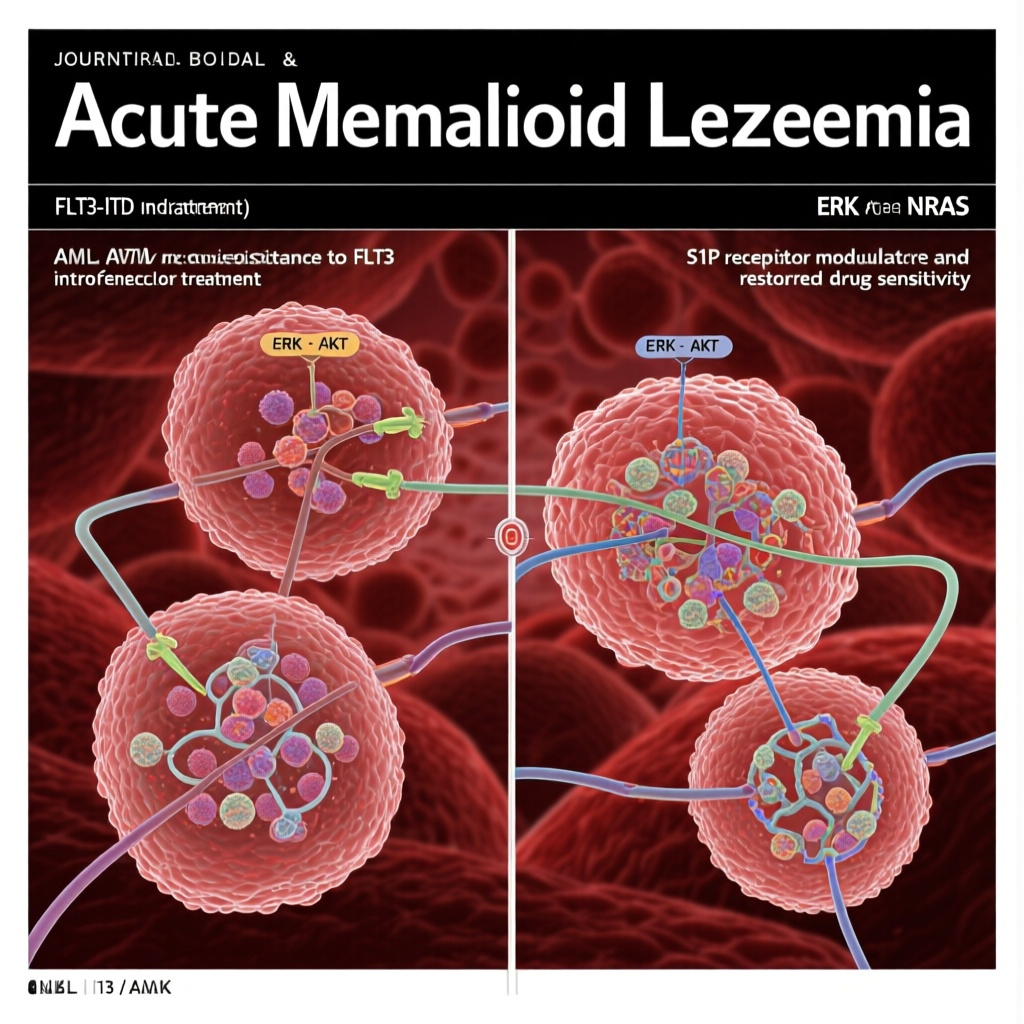
S1P Receptor Modulation Restores FLT3 Inhibitor Sensitivity in NRAS-Mutated FLT3-ITD Acute Myeloid Leukemia
Posted inHematology-Oncology news Oncology

S1P Receptor Modulation Restores FLT3 Inhibitor Sensitivity in NRAS-Mutated FLT3-ITD Acute Myeloid Leukemia

Posted by MedXY By MedXY 06/04/2026
Preclinical data suggest fingolimod and mocravimod can resensitize NRAS-mutated FLT3-ITD AML to FLT3 inhibitors by suppressing ERK-SPHK1-AKT signaling, including activity in patient blasts and an orthotopic mouse model.
Read More
Comprehensive Mutational Profiling and Clinical Outcomes in Adult AML with NUP98 Rearrangement
Posted inHematology-Oncology news

Comprehensive Mutational Profiling and Clinical Outcomes in Adult AML with NUP98 Rearrangement

Posted by MedXY By MedXY 05/18/2026
Adult AML with NUP98 rearrangements is a high-risk subtype marked by frequent FLT3-ITD and WT1 mutations, poor survival, and potential benefit from FLT3 inhibitors and stem cell transplant.
Read More
Allogeneic Stem Cell Transplantation Improves Survival in High-Risk t(6;9) AML, Especially in Younger Patients and Those Achieving CR1
Posted inHematology-Oncology news Pediatrics

Allogeneic Stem Cell Transplantation Improves Survival in High-Risk t(6;9) AML, Especially in Younger Patients and Those Achieving CR1

Posted by MedXY By MedXY 04/27/2026
A large EBMT study shows allo-HSCT provides favorable 2-year survival (65.7%) in high-risk t(6;9) AML, with superior outcomes in CR1 and pediatric/AYA patients. FLT3-ITD positivity triples relapse risk but doesn't impact overall survival.
Read More
Tailoring Transplant Conditioning and Maintenance Therapy in FLT3-ITD AML: Insights on NPM1 Mutations and Measurable Residual Disease
Posted inHematology-Oncology news

Tailoring Transplant Conditioning and Maintenance Therapy in FLT3-ITD AML: Insights on NPM1 Mutations and Measurable Residual Disease

Posted by MedXY By MedXY 11/04/2025
Posttransplant gilteritinib greatly benefits FLT3-ITD AML patients with NPM1 comutations, while myeloablative conditioning offers limited advantages over reduced-intensity conditioning in eradicating measurable residual disease.
Read More
  • Comorbid Insomnia Amplifies Blood Pressure Reduction with CPAP Therapy in Obstructive Sleep Apnea Patients
  • Decoding the Immune Landscape of COPD: Single-Cell RNA Sequencing Reveals Profibrotic Macrophage and Monocyte Niches Driving Disease Progression
  • One-Year Tumor Volume Regression as a Predictor of Survival in I-125 Plaque Brachytherapy for Posterior Uveal Melanoma
  • Unveiling XXYLT1 as a Novel Mendelian Gene in Inherited Retinal Dystrophy: Insights from an Integrated GWAS Approach
  • Determinants of Endothelial Cell Density One Year After DMEK: Insights from the Diabetes Endothelial Keratoplasty Study
  • About us
  • Contact us
  • MedXY story
  • Privacy Policy
  • Subscribe Now!
  • 账号

  • English
  • 日本語
  • Tiếng Việt
  • 中文

Alzheimer's disease artificial intelligence atrial fibrillation biomarkers breast cancer Cardiology cardiovascular disease cardiovascular risk chronic kidney disease clinical trial clinical trials critical care diabetes epidemiology health heart failure hepatocellular carcinoma Hypertension immunotherapy inflammation MASLD mental health metformin Mortality myocardial infarction nutrition obesity older adults oncology Pediatrics precision medicine Pregnancy prostate cancer public health quality of life randomized clinical trial randomized controlled trial randomized trial risk stratification SGLT2 inhibitors stroke type 1 diabetes type 2 diabetes weight loss women's health

Your health, we care

Copyright 2026 — Medxy AI. All rights reserved.
Scroll to Top
Sign in