
MedXY
Not signed in Sign in / Register
Skip to content
medxy logo Medxy AI
  • Specialties
    • Allergy & Immunology
    • Anesthesiology
    • Cardiology
    • Critical Care
    • Dermatology
    • Diabetes & Endocrinology
    • Emergency Medicine
    • Family Medicine & Nutrition
    • Gastroenterology
    • General Surgery
    • Hematology-Oncology
    • HIV/AIDS
    • Infectious Diseases
    • Internal Medicine
    • Nephrology
    • Neurology
    • Nursing & care
    • OB/GYN & Women’s Health
    • Oncology
    • Ophthalmology
    • Orthopedics
    • Otorhinolaryngology
    • Pathology & Lab Medicine
    • Pediatrics
    • Plastic Surgery
    • Psychiatry
    • Public Health
    • Radiology
    • Respiratory
    • Rheumatology
    • Urology
  • Clinical Updates
  • Medical News
  • iDoctor
  • Specialties
    • Allergy & Immunology
    • Anesthesiology
    • Cardiology
    • Critical Care
    • Dermatology
    • Diabetes & Endocrinology
    • Emergency Medicine
    • Family Medicine & Nutrition
    • Gastroenterology
    • General Surgery
    • Hematology-Oncology
    • HIV/AIDS
    • Infectious Diseases
    • Internal Medicine
    • Nephrology
    • Neurology
    • Nursing & care
    • OB/GYN & Women’s Health
    • Oncology
    • Ophthalmology
    • Orthopedics
    • Otorhinolaryngology
    • Pathology & Lab Medicine
    • Pediatrics
    • Plastic Surgery
    • Psychiatry
    • Public Health
    • Radiology
    • Respiratory
    • Rheumatology
    • Urology
  • Clinical Updates
  • Medical News
  • iDoctor
  • facebook.com
  • twitter.com
  • t.me
  • instagram.com
  • youtube.com
Subscribe

corneal epithelium

  • Home
  • corneal epithelium
Corneal Epithelial Changes Induced by CDK4/6 Inhibitors in HR+ Breast Cancer: Clinical Insights and Implications
Posted innews Oncology Ophthalmology

Corneal Epithelial Changes Induced by CDK4/6 Inhibitors in HR+ Breast Cancer: Clinical Insights and Implications

Posted by By MedXY 10/14/2026
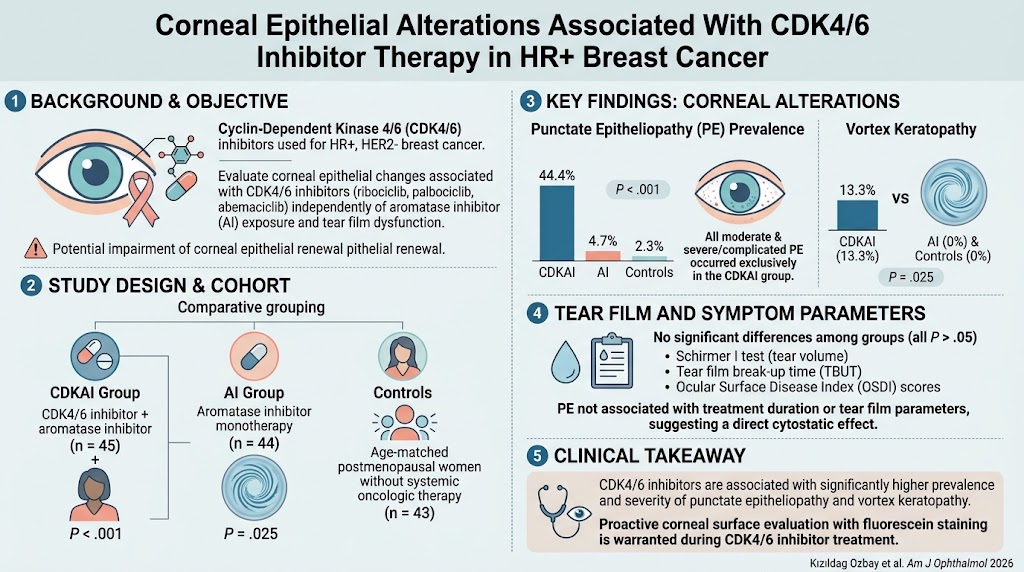
CDK4/6 inhibitor therapy in hormone receptor-positive breast cancer is linked to increased corneal epithelial alterations, including punctate epitheliopathy and vortex keratopathy, independent of aromatase inhibitor effects or tear film dysfunction.
Read More
  • Evaluating Beta Cell Function in Preclinical Type 1 Diabetes Using CGM-Derived Disposition Index
  • Menstrual Cycle Influence on Exercise Performance: The Role of Cramp Severity and Psychological Factors in Active Women
  • Innovative Optical Tracking Enhances Upper Extremity Joint Assessment in Burn Patients
  • Comparative 1-Year Evaluation of 3D-Printed Resin Crowns Versus Monolithic Zirconia Crowns for Posterior Prostheses
  • Facilitated vs Self-Guided Advance Care Planning in Black and White Older Adults: Insights from the EQUAL ACP Randomized Trial
  • About us
  • Contact us
  • MedXY story
  • Privacy Policy
  • Subscribe Now!
  • 账号

  • English
  • 日本語
  • Tiếng Việt
  • 中文

Alzheimer's disease artificial intelligence atrial fibrillation biomarkers breast cancer Cardiology cardiovascular disease cardiovascular risk chronic kidney disease clinical trial clinical trials critical care diabetes epidemiology GLP-1 receptor agonists heart failure hepatocellular carcinoma Hypertension immunotherapy inflammation MASLD mental health Mortality multiple myeloma myocardial infarction nutrition obesity older adults oncology Pediatrics precision medicine Pregnancy prognosis public health quality of life randomized clinical trial randomized controlled trial risk stratification semaglutide SGLT2 inhibitors stroke targeted therapy type 1 diabetes type 2 diabetes women's health

Your health, we care

Copyright 2026 — Medxy AI. All rights reserved.
Scroll to Top