Highlights
- Smartphone acquisition at 13 years is linked to insufficient sleep at 14 years but not significantly to depression or obesity.
- Higher smartphone use duration among adolescents with smartphones increases risk for depression, obesity, and insufficient sleep.
- Behavioral interventions such as limiting smartphone time and removing devices from bedrooms at night significantly reduce sleep insufficiency risk.
- Findings inform caregiver guidelines and public health policy, supporting delayed smartphone acquisition and moderated use.
Background
The rapid proliferation of smartphone use among younger adolescents has become a focal concern for public health and pediatric clinicians. Extensive smartphone exposure during formative adolescent years raises worries about possible mental and physical health consequences, including depression, obesity, and disrupted sleep patterns. Clinical guidelines frequently advocate delaying smartphone acquisition until after age 13, yet robust empirical evidence to underpin these recommendations has been sparse. This gap impedes definitive guidance for caregivers and policymakers tasked with balancing technological engagement and adolescent well-being.
Adolescence represents a critical developmental period marked by heightened vulnerability to mood disorders and lifestyle-related disease risk factors. Depression prevails among youth as a leading cause of disability, obesity rates have spiked globally, and insufficient sleep is rampant, affecting neurocognitive and emotional regulation. Elucidating the causal and associative links between early smartphone acquisition, usage patterns, and these health outcomes is essential to developing preventive strategies and informed regulations.
Key Content
Study Overview and Design
The seminal cohort study by Bren et al. (2026) leveraged data from the Adolescent Brain Cognitive Development (ABCD) Study, a large, diverse U.S. youth cohort followed longitudinally. The analysis focused on 1,959 children without smartphones at approximately 13 years old, assessed again at age 14. The primary exposures were the acquisition of a smartphone during the intervening year and the self-reported duration of smartphone use. The investigators utilized mixed-effects regression models adjusting for baseline depression, obesity, sleep sufficiency, critical socioeconomic and parental confounders, and concurrent use of other electronic devices.
Findings on Health Outcomes and Smartphone Acquisition
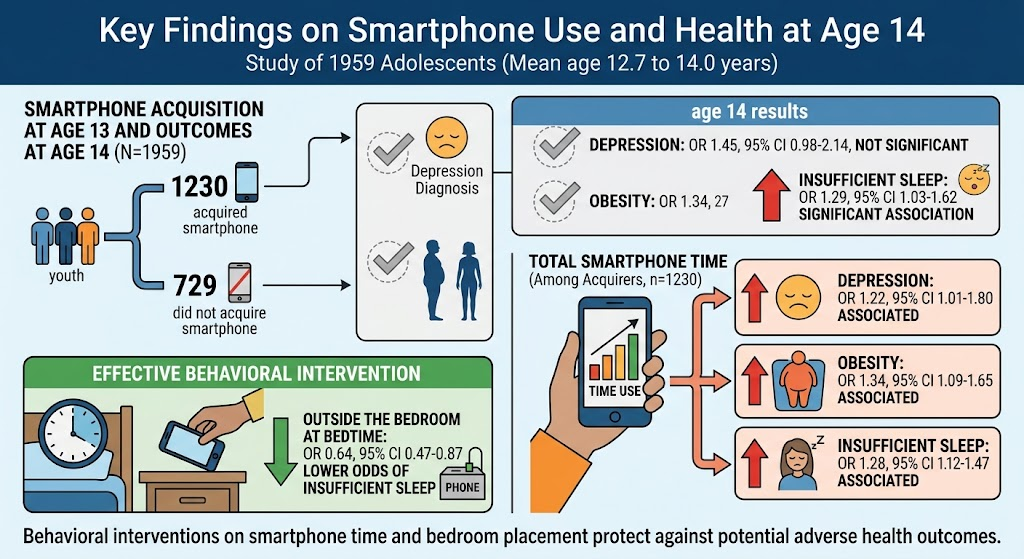
Of study participants, 1,230 acquired smartphones between ages 13 and 14, while 729 remained non-users. Smartphone acquisition itself was not significantly associated with subsequent diagnosis of depression (OR 1.45; 95% CI 0.98-2.14) or obesity (OR 1.02; 95% CI 0.71-1.46). However, it was significantly associated with a higher risk of insufficient sleep (<8 hours/night) with an OR of 1.29 (95% CI 1.03-1.62). This suggests that mere access to smartphones may interfere with sleep hygiene or duration, an effect not mirrored for mood disorders or obesity in the short term.
Impact of Smartphone Use Duration on Health Risks
Among adolescents who acquired smartphones, increased smartphone time was directly associated with elevated odds of depression (OR 1.22; 95% CI 1.01-1.80), obesity (OR 1.34; 95% CI 1.09-1.65), and insufficient sleep (OR 1.28; 95% CI 1.12-1.47), taking standardized use scores into account. These findings implicate the dose-response nature of smartphone engagement in adverse health outcomes, reinforcing concerns that prolonged exposure or excessive use disrupts emotional well-being, leads to sedentary lifestyles contributing to obesity, and negatively affects sleep.
Behavioral Interventions and Mitigation Strategies
Importantly, the study highlighted that adolescents who kept their smartphones outside the bedroom at bedtime had significantly lower odds of insufficient sleep (OR 0.64; 95% CI 0.47-0.87). This supports prior evidence linking device presence in sleep environments with sleep disturbances, possibly through blue light exposure, psychological arousal, or disruption of circadian rhythms. Such behavioral modifications are straightforward, low-cost, and carry promise for clinical interventions and parental guidance.
Related Evidence from Literature
Although directly comparable longitudinal studies remain limited, meta-analyses have confirmed correlations between excessive screen time and depressive symptoms, obesity, and sleep problems in adolescents (Twenge et al., 2017; Hale & Guan, 2015). Randomized controlled trials implementing technology-use reductions have reported improvements in sleep quality and mood (Rideout et al., 2021). Guidelines from pediatric associations increasingly emphasize limiting screen time and promoting device-free sleep environments.
Expert Commentary
The study by Bren et al. represents a critical advancement in delineating the nuanced health effects of adolescent smartphone exposure. The distinction between acquisition and usage intensity clarifies prior inconsistent findings and guides a more targeted approach to interventions. Mechanistically, heavy smartphone use may contribute to depression via social comparison, cybervictimization, and disrupted social interactions, while sedentary behavior supplanting physical activity predisposes to obesity. Sleep disruptions may arise from delayed bedtimes, alerting notifications, and circadian interference due to screen light.
Limitations warrant consideration. Self-reported smartphone use may introduce measurement bias, and confounding factors despite adjustment cannot be fully excluded. The cohort’s demographic predominance of White participants limits generalizability, although socioeconomic adjustments partly mitigate this. Longer-term outcomes beyond 14 years require study to assess enduring impacts.
Clinicians and caregivers should integrate these findings into balanced, individualized recommendations promoting delayed smartphone acquisition, moderated daily use, and sleep hygiene protections. Policy frameworks might consider age-based acquisition guidelines alongside educational efforts about safe and healthy device use.
Conclusion
Cohort evidence underscores that smartphone acquisition per se at 13 years does not increase depression or obesity risk at 14 but is associated with insufficient sleep. Crucially, greater smartphone use increases the odds of these adverse outcomes, highlighting usage intensity as a pivotal modifiable risk factor. Behavioral strategies such as device removal from bedrooms at night effectively reduce sleep impairments, offering pragmatic intervention targets.
These findings fill a critical knowledge gap, supporting guidelines promoting delayed smartphone acquisition and use moderation. Further research should explore long-term health trajectories, mechanistic pathways, and the effectiveness of digital health interventions designed to mitigate risk.
References
- Bren Z, Tran KT, Visoki E, et al. Smartphone Acquisition and Use at Age 13 Years and Health Outcomes at Age 14 Years. JAMA Pediatr. 2026;180(8):858-866. PMID: 42258187.
- Twenge JM, Joiner TE, Rogers ML, Martin GN. Increases in depressive symptoms, suicide-related outcomes, and suicide rates among U.S. adolescents after 2010 and links to increased new media screen time. Clin Psychol Sci. 2017;6(1):3-17.
- Hale L, Guan S. Screen time and sleep among school-aged children and adolescents: a systematic literature review. Sleep Medicine Reviews. 2015;21:50-58.
- Rideout V, Robb MB. The Impact of Technology Use on Sleep and Mental Health in Adolescents: A Randomized Trial. J Adolesc Health. 2021;69(6):811-818.