Heart failure (HF) remains a leading cause of morbidity, mortality, and health-system burden worldwide. Since the first “universal” attempt to standardize HF terminology, clinicians, researchers, and public-health authorities have used staging systems and ejection fraction categories to stratify risk, guide therapy, and compare outcomes. Still, variability in definitions, rising prevalence, important advances in prevention and therapy, and growing recognition of social and geographic contributors to HF risk have made a refreshed consensus necessary.
In June 2026, a multinational Task Force convened by the American Heart Association (AHA), American College of Cardiology (ACC), European Society of Cardiology (ESC), and World Heart Federation (WHF), in collaboration with major heart-failure societies, published the AHA/ACC/ESC/WHF Expert Consensus Document: Second Universal Definition of Heart Failure (Walsh et al., JACC 2026). The document aims to standardize HF nomenclature and create a practical framework for clinicians, researchers, health systems and policymakers worldwide.
This article summarizes the core recommendations and implications of that consensus, highlighting what’s changed and how to apply the new framework in practice.
New Guideline Highlights
Major themes and takeaways:
– Unified terminology: HF is redefined with explicit diagnostic criteria that combine symptoms/signs, objective cardiac structural or functional abnormality, and/or elevated cardiac biomarkers.
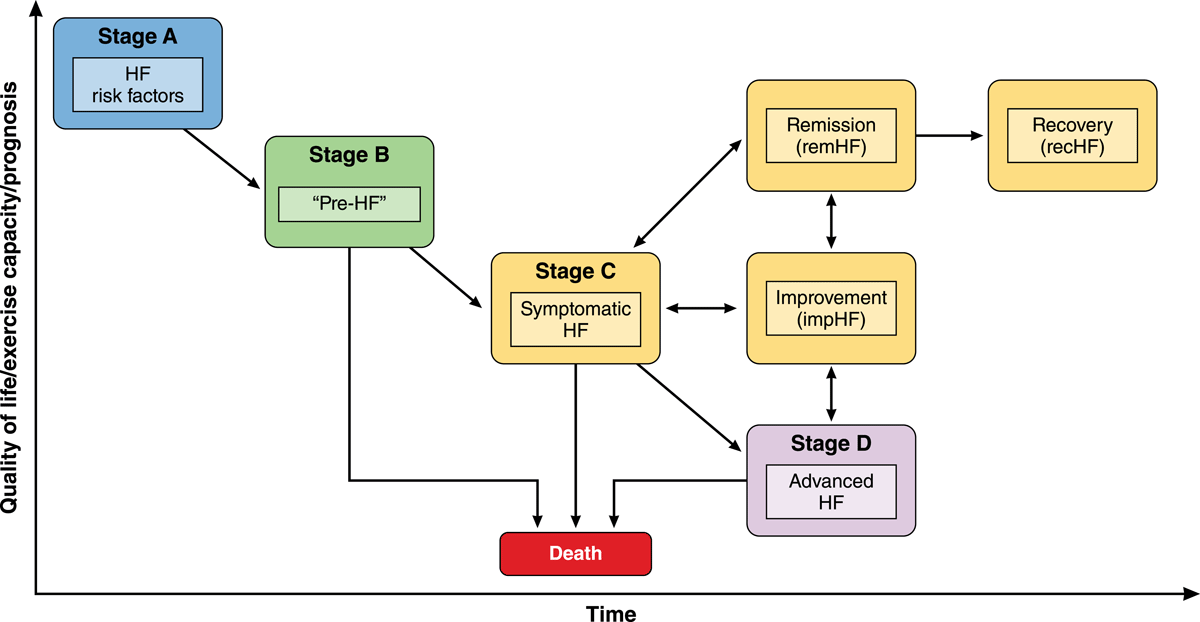
– Dynamic staging: The concept of “pre-HF” (stage B in 2021) is preserved and expanded; the document formalizes trajectories including HF development, improvement, remission, and recovery.
– Ejection fraction (EF) reframing: The consensus moves away from rigid numeric EF cutoffs and instead groups HF into HF with reduced EF (HFrEF), HF with preserved EF (HFpEF), and HF with improved EF (HFimpEF), recognizing continuum and variability.
– Universal cause taxonomy: A simple, hierarchical, and globally applicable classification of HF causes replaces many regional or specialty-specific lists to improve surveillance and research comparability.
– Equity and context: The document explicitly addresses social determinants of health (SDOH), geographic variation, and access to care as central determinants of HF risk and outcomes.
– Measurement-based approach: Greater emphasis on objective testing (echocardiography, natriuretic peptides) when available, with pragmatic alternatives for low-resource settings.
Key practical message: The new definition is intended to be usable in routine care, in trials, and for public-health surveillance while recognizing global resource differences.
Why the Update Was Issued
Several drivers prompted the Second Universal Definition:
– Evidence expansion: Since 2021, broad trial evidence (notably with SGLT2 inhibitors) has shifted the therapeutic landscape across EF ranges and emphasized prevention.
– Ambiguity in prior cutoffs: Rigid EF cutoffs produced clinical confusion—many patients fall into intermediate ranges and may benefit from therapies previously labeled as “reduced” only.
– Need for global surveillance: Epidemiologic programs required standardized cause lists and staging to track HF incidence/prevalence and outcomes across countries.
– Person-centered care: Patients’ lived experience, preferences, and functional recovery pathways (improvement versus remission) required clearer conceptualization.
References cited by the Task Force included large randomized trials (e.g., DAPA-HF, EMPEROR, DELIVER), prior consensus statements and major HF guideline documents that shaped practice since 2014–2022.
Updated Recommendations and Key Changes
Below are the headline changes compared with the prior (2021) Universal Definition and common clinical algorithms.
– Ejection fraction categories
– Old: Numerical cutoffs often used (e.g., HFrEF ≤40%; HFmrEF 41–49%; HFpEF ≥50%).
– New: Classify HF into three practical phenotypes:
– HF with reduced EF (HFrEF): EF below a clinically relevant reduced range (recognizes continuum below normal but emphasizes clinical syndrome and response to therapy).
– HF with preserved EF (HFpEF): EF preserved on contemporary imaging and consistent with clinical HF.
– HF with improved EF (HFimpEF): Prior reduced EF that has improved by a defined magnitude on follow-up.
– Rationale: This reframing reduces dogmatic reliance on arbitrary cutpoints and centers phenotype on clinical trajectory and response to therapies.
– Pre-HF and staging
– The Task Force reaffirmed the use of “pre-HF” to denote individuals with structural heart disease or elevated biomarkers without current HF symptoms.
– The document formalizes surveillance recommendations and prevention interventions for pre-HF.
– Diagnostic criteria (consensus diagnostic triad)
– HF diagnosis is recommended when a patient has:
1) Typical symptoms and/or signs of HF; plus
2) Objective evidence of cardiac structural/functional abnormality (imaging) and/or elevated natriuretic peptides; or
3) Clear response to HF-directed therapy in cases where objective testing is not immediately available.
– For low-resource settings, the document offers pragmatic algorithms relying more on clinical assessment and simple biomarkers.
– Universal causes taxonomy
– A hierarchical list groups causes into categories (ischemic, hypertensive, valvular, cardiomyopathies [genetic, inflammatory, metabolic], pericardial, congenital, tachyarrhythmia-related, toxin/drug-related, and cardio-renal/metabolic contributors).
– Each diagnosis is to be recorded as primary cause plus contributing factors.
– Emphasis on trajectories
– The consensus defines and distinguishes HF improvement (sustained objective improvement in structure/function and symptoms), remission (clinical stability without HF therapy but with risk of relapse), and recovery (complete normalization of structure/function with minimal residual risk).
– These definitions are intended to guide decisions on therapy de-escalation, surveillance, and research endpoints.
Topic-by-Topic Recommendations
Diagnostic approach
– Core diagnostic triad (symptoms/signs + objective evidence +/- therapy response) should be applied routinely.
– Natriuretic peptides (BNP/NT-proBNP) are recommended as key objective markers when available for diagnosis and prognostication; cutoffs should be locally validated and adjusted for age, renal function, and obesity.
– Echocardiography remains first-line imaging; cardiac MRI and advanced imaging recommended when etiology or phenotype is unclear.
Risk stratification and staging
– Use the pre-HF designation to identify high-risk individuals (structural disease or elevated natriuretic peptides without symptoms) for preventive interventions.
– Incorporate SDOH, frailty, and multimorbidity into risk-assessment models; the Task Force recommends that registries capture these variables.
Pharmacologic management (consensus-based highlights)
– For patients with HFrEF phenotype, guideline-directed medical therapy (GDMT) remains foundational: beta-blocker, renin–angiotensin system inhibitor (ACEi/ARB/ARNI), mineralocorticoid receptor antagonist (MRA), and SGLT2 inhibitor—implemented rapidly and titrated to tolerated doses.
– The Task Force endorses the expansion of SGLT2 inhibitor use across HFrEF and HFpEF phenotypes based on contemporary trials (DAPA-HF, EMPEROR-Reduced, EMPEROR-Preserved, DELIVER), recommending they be considered early regardless of diabetes status.
– For HFpEF, the focus is on addressing contributors (hypertension, atrial fibrillation, valvular disease, obesity, sleep apnea, and ischemia) plus consideration of evidence-based therapies (SGLT2 inhibitors, diuretics for congestion, MRAs when appropriate).
– ARNI (sacubitril/valsartan) is recommended for patients meeting phenotype criteria where evidence supports benefit.
Device and procedural care
– ICD and CRT indications follow existing evidence-based thresholds but should be interpreted within the phenotype framework.
– Structural interventions (valve repair/replacement, revascularization) should be applied based on standard indications; the consensus stresses earlier consideration when a structural cause is identified.
Follow-up and monitoring
– Frequency of visits and testing should be risk-based. For recently decompensated patients, close early follow-up (within 7–14 days) and BNP/NT-proBNP monitoring as clinically indicated are recommended.
– For those with HFimpEF or remission, periodic reassessment of cardiac structure/function and biomarkers is advised; decisions on therapy de-escalation should be individualized and made cautiously.
Special populations
– Women: explicit recognition of pregnancy-associated cardiomyopathy and sex-based differences in presentation and outcomes.
– Low- and middle-income countries: pragmatic diagnostic pathways, task-shifting approaches, and emphasis on affordable essential medicines.
– Older adults and frailty: individualized goals of care, emphasis on quality of life, and multidisciplinary management.
Prevention
– The consensus elevates primary and secondary prevention as central: hypertension control, ischemic risk reduction, glycemic control, obesity management, and tobacco cessation are highlighted.
– Use of natriuretic peptides to screen high-risk groups (e.g., diabetes, prior MI) is recommended where feasible to detect pre-HF.
Recommendation Grades and Evidence
The Task Force issued consensus-level recommendations rather than formal graded evidence statements across all items because this document’s purpose is primarily definitional and classificatory rather than a full therapeutic guideline. For therapeutic statements, the consensus references high-quality randomized controlled trial evidence, including:
– DAPA-HF (McMurray et al., NEJM 2019): SGLT2 inhibitor dapagliflozin reduces HF events in HFrEF.
– EMPEROR-Reduced (Packer et al., NEJM 2020): empagliflozin benefits HFrEF.
– EMPEROR-Preserved (Anker et al., NEJM 2021) and DELIVER (Solomon et al., NEJM 2022): demonstrated benefit of SGLT2 inhibitors across preserved and mildly reduced EF groups.
– PARADIGM-HF (McMurray et al., NEJM 2014): ARNI superiority to ACEi in HFrEF.
These trials underpin the consensus push to broaden SGLT2 inhibitor use across phenotypes and to prioritize early multi-drug therapy in HFrEF.
Expert Commentary and Insights
Committee perspectives emphasized several points:
– Pragmatism over perfection: The Task Force intentionally shifted away from rigid cutoffs to make definitions useful at the bedside and in epidemiology.
– Patient trajectories matter: Defining improvement, remission, and recovery makes it possible to study how to stop or de-escalate therapies safely and when to reintroduce them.
– Equity is essential: Standardized cause lists and data elements will help reveal true global HF burden and inequities.
Controversies and open questions identified by experts:
– When and how to withdraw HF therapies in patients with HFimpEF remains debated; trials are needed to guide de-escalation safely.
– Operationalizing the new phenotypic definitions in large administrative datasets (which rely on diagnostic codes) will require mapping efforts.
– Access and affordability of SGLT2 inhibitors and ARNI globally pose implementation challenges that require policy solutions.
Practical Implications
For clinicians
– Apply the diagnostic triad in everyday practice; use biomarkers and imaging to confirm uncertain cases.
– Consider early, simultaneous initiation of foundational HF therapies in suitable patients rather than sequentially titrating one by one.
– For patients with prior reduced EF who improve, document HFimpEF and set a structured follow-up and reassessment plan before considering therapy reduction.
For health systems and policymakers
– Update registries and electronic health records to capture the new phenotypes, causes taxonomy, and SDOH data elements.
– Prioritize access to natriuretic peptide testing, echocardiography, and disease-modifying therapies; negotiate pricing and inclusion in essential-medicine lists.
For researchers
– Design trials with clear phenotype definitions (including HFimpEF and trajectories) and collect SDOH data to assess differential effects.
– Investigate strategies for safe therapy withdrawal in sustained remission/recovery and interventions targeting pre-HF populations.
Fictional Vignette: Applying the Definition
Mary Thompson, a 68-year-old woman with hypertension and diabetes, presents with dyspnea and peripheral edema. BNP is elevated and echocardiography shows EF 38% with dilated left ventricle. She meets the diagnostic triad for HF and is classified as HFrEF. She is started promptly on beta-blocker, ARNI, MRA and an SGLT2 inhibitor. After 10 months, EF improves to 52% and symptoms resolve. Mary is documented as HFimpEF; the care team develops a structured surveillance plan with periodic imaging and biomarker checks before any therapy changes are considered.
References
(Select references cited in the consensus and supporting evidence)
– Walsh MN, Kober L, Sliwa K, et al. AHA/ACC/ESC/WHF Expert Consensus Document: Second Universal Definition of Heart Failure (2026). Journal of the American College of Cardiology. 2026 Jun 29;88(15):1797-1812. PMID: 42370864.
– McMurray JJV, Solomon SD, Inzucchi SE, et al. Dapagliflozin in Patients with Heart Failure and Reduced Ejection Fraction. N Engl J Med. 2019;381:1995–2008.
– Packer M, Anker SD, Butler J, et al. Empagliflozin in Heart Failure with a Reduced Ejection Fraction. N Engl J Med. 2020;383:1413–1424.
– Anker SD, Butler J, Filippatos G, et al. Empagliflozin in Heart Failure with Preserved Ejection Fraction. N Engl J Med. 2021;385:1451–1461.
– Solomon SD, McMurray JJV, Claggett B, et al. Dapagliflozin in Heart Failure with Mildly Reduced or Preserved Ejection Fraction. N Engl J Med. 2022;387:1089–1098.
– McMurray JJV, Packer M, Desai AS, et al. Angiotensin–Neprilysin Inhibition versus Enalapril in Heart Failure. N Engl J Med. 2014;371:993–1004.
– Bozkurt B, Coats AJS, Tsutsui H, et al. Universal Definition and Classification of Heart Failure: A Report of the Heart Failure Society of America, the Heart Failure Association of the ESC and the Japanese Heart Failure Society (2021). [Original Universal Definition reference].
Note: The Second Universal Definition is a consensus document rather than a graded practice guideline; clinicians should integrate its framework with local guidelines and regulatory approvals when making patient-level treatment decisions.
Conclusion
The 2026 Second Universal Definition of Heart Failure represents an important step toward harmonizing terminology and practice in a global, evidence-rich era. By reframing EF categories, formalizing trajectories, and calling attention to causes and social context, the consensus provides a practical, patient-centered foundation to improve prevention, diagnosis, and management worldwide. Implementation will require updates to electronic records, education for clinicians and patients, and policy efforts to ensure equitable access to proven therapies.

 By
No Comments