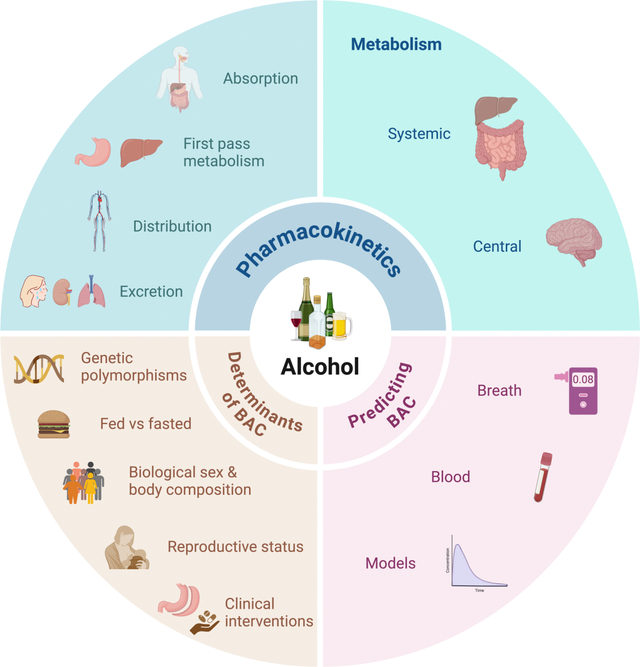
Alcohol remains the most widely consumed psychoactive substance globally and a major contributor to premature mortality, especially among individuals aged 15 to 49 years. Understanding the pharmacokinetics of alcohol—including its absorption, distribution, metabolism, and excretion—is pivotal for predicting its behavioral effects and toxicity. Over recent decades, research has advanced our knowledge of alcohol metabolism not only in the liver and gut but also centrally within the brain. Moreover, variability in this metabolic processing, influenced by genetic polymorphisms, sex, physiological states such as pregnancy and lactation, and clinical interventions such as bariatric surgery, has significant implications for individual susceptibility to alcohol use disorder (AUD) and alcohol-related diseases.