Highlight
1. Elevated YTHDC1 and TIGAR levels in pulmonary and circulating macrophages correlate with pulmonary arterial hypertension (PAH) severity.
2. Myeloid-specific deletion of Ythdc1 or Tigar confers protection against hypoxia- and SU5416/hypoxia-induced PH in mice.
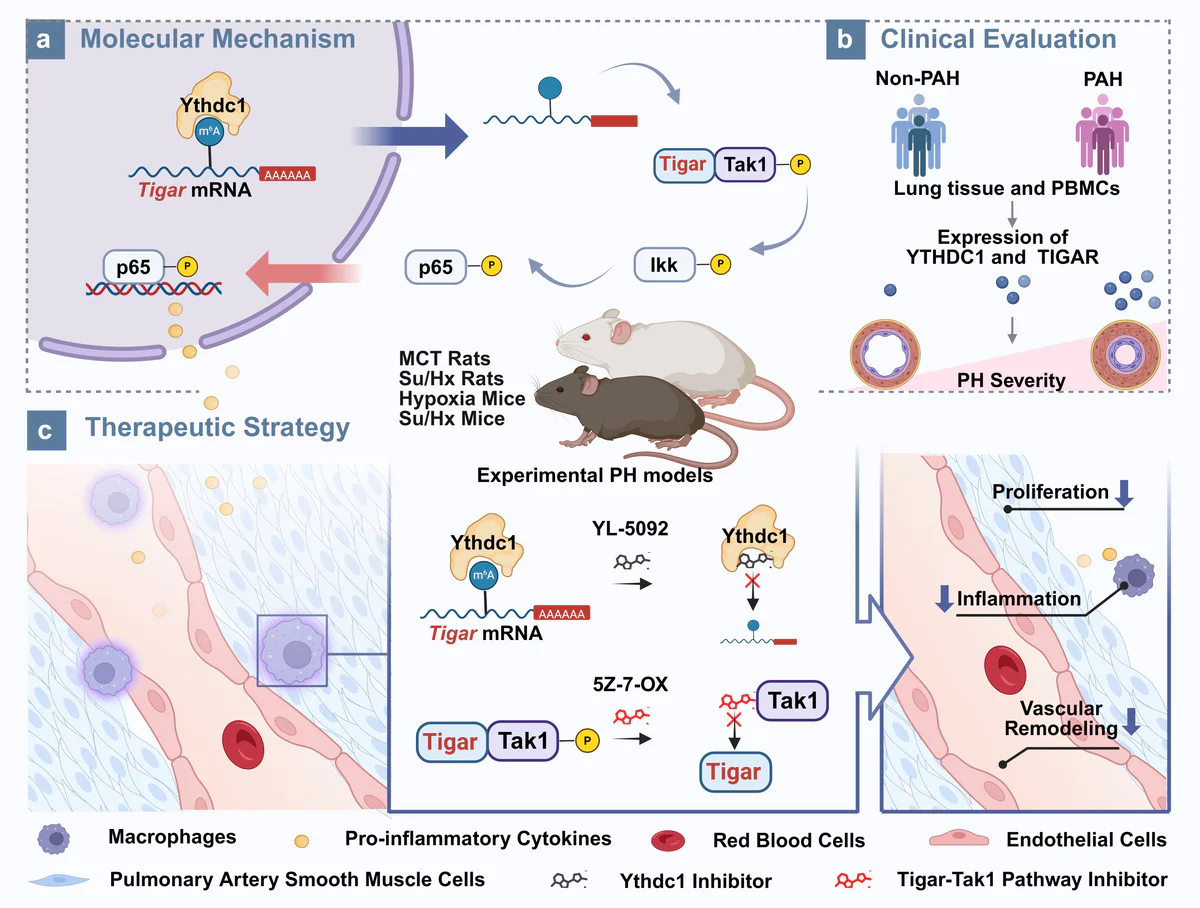
3. YTHDC1 stabilizes TIGAR mRNA, leading to NF-κB activation through TIGAR-TAK1 interaction, promoting inflammation and vascular remodeling.
4. Pharmacological targeting of the YTHDC1/TIGAR/NF-κB axis effectively reduces inflammation and disease progression in multiple PH models.
Study Background
Pulmonary hypertension (PH) is a progressive and often fatal disease characterized by increased pulmonary artery pressure and vascular remodeling, leading to right ventricular failure. Inflammation and immune dysregulation play a crucial role in exacerbating pulmonary vascular remodeling, yet clinical attempts to target inflammation have produced limited success to date. RNA modifications and their readers—especially N6-methyladenosine (m6A) binding proteins—emerge as pivotal regulators in immune and vascular biology, but the nuclear reader YTHDC1’s role in PH remains to be elucidated. This study investigates the macrophage YTHDC1/TIGAR/NF-κB axis as a novel inflammatory mediator and therapeutic target in PH.
Study Design
The authors performed a comprehensive analysis involving human PH lung and blood samples, assessing YTHDC1 and TIGAR expression in macrophages. Parallel studies utilized several well-established rodent PH models, including hypoxia-induced PH, SU5416/hypoxia, and monocrotaline models, to examine the mechanistic and therapeutic role of YTHDC1 and TIGAR. Genetic interventions involved myeloid-specific knockout mice for Ythdc1 and Tigar. Pharmacological approaches utilized YL-5092, a YTHDC1 inhibitor, and 5Z-7-oxozeaenol, a compound disrupting the TIGAR-TAK1 interaction. Key endpoints included pulmonary vascular remodeling, right ventricular systolic pressure, macrophage inflammatory profiles, and smooth muscle cell proliferation.
Key Findings
Expression Correlates with Disease Severity: In patients with idiopathic or connective tissue disease-associated PAH, both YTHDC1 and TIGAR were significantly upregulated in pulmonary macrophages and circulating monocytes. Their levels correlated positively with clinical parameters indicating disease severity, suggesting a potential biomarker role.
Genetic Deletion Protects Against PH: Myeloid-specific deletion of Ythdc1 or Tigar in mice yielded robust protection against hypoxia- and SU5416/hypoxia-induced PH. Specifically, these knockouts demonstrated reduced right ventricular systolic pressure, diminished pulmonary arterial remodeling, and decreased macrophage inflammatory activation, highlighting the axis’s critical pathogenic role.
Molecular Mechanisms: Under hypoxic conditions, Ythdc1 is upregulated in macrophages and directly binds Tigar mRNA, increasing its stability and protein expression. TIGAR protein interacts non-enzymatically through residues 152–161 with TAK1 kinase, initiating the NF-κB signaling cascade. This activation promotes the transcription of pro-inflammatory cytokines that drive pulmonary artery smooth muscle cell proliferation, a hallmark of vascular remodeling in PH.
Pharmacological Interventions: Treatment with YL-5092, targeting YTHDC1, or 5Z-7-oxozeaenol, which inhibits the TIGAR-TAK1 interaction, effectively suppressed macrophage-driven inflammation. Both agents attenuated pulmonary artery remodeling and right heart pressures across multiple rodent models with distinct PH etiologies, demonstrating potential translational applicability.
Expert Commentary
This study provides compelling evidence that the nuclear m6A reader YTHDC1 orchestrates a novel inflammatory signaling pathway in macrophages, driving pulmonary vascular remodeling through TIGAR-mediated NF-κB activation. The demonstration of YTHDC1’s RNA stabilization function on Tigar mRNA highlights a novel layer of post-transcriptional regulation in PH pathogenesis. Importantly, the non-enzymatic role of TIGAR interacting with TAK1 uncovers a unique mechanistic insight distinct from TIGAR’s canonical metabolic functions.
Given the complexity and heterogeneity of PH, targeting macrophage-driven inflammation through this newly identified axis could reconcile previous challenges faced by broadly immunosuppressive therapies. However, further investigation is warranted to confirm safety profiles and long-term efficacy, as well as to assess potential off-target effects of these novel inhibitors in humans.
Conclusion
The macrophage YTHDC1/TIGAR/NF-κB axis emerges as a critical driver of inflammatory vascular remodeling in pulmonary hypertension. Both genetic and pharmacologic intervention targeting this pathway shows promise in mitigating disease progression in preclinical models. These findings position YTHDC1 and TIGAR as potential biomarkers and therapeutic targets, opening new avenues for innovative treatment strategies to address the unmet clinical needs in PH management.
Funding and Clinicaltrials.gov
The study was supported by grants from various scientific foundations. There is no indication from the cited publication that clinical trials have been registered yet for pharmacological inhibitors YL-5092 or 5Z-7-oxozeaenol in PH. Further clinical translation and trial design will be essential to advance these findings.
References
Wang J, Feng Y, Shen Y, et al. Therapeutic Targeting of the Macrophage YTHDC1/TIGAR/NF-κB Axis Mitigates Pulmonary Hypertension. Am J Respir Crit Care Med. 2026 Oct 26. PMID: 42934119. Available at: https://pubmed.ncbi.nlm.nih.gov/42934119/
Additional literature supporting m6A readers in immune regulation and pulmonary hypertension pathobiology can be found in recent reviews and studies cited within the primary article.
Specialty calculators
For clinical reference; use professional judgment.