Highlight
- Age-dependent prolongation of the organ donation timeline was observed in pediatric brain-dead donors in Japan, with younger children (<6 years) experiencing the longest intervals between admission and organ procurement.
- Despite prolonged donor management, high organ-specific transplantation rates (>99%) were achieved across all pediatric age groups.
- Functions of key organs—respiratory, cardiovascular, renal, and hepatic—were successfully maintained or improved during donor management irrespective of donor age.
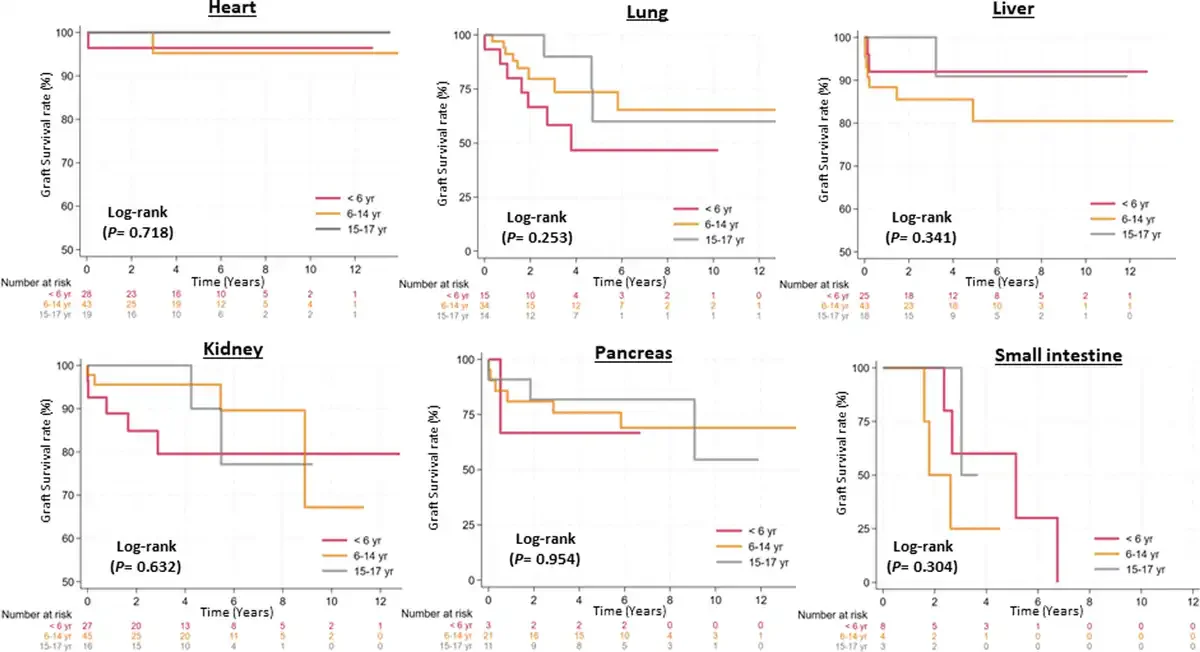
- Graft survival outcomes showed no significant differences across donor age groups, underscoring effective management strategies in pediatric donation.
Study Background
Organ transplantation remains a life-saving intervention for critically ill children with end-stage organ failure. However, pediatric donor availability and management present unique clinical challenges compared to adult counterparts. Brain death determination, family consent, and donor stabilization can be particularly complex owing to developmental physiology and ethical considerations in children. Japan’s pediatric donation system offers a valuable context to examine age-related nuances within brain-dead donors, particularly given the country’s relatively low pediatric organ donation volumes historically and recent legislative changes supporting transplantation. Understanding age-dependent processes and outcomes is crucial for optimizing donor management, enhancing organ utilization, and improving transplant success in this vulnerable population.Study Design
This retrospective nationwide cohort study analyzed all pediatric brain-dead donors (≤17 years) recorded by the Japan Organ Transplant Network between July 17, 2010, and March 31, 2024. Donors were stratified into three age groups for analysis: younger than 6 years, 6 to 14 years, and 15 to 17 years. The primary focus was to characterize the organ donation process’s timeline, donor management settings, organ-specific procurement and transplantation rates, and graft survival among these pediatric strata. No interventional procedures were performed as part of the study. Key endpoints included the duration from hospital admission to organ procurement, the proportions of organs transplanted by type (heart, liver, kidneys, lungs, pancreas), and graft survival data post-transplantation.Key Findings
The cohort comprised 100 pediatric brain-dead donors categorized as <6 years (n=32), 6-14 years (n=48), and 15-17 years (n=20). There was a clear age-related trend in the length of the donation process, with median times from hospital admission to organ procurement being 28 days for the youngest group, 19.5 days for the middle group, and 13.5 days for the oldest group (p < 0.01). Younger donors were more often cared for in dedicated children's hospitals and pediatric departments, whereas older donors were increasingly managed in emergency and critical care settings, reflecting care complexity and institutional specialization. Nearly all donors (99%) successfully led to organ transplantation, demonstrating the system’s efficiency. Transplantation rates for heart, liver, and kidneys were consistently high across all age groups, underlining effective donor selection and organ preservation. Interestingly, lung and pancreas transplantation rates increased progressively with donor age, possibly reflecting age-related anatomical and physiological suitability and acceptance criteria. Throughout the donor management phase, critical organ functions such as respiratory, cardiovascular, renal, and hepatic parameters were generally stable or improved until procurement, highlighting the efficacy of the multidisciplinary management approach. Importantly, graft survival analysis revealed no statistically significant differences across donor age groups, suggesting that prolonged donor management and younger age did not adversely impact transplantation outcomes.Expert Commentary
These findings provide compelling evidence that pediatric organ donation, even in younger children where donor management is prolonged, can achieve excellent transplantation rates and graft outcomes. The prolonged timeline in younger donors likely reflects complexity in brain death determination, family consent processes, and physiological stabilization in smaller children, necessitating extended multidisciplinary care and family support. The maintenance or improvement of organ function during this extended period speaks to advances in pediatric critical care and donor management protocols. The age-related increase in lung and pancreas transplantation rates could be attributable to technical challenges and organ size matching criteria more favorable in older donors. The lack of graft survival differences reassures clinicians and policymakers that prolonged donor management does not compromise transplant efficacy in pediatrics. However, these outcomes may rely on Japan’s specialized healthcare infrastructure and coordinated organ transplant network, which could limit direct generalizability to lower-resource settings. Future research might explore mechanistic factors underlying organ-specific transplantation feasibility by age and psychosocial dynamics influencing prolonged management, aiming to streamline and optimize donation processes further. Additionally, international comparative studies could elucidate system-level variations and best practices to improve pediatric transplantation globally.Conclusion
This nationwide Japanese study highlights significant age-dependent differences in the pediatric brain-dead organ donation process, notably a substantially prolonged timeline in children under six years. Despite this, high transplantation rates and equivalent graft survival across all pediatric age groups were achieved, underscoring effective multidisciplinary donor management and supportive care protocols. The findings emphasize the critical importance of sustained clinical and family engagement throughout the donation period. These insights offer valuable guidance for refining pediatric organ donation systems, especially in countries with low pediatric donation volumes, and ultimately improving transplant access and outcomes in children.Funding and ClinicalTrials.gov
The study was conducted using national registry data and does not report specific external funding or trial registration.References
1. Obara T, Tsukahara K, Nojima T, et al. Age-Related Differences in the Organ Donation Process Among Pediatric Brain-Dead Donors: A Nationwide Study in Japan. Crit Care Med. 2026;54(11):xxx-xxx. PMID: 43049463. 2. Pruett TL, et al. Pediatric organ donation and transplantation challenges. Pediatr Transplant. 2020;24(5):e13731. 3. Shemie SD, et al. International guidelines for pediatric brain death determination. J Intensive Care Med. 2021;36(7):748-757. 4. Japanese Organ Transplant Law and policy updates. Transplant Proc. 2023;55(1):27-32.Specialty calculators
For clinical reference; use professional judgment.