Polygenic Risk Based Detection and Treatment of Subclinical Coronary Atherosclerosis in the PROACT Clinical Trials: A Genotype-First Precision Prevention Approach
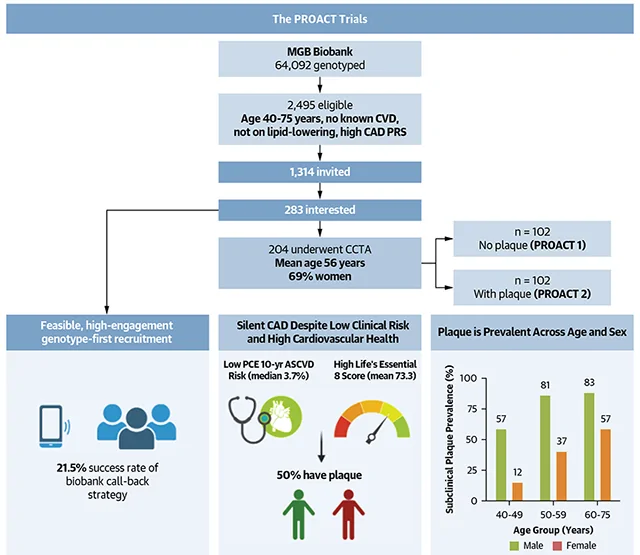
PROACT trials demonstrate feasibility and effectiveness of genotype-first recruitment using polygenic risk scores (PRS) to identify individuals at high genetic risk for coronary artery disease (CAD) despite low conventional risk.
Coronary computed tomographic angiography (CCTA) reveals a high prevalence of subclinical coronary atherosclerosis in asymptomatic, low-clinical-risk individuals stratified by high PRS.
Engagement with prevention trials is facilitated by genotype-based callback, with factors such as specialty care engagement and proximity to study sites influencing participation.
Findings highlight an actionable subset of “silent” CAD patients for whom early pharmacologic intervention (statins, colchicine) may prevent progression and clinical events, prompting reconsideration of risk assessment paradigms.