Introduction
Recurrent respiratory papillomatosis (RRP) is a rare, chronic disease characterized by the growth of benign tumors in the respiratory tract, primarily caused by infection with human papillomavirus (HPV) types 6 and 11. These papillomas can cause airway obstruction, voice changes, and breathing difficulties. The standard treatment typically involves repeated surgical removal of papillomas to maintain airway patency and vocal function. However, the need for frequent surgeries significantly diminishes quality of life and can pose substantial risks including anesthesia-related complications and scarring. In recent years, non-surgical therapies such as bevacizumab—a monoclonal antibody targeting vascular endothelial growth factor (VEGF)—and HPV-specific immunotherapies have emerged as promising alternatives or adjuncts to surgery. Bevacizumab, administered systemically or via direct injection into papillomas, may reduce tumor growth by inhibiting angiogenesis. HPV-targeted immunotherapies aim to enhance the patient’s immune response against the virus, potentially reducing lesion recurrence. Despite these advances, little is known about how patients with RRP prioritize different treatment attributes when making decisions, particularly regarding the trade-offs between surgery and emerging therapies. Understanding patient preferences is essential to developing patient-centered treatment models and improving clinical outcomes.Study Objectives
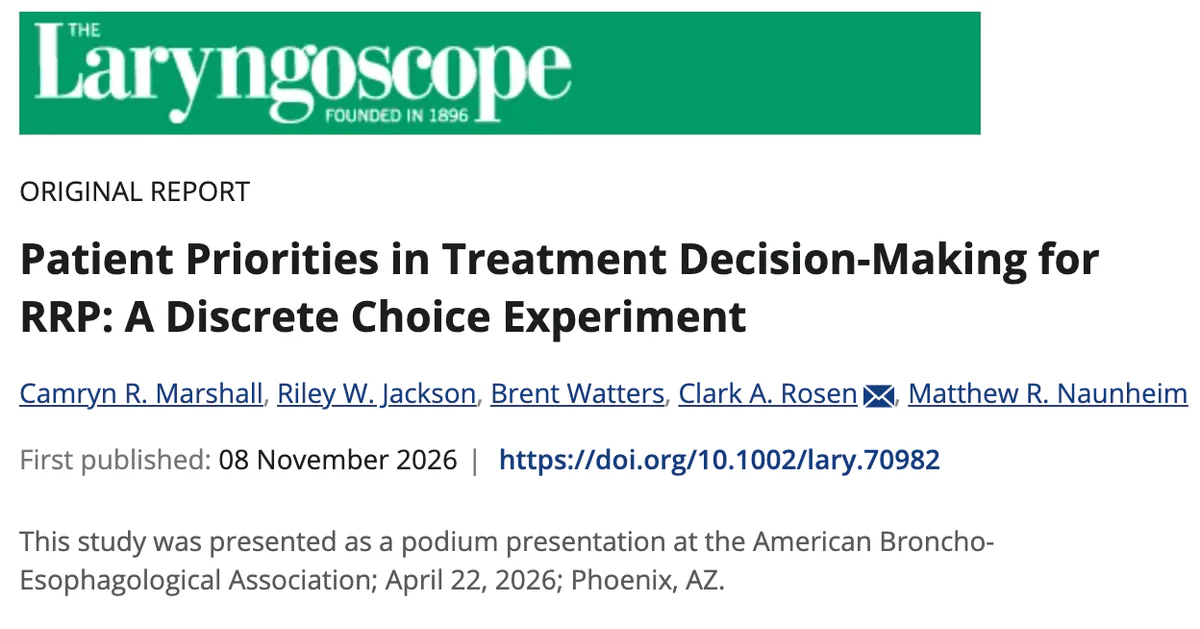
This study aimed to quantitatively assess treatment priorities among RRP patients using a discrete choice experiment (DCE). By identifying the most valued treatment attributes—such as frequency of future surgeries, side effects, and treatment burden—the study sought to inform clinical practice and future research tailored to patient needs.Methods
A two-phased approach was employed: 1. Semi-structured interviews: Ten randomly selected RRP patients were interviewed to identify significant treatment attributes that affect their decision-making. The most frequently cited attributes were the likelihood of needing future surgery, frequency of non-surgical treatments, and potential side effects. 2. Discrete Choice Experiment (DCE): These three key attributes were incorporated into a structured questionnaire distributed to a broader sample of RRP patients. Alongside, patients received standardized educational materials detailing bevacizumab and HPV-specific immunotherapy options to ensure informed responses. Participants then completed a series of hypothetical treatment choice tasks and indicated their preferred therapy option. Data quality was ensured by excluding incomplete or inconsistent responses. Hierarchical Bayes modeling was used to estimate patient preferences and attribute importance from the choice data.Results
The study analyzed 66 quality-controlled DCE responses. All three treatment attributes significantly influenced patient preferences (p < 0.001), demonstrating logical and consistent patterns in decision-making: – Side effects: Most influential attribute, accounting for 55.1% of the decision weight. Patients strongly preferred treatments with fewer or milder adverse effects. – Likelihood of future surgery: Accounted for 36.5% of the preference weight. Patients prioritized lowering the chance of requiring repeated surgeries. – Treatment frequency: Had less influence but was still significant, contributing 8.4% to decision-making. Patients favored treatments requiring fewer visits or interventions. Regarding treatment modality preferences, nearly half of the patients (48%) favored HPV-specific immunotherapy, and 44% preferred bevacizumab, compared to only 8% who preferred surgical options under local (awake) or general anesthesia.Discussion
This is the first quantitative investigation into treatment priorities from the perspective of patients living with RRP. The findings reveal a clear patient preference for therapies that reduce surgical burden and adverse effects. Given the well-recognized surgical risks, including airway trauma and anesthesia complications associated with repeated excisions, these results underscore an urgent unmet need for effective medical therapies. The strong inclination toward HPV-specific immunotherapy reflects patient optimism about immune-based strategies that might achieve sustained control of papillomas by targeting underlying viral infection. Bevacizumab’s favorable reception aligns with its mechanism of limiting tumor angiogenesis, which may reduce papilloma growth and thus surgery frequency. While frequency of treatments played a smaller role, it remains an important consideration, as patients weigh convenience and impact on daily life alongside therapeutic efficacy and safety.Clinical Implications
The study supports integrating patient preference data in clinical decision-making for RRP management, emphasizing shared decision-making models. Physicians should educate patients about emerging therapies including the benefits and risks of bevacizumab and HPV immunotherapy, contextualizing these within individual disease severity and treatment goals. Incorporating patient priorities can enhance adherence to chosen therapies, improve satisfaction, and ultimately lead to better health outcomes.Limitations and Future Research
The sample size was modest and primarily included patients able to complete the DCE, possibly skewing toward those engaged with healthcare systems. Further large-scale studies across diverse populations are necessary to validate and expand these findings. Longitudinal research should assess how treatment preferences evolve with disease progression and as new therapies become available. Additionally, real-world effectiveness and safety data for non-surgical options will be critical to inform practice guidelines.Conclusion
Patients with recurrent respiratory papillomatosis prioritize treatments that reduce the surgical burden and side effects, favoring HPV-specific immunotherapies and bevacizumab over repeated surgeries. This study provides essential patient-centered insights that can guide the development and clinical implementation of emerging RRP therapies, improving quality of life and treatment satisfaction for this challenging condition.Specialty calculators
For clinical reference; use professional judgment.