Highlights
- Oral deucrictibant, a bradykinin B2 receptor antagonist, demonstrated significantly faster onset of symptom relief compared to placebo in a large, global phase 3 crossover trial (RAPIDe-3) for on-demand treatment of hereditary angioedema (HAE) attacks.
- Phase 2 trials established dose-dependent efficacy and safety profiles for oral deucrictibant, supporting the 20 mg dose used in RAPIDe-3 and indicating favorable tolerability comparable to placebo.
- Oral administration provides a convenient, non-parenteral route addressing barriers to timely treatment of acute HAE attacks associated with injectable therapies.
- Early evidence supports potential efficacy of oral deucrictibant for prophylactic use in HAE and acquired angioedema due to C1-inhibitor deficiency, expanding therapeutic applications.
Background
Hereditary angioedema (HAE) is a genetically heterogeneous, rare, bradykinin-mediated disease characterized by unpredictable, episodic swelling affecting the skin and mucosal tissues. Attacks can cause significant morbidity and mortality, particularly when involving the upper airways. Current on-demand therapies include injectable C1 inhibitor concentrates and bradykinin B2 receptor antagonists, which, while effective, are limited by parenteral administration that can delay treatment initiation. There remains a critical unmet need for orally administered, effective, and well-tolerated on-demand treatments that enable prompt self-administration with rapid symptom relief.Key Content
Chronological Development and Clinical Trial Evidence
Phase 2 on-demand studies (RAPIDe-1)
The foundation for RAPIDe-3 was laid by the phase 2 dose-ranging trial RAPIDe-1, involving 74 adult participants with type 1 or 2 HAE. This randomized, double-blind, placebo-controlled crossover study investigated oral deucrictibant at 10, 20, and 30 mg doses. The primary endpoint was change in severity of attack manifestations by visual analog scale within 4 hours post-treatment. All deucrictibant doses significantly reduced attack severity compared with placebo (p<0·0001) with an excellent safety profile; no adverse events exceeded grade 2 severity. RAPIDe-1 demonstrated a clear dose-response effect and established 20 mg as an effective dose balancing efficacy and tolerability for subsequent trials.Phase 3 on-demand trial (RAPIDe-3)
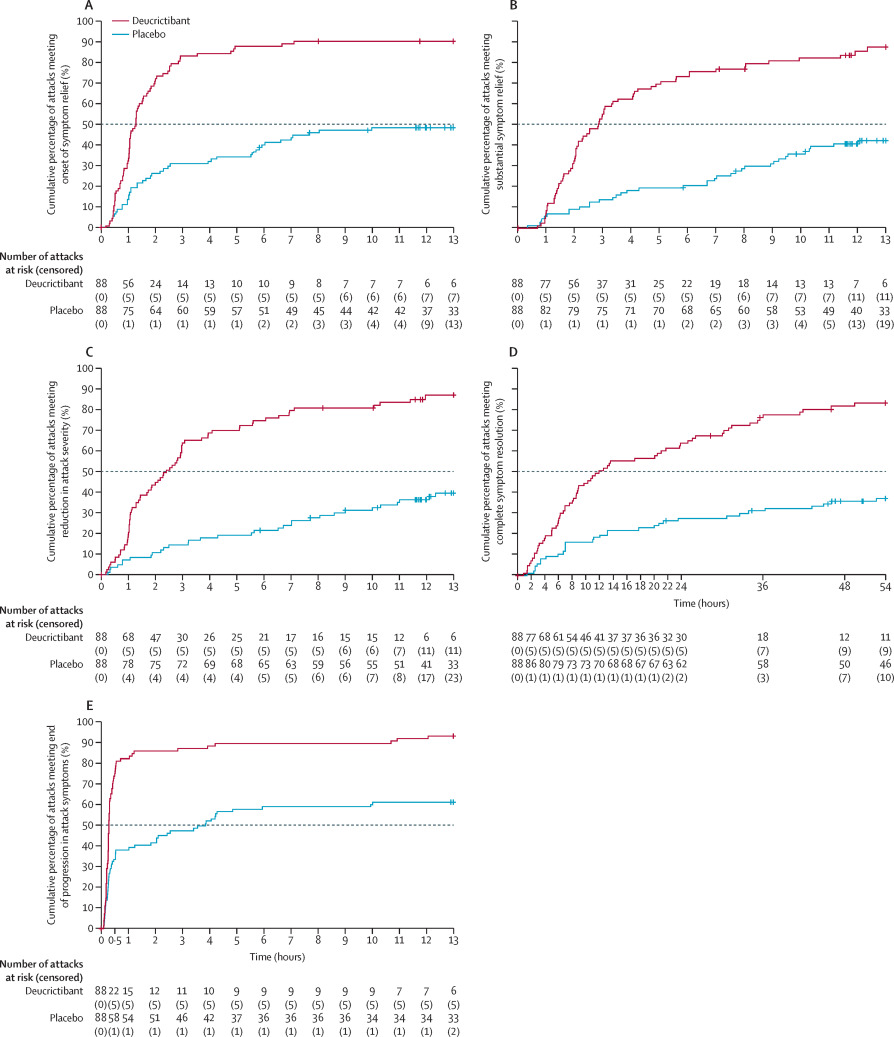
RAPIDe-3, a pivotal phase 3, 2×2 crossover trial enrolled adolescents (≥12 years) and adults (up to 75 years) with hereditary angioedema, including patients with normal C1 inhibitor but documented genetic variants. Conducted at 59 sites globally across 24 countries and six continents, the study randomized 134 eligible participants with documented recent attacks and experience with conventional therapies. Patients treated two attacks each, receiving 20 mg oral deucrictibant immediate-release capsules or placebo in randomized sequences, stratified by age and prophylaxis use. The primary endpoint was time to onset of symptom relief as per Patient Global Impression of Change (PGIC) score ‘at least a little better.’ Results showed median symptom relief onset at 1.28 hours with deucrictibant versus over 12 hours with placebo (p<0·0001). Across 113 patients treating 201 attacks, deucrictibant consistently accelerated symptom relief, and fatigue was the only adverse event reported more than once within 3 days post-treatment, with no treatment-related serious adverse events or discontinuations. These findings support deucrictibant as the first oral bradykinin B2 receptor antagonist yielding rapid, sustained relief for acute HAE attacks and improving patient convenience and adherence.Phase 2 prophylaxis trial (CHAPTER-1)
Beyond acute management, deucrictibant’s oral bioavailability was explored in the CHAPTER-1 phase 2 trial for prophylaxis in adults with HAE type 1 or 2. Randomizing 34 patients to 20 mg or 40 mg daily or placebo over 12 weeks demonstrated marked reductions in monthly attack rates: 79.2% reduction with 20 mg and 84.5% reduction with 40 mg vs placebo (p=0.0010 and p=0.0008, respectively). Safety was favorable, with mild, infrequent treatment-related adverse events. This proof-of-concept supports bradykinin B2 receptor antagonism by oral deucrictibant for prophylaxis, a novel therapeutic paradigm in HAE care.Long-term prophylaxis in acquired angioedema
In acquired angioedema due to C1-inhibitor deficiency (AAE-C1INH), open-label studies have shown deucrictibant extended-release tablets effectively prevent attacks over extended durations, reducing monthly attack rates nearly to zero without safety concerns. These early findings suggest deucrictibant’s therapeutic scope may include both hereditary and acquired bradykinin-mediated angioedema.Pharmacologic Mechanism and Translational Implications
Deucrictibant selectively antagonizes the bradykinin B2 receptor, a key mediator in vascular permeability and edema formation in HAE attacks. Oral immediate-release formulations allow rapid systemic absorption, critical for on-demand use. By blocking B2 receptors, deucrictibant mitigates bradykinin-induced angioedema with a mechanism distinct from C1 inhibitor replacement but complementary in targeting the downstream mediator pathway. The availability of an oral therapy facilitates early self-administration, potentially reducing attack severity, healthcare utilization, and improving quality of life. The successful demonstration of both on-demand and prophylactic efficacy heralds a paradigm shift towards convenient all-oral HAE management strategies with possibly broader applications in related bradykinin-mediated disorders.Expert Commentary
The robust, multicentre RAPIDe-3 trial represents a milestone in HAE therapeutics, providing Class 1 evidence for oral deucrictibant as a rapid, effective, and well-tolerated on-demand treatment. Its global scope and inclusion of adolescents enhance generalizability. The rapid median time to symptom relief significantly improves on previous options, potentially addressing delays in treatment initiation due to parenteral administration requirements of existing therapies. Despite encouraging findings, some limitations warrant discussion. The crossover design, while reducing inter-patient variability, may introduce carryover effects, though washout approaches mitigate this risk. The trial primarily enrolled patients experienced with conventional therapies, which might influence symptom reporting dynamics. Long-term safety data, especially concerning recurrent oral dosing and prophylactic use, requires further accumulation. Integration with existing guideline recommendations will be pivotal. Current HAE management guidelines endorse effective on-demand therapies for acute attacks but acknowledge limitations in administration routes. Deucrictibant offers a unique oral alternative, potentially broadening patient choice and adherence. However, head-to-head comparisons with existing parenteral B2 receptor antagonists or C1 inhibitor therapies remain necessary to delineate positioning. Mechanistically, targeting the bradykinin B2 receptor remains validated by clinical outcomes. Oral deucrictibant’s bioavailability and rapid action exemplify advances in drug formulation and pharmacokinetics, underscoring the translational success from receptor pharmacology to patient-centered therapy.Conclusion
Oral deucrictibant emerges as a transformative agent in hereditary angioedema management, delivering rapid symptom relief for acute attacks with an excellent safety profile, and promising prophylactic efficacy. The phase 3 RAPIDe-3 trial robustly supports its clinical adoption as the first oral bradykinin B2 receptor antagonist available for on-demand treatment, addressing longstanding unmet needs related to administration convenience, rapidity of effect, and tolerability. Further research should focus on head-to-head trials, real-world effectiveness, long-term safety, and exploration of its role in prophylaxis and acquired angioedema. The advent of oral deucrictibant is poised to significantly impact therapeutic algorithms, patient quality of life, and healthcare delivery paradigms in bradykinin-mediated angioedema.References
- Riedl MA, et al. Oral deucrictibant for on-demand treatment of hereditary angioedema attacks: a phase 3, multicentre, randomised, double-blind, placebo-controlled crossover trial. Lancet. 2026 Oct 8. PMID: 42849489.
- Riedl MA, et al. Oral deucrictibant for on-demand treatment of hereditary angioedema attacks (RAPIDe-1): a randomised, double-blind, placebo-controlled, phase 2 trial. Lancet Haematol. 2026 Apr;13(4):e200-e214. PMID: 41865747.
- Riedl MA, et al. Oral deucrictibant for prophylaxis of hereditary angioedema attacks (CHAPTER-1): primary analysis of a randomised, double-blind, placebo-controlled, phase 2 trial. Lancet Haematol. 2026 Apr;13(4):e215-e226. PMID: 41865746.
- Craig TJ, et al. Long-term prophylactic treatment with deucrictibant for angioedema due to acquired C1-inhibitor deficiency. J Allergy Clin Immunol. 2025 Dec;156(6):1650-1655. PMID: 40882771.