Patient Information
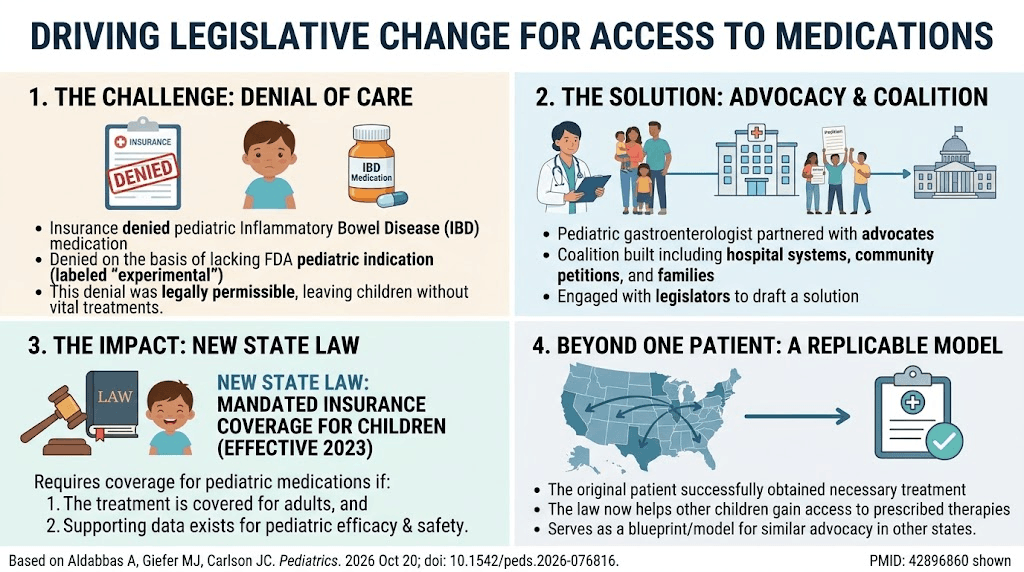
The patient is a pediatric patient diagnosed with inflammatory bowel disease (IBD), presenting with active disease requiring biologic therapy. The patient’s family consulted their pediatric gastroenterologist regarding the optimal treatment plan. Despite clinical indications, the patient’s insurance provider denied coverage for the indicated medication, citing that the treatment lacked a pediatric Food and Drug Administration (FDA) indication and was therefore considered experimental.
Diagnosis
The diagnosis of inflammatory bowel disease in this pediatric patient was established based on clinical presentation, endoscopic evaluation, and compatible histopathological findings. The necessity for advanced medication, typically used in adult populations and lacking formal pediatric FDA approval at that time, was crucial for disease control.
Differential Diagnosis
In the context of this case, differential diagnoses considered included other causes of pediatric gastrointestinal inflammation, such as infectious colitis, allergic colitis, and other forms of enteropathy. These were ruled out via laboratory results, imaging, and histology confirming IBD. The primary concern was ensuring access to effective treatment rather than diagnosis uncertainty.
Treatment and Management
The clinical team recommended an inflammatory bowel disease medication that was FDA-approved in adults but lacked pediatric labeling. After insurance coverage was denied legally based on the absence of pediatric FDA indication, the patient’s pediatric gastroenterologist collaborated with colleagues and advocacy groups to address access barriers at the legislative level.
Coalition building involved the local hospital system, community members, and patient families who petitioned policymakers. The physician and family provided testimony emphasizing the significance of timely access to standard-of-care medications for children when evidentiary data support pediatric safety and efficacy, despite the absence of formal pediatric labeling.
These efforts culminated in the successful enactment of a new state law in 2023 that mandates insurance coverage of medications for children if those medications are covered for adults and supported by pediatric efficacy and safety data.
Outcome and Prognosis
Following the law’s passage, the patient was able to obtain the necessary medication, leading to clinical stabilization and improved disease control. Moreover, the legislation has benefited other pediatric patients across the state in gaining access to prescribed treatments that were previously denied coverage solely on pediatric FDA labeling grounds.
Long-term prognosis for the patient is expected to improve with appropriate medical management enabled by legislative advocacy removing access barriers.
Discussion
This case highlights the intersection between clinical care and health policy, demonstrating how legal and insurance frameworks can impede access to indicated treatments for pediatric populations due to regulatory labeling limitations.
Although pediatric drug labeling by the FDA aims to ensure safety and efficacy, delays in pediatric approval often lead to off-label use supported by clinical evidence. Insurance denials based on lack of pediatric labeling leave children vulnerable to treatment delays or suboptimal care.
The pediatric gastroenterologist’s initiative to build a broad coalition, engage hospital systems, affected families, and legislators exemplifies a successful model of advocacy driving systemic change. The enacted law mandates insurance coverage parity between adults and children when safety and efficacy are supported by data, irrespective of the timing of formal pediatric FDA approval.
This approach addresses a common policy gap affecting pediatric patients with chronic and complex diseases beyond IBD, promoting equitable access to medications vital for health outcomes.
Clinicians encountering insurance denials for off-label but evidence-supported pediatric treatments might consider similar advocacy strategies focusing on legislative solutions. Future efforts could include extending such laws to other states and expanding education on pediatric drug labeling and insurance coverage policies.
This case also underscores the importance of interdisciplinary cooperation among physicians, patient families, healthcare systems, and policymakers to overcome barriers and optimize pediatric care.
References
1. U.S. Food and Drug Administration. Pediatric and Maternal Labeling Changes and Pediatric Studies. https://www.fda.gov/
2. Turner D, Kierkus J, Sandborn WJ, et al. Advances in Diagnosis and Management of Pediatric Inflammatory Bowel Disease. Gastroenterology. 2022;162(1):21-35.
3. Fox ER, McMahon JM. Insurance Coverage for Off-Label Pediatric Medications: Legal, Ethical, and Policy Considerations. Pediatrics. 2021;147(1):e20200123.
4. Aldabbas A, Giefer MJ, Carlson JC. Driving Legislative Change for Access to Medications. Pediatrics. 2026 Oct 20; PMID: 42896860.
This legislative advocacy success potentially serves as a replicable model for other healthcare providers and advocates aiming to improve pediatric access to medications nationwide.

 By
No Comments