Highlight
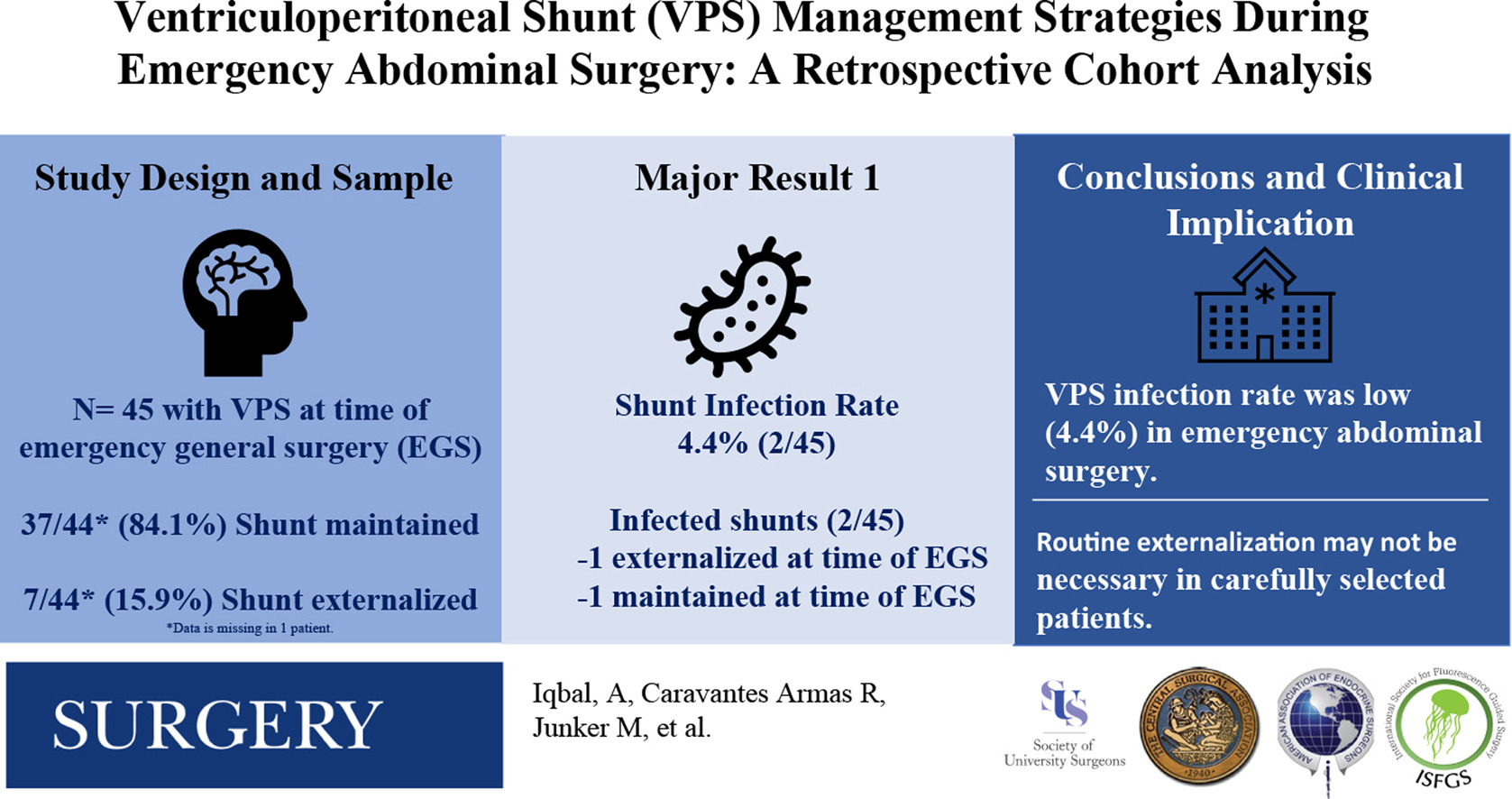
1. Among adults with ventriculoperitoneal shunts undergoing emergency general surgery, shunt preservation was feasible and safe in the majority of cases.
2. The 30-day postoperative ventriculoperitoneal shunt infection rate was low (4.4%), even with considerable wound contamination severity.
3. Shunt explantation performed after infection onset resulted in favorable outcomes without noted adverse consequences.
4. Minimally invasive surgical approaches were utilized in nearly half of the emergency abdominal surgeries, suggesting feasibility in this complex population.