Highlight
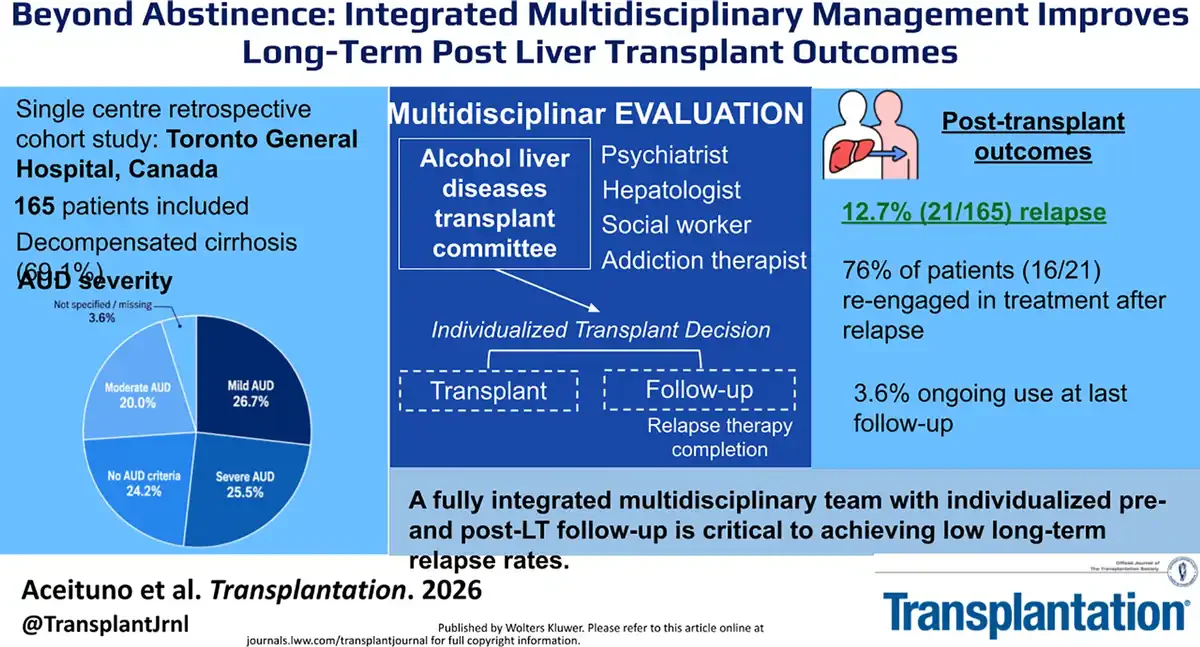
– Long-term alcohol relapse after liver transplantation (LT) for alcohol-associated liver disease (ALD) is significantly reduced by using an integrated multidisciplinary management program. – The program eliminates the traditional requirement for a predefined abstinence period, focusing instead on individualized evaluation and continuous relapse prevention support. – Only 12.7% of patients experienced relapse post-LT, with most cases classified as mild, and no alcohol-related graft loss or mortality reported. – Embedded addiction psychiatry and relapse prevention therapies facilitated early identification and management of relapse, leading most patients to reestablish sustained abstinence.Study Background
Alcohol-associated liver disease (ALD) remains the leading indication for liver transplantation worldwide. Traditionally, transplant programs have mandated a fixed abstinence period—commonly six months—before listing candidates to mitigate relapse risk. However, this prerequisite is disputed, as it can delay timely transplantation and may not reliably predict posttransplant behavior. Relapse after LT presents serious challenges, including graft damage, reduced patient survival, and psychological distress. Recent perspectives emphasize comprehensive, individualized management strategies rather than inflexible abstinence timelines. Multidisciplinary teams incorporating hepatologists, transplant surgeons, addiction psychiatrists, and social workers offer a holistic approach aiming to optimize patient selection and improve long-term outcomes by continuous pre- and post-transplant addiction support.Study Design
This prospective observational program, initiated in 2018, involved adult patients with ALD evaluated and transplanted at a tertiary center. The innovation included embedding a multidisciplinary team within the transplant program that provided continuous monitoring, individualized assessments, and relapse prevention therapies both before and after transplantation. No minimum abstinence period was enforced prior to listing. Patients had regular follow-ups involving clinical evaluations, psychosocial assessments, and biochemical monitoring for alcohol use, including ethyl glucuronide testing—a sensitive biomarker of recent alcohol consumption. The primary endpoint was the incidence and severity of posttransplant alcohol relapse. Secondary endpoints included engagement in relapse prevention therapy, patient and graft survival, and alcohol-related complications.Key Findings
Between 2018 and 2023, 165 liver transplant recipients with ALD were managed under this program. Posttransplant alcohol relapse occurred in 21 patients (12.7%), with relapse severity categorized as follows: mild consumption in 57.1%, moderate in 4.8%, and severe in 33.3%. The median time to relapse was 9.4 months (interquartile range 5.9–30.2 months), indicating that relapse risk extends well beyond the early postoperative period and underscores the need for long-term monitoring. Ethyl glucuronide testing confirmed relapse in 20 of the 21 patients, illustrating the utility of biochemical markers in relapse detection. Importantly, 17 of these patients self-reported alcohol use, reflecting reasonable patient transparency and trust within the program. All relapsed patients had access to addiction psychiatry and were offered intensified relapse prevention therapy. Engagement was high, with 16 of 21 patients adhering to regular follow-up and therapeutic interventions. Remarkably, only six patients (3.6% of the total cohort) reported ongoing alcohol consumption at the last follow-up, with the majority achieving reinstated abstinence. No significant differences in survival or graft outcomes were observed between patients who relapsed and those who did not. Critically, no alcohol-related graft losses or deaths occurred, suggesting that the multidisciplinary approach mitigates the traditionally feared consequences of relapse.Expert Commentary
This study challenges the traditional paradigm of mandatory fixed abstinence periods before liver transplantation in ALD. By embedding addiction specialists within transplant care teams, it fosters continuous, comprehensive support tailored to individual risk profiles. The relatively low relapse rate contrasts favorably against earlier reports of relapse rates up to 50% in some cohorts. The success likely stems from intensive surveillance using objective biomarkers such as ethyl glucuronide combined with psychosocial support. This dual approach promotes early intervention and patient engagement. Limitations include the single-center design and potential selection bias towards motivated patients willing to participate in multidisciplinary care. Future multicenter studies with longer follow-ups would strengthen evidence and generalizability. Mechanistically, ongoing substance use disorder is a complex chronic disease influenced by biological, psychological, and social determinants. A supportive environment addressing all these dimensions is essential to sustain abstinence. Current guidelines increasingly acknowledge integrated behavioral health support in liver transplant protocols, and this study provides robust clinical data to endorse such models.Conclusion
The integration of a dedicated multidisciplinary team within the liver transplant program, focusing on individualized candidate selection and continuous relapse prevention without enforcing strict pretransplant abstinence, significantly reduces the risk and severity of posttransplant alcohol relapse. This approach not only ensures improved long-term graft and patient outcomes but also ameliorates the psychosocial burden associated with alcoholism and transplantation. Embedding addiction psychiatry within transplant care should be considered a best practice moving forward. Further research should aim to validate these findings in broader populations and explore cost-effectiveness and patient-reported outcomes. Nevertheless, this paradigm shift holds promise to optimize liver transplant candidacy and care in patients with alcohol-associated liver disease.Funding and Clinical Trials
The original study did not specify funding sources or clinical trial registration numbers. Prospective readers should consult the full publication for detailed disclosures.References
1. Aceituno L, et al. Beyond Abstinence: How Integrated Multidisciplinary Management Improves Long-term Post Liver Transplant Outcomes. Transplantation. 2026 Oct 28; PMID: 42950137. 2. Lucey MR, et al. Liver transplantation and alcohol use disorder: Managing selection and risk. Hepatology. 2020; 71(5): 1785-1796. 3. Addolorato G, et al. Liver transplantation for alcoholic liver disease: A comprehensive review. Alcohol Alcohol. 2019;54(4):327-338. 4. Weinrieb RM, O’Shea RS, eds. Addiction Psychiatry in Liver Transplantation. Clin Liver Dis. 2017;21(4):727-744.Specialty calculators
For clinical reference; use professional judgment.