Highlight
- In postmenopausal individuals with recurrent urinary tract infections (UTIs), periurethral application of estradiol cream is noninferior to traditional intravaginal application for preventing UTI recurrence.
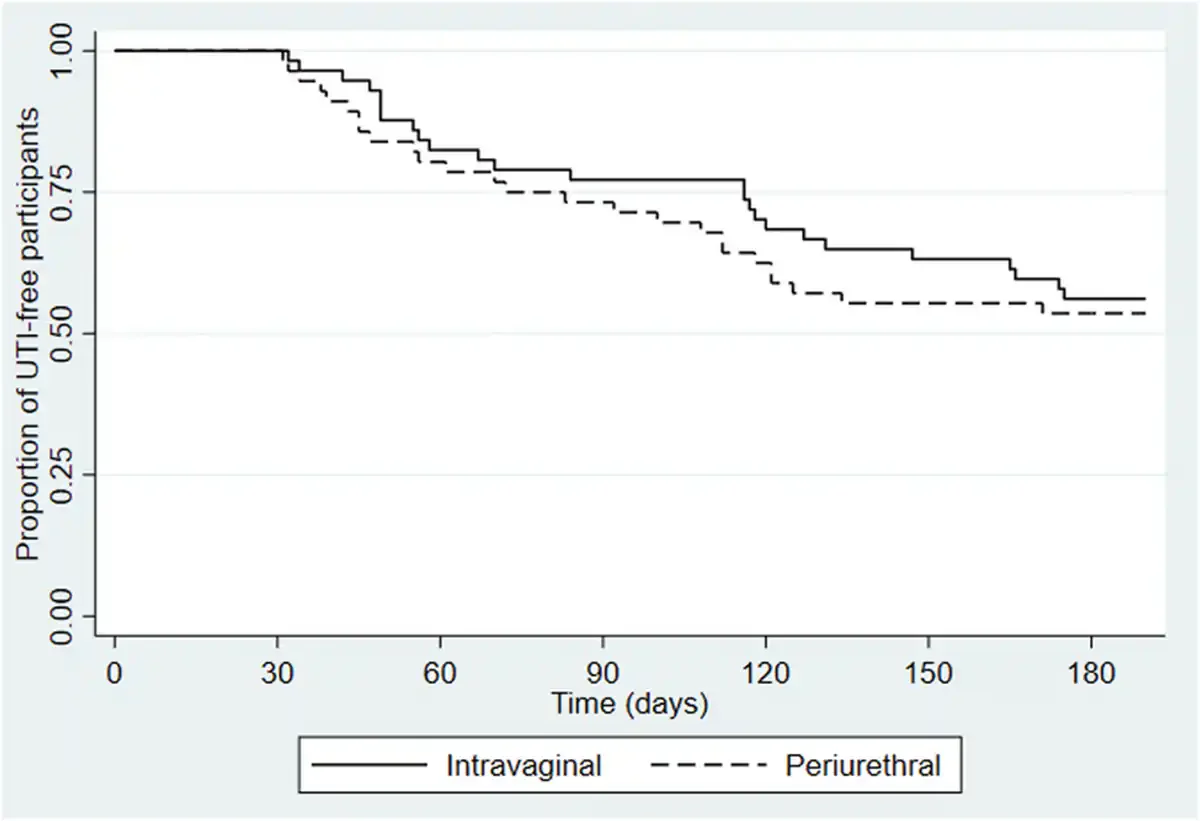
- Approximately half of participants in both groups remained UTI-free at 6 months, indicating substantial benefit from estrogen therapy regardless of application method.
- Periurethral application was associated with significantly less vaginal itching compared to intravaginal application, highlighting a better local safety profile.
- Both application methods effectively lowered vaginal pH, an important factor in reducing UTI risk.
Study Background
Urinary tract infections (UTIs) are a common and recurrent problem among postmenopausal individuals, significantly impacting quality of life and healthcare resources. The postmenopausal state is characterized by estrogen deficiency that leads to atrophic changes in the urogenital tract, including increased vaginal pH, thinning of the urogenital mucosa, and alterations in the local microbiota. These physiological changes predispose women to recurrent UTIs. Vaginal estrogen therapy has emerged as an effective and recommended strategy for restoring local mucosal health, lowering vaginal pH, and preventing UTI recurrence. Traditionally, intravaginal application of estrogen cream has been the standard delivery method. However, the optimal method of estrogen administration to maximize efficacy while minimizing side effects has not been fully elucidated. The TAPER trial aimed to fill this evidence gap by comparing periurethral versus intravaginal estrogen application techniques in postmenopausal patients with laboratory-confirmed recurrent UTIs.Study Design
The TAPER (Techniques of Applying Vaginal Estrogen for Prevention of Recurrent Urinary Tract Infections) trial was a single-center, nonblinded, randomized noninferiority trial conducted in postmenopausal individuals with recurrent UTIs confirmed by laboratory criteria. A total of 114 participants were randomized equally to receive either twice-weekly intravaginal application of 1.0 g estradiol cream via an applicator or twice-weekly periurethral application of 0.5 g cream using digital insertion. The primary endpoint was the proportion of participants who remained free of UTI at 6 months post-intervention. Secondary endpoints included number of UTIs during follow-up, time to first UTI, vaginal pH changes, patient-reported outcomes via PGI-I (Patient Global Impression of Improvement), adverse effects, and assessment of urinary and sexual function. Sample size calculation was based on achieving 80% power with 5% type I error, allowing detection of a noninferiority margin of 25% in the primary outcome.Key Findings
Among 114 randomized participants (mean age 71.1 years, predominantly White [92.1%]), median baseline UTI episodes in the prior year was three. At 6 months, 50.9% of the periurethral group remained UTI-free compared to 52.6% in the intravaginal group (risk difference -1.75%; 95% CI, -20.0 to 17.0 percentage points), confirming noninferiority of periurethral application regarding UTI prevention. Both groups exhibited significant decreases in vaginal pH, an indicator of restored local mucosal environment hostile to uropathogens, with no statistically significant difference between groups (-1.2 intravaginal vs -0.8 periurethral, P=0.30). Notably, the intravaginal group reported higher rates of vaginal itching at 3 months (24.0% vs 2.4% in periurethral, P<.01), suggesting local irritation may be more common with intravaginal application. Other secondary outcomes including urinary and sexual function, patient global impression of improvement, and adverse event rates did not differ significantly between treatment arms.Expert Commentary
This trial provides valuable clinical evidence supporting periurethral administration of estradiol cream as an effective and tolerable alternative to intravaginal application for prevention of recurrent UTIs in postmenopausal individuals. Given the similar efficacy and improved local side effect profile, periurethral application may enhance adherence and patient satisfaction in routine clinical practice. Mechanistically, estrogen restores mucosal defense by lowering vaginal pH, enhancing lactobacilli colonization, and improving urethral and periurethral epithelial integrity. The comparable reductions in pH observed across groups align with the shared therapeutic benefit. Limitations include the single-center design, homogenous predominantly White population limiting generalizability, and open-label administration which may introduce some bias. Longer-term outcomes beyond 6 months and inclusion of more diverse populations would strengthen future research. Furthermore, assessment of adherence and cost-effectiveness between application methods would be important for clinical decision-making.Conclusion
The TAPER trial robustly demonstrates that periurethral estrogen cream application is noninferior to the conventional intravaginal approach for preventing recurrent UTIs in postmenopausal individuals, with similar efficacy and a superior local tolerability profile. Given the high burden of recurrent UTIs and significant impact on postmenopausal health, clinicians should consider periurethral administration as a patient-centered alternative that may improve comfort and adherence without compromising efficacy. Further studies are warranted to confirm these findings across diverse populations and evaluate long-term benefits.Funding and Clinical Trial Registration
The study was registered on ClinicalTrials.gov (NCT05472779). Funding sources were not specified in the publication.References
1. Zuo SW, Mowers EE, Hem S, et al. Vaginal Estrogen Application Techniques for Prevention of Urinary Tract Infection: A Randomized Trial. Obstet Gynecol. 2026 Jul 27;148(5):671-679. doi:10.1097/AOG.0000000000005001. PMID: 42492951. 2. Raz R. Recurrent urinary tract infections in postmenopausal women. Curr Infect Dis Rep. 2012;14(6):555-9. 3. Sihra N, Cardozo L. Urinary tract infections in postmenopausal women. Post Reprod Health. 2019;25(1):40-45. 4. Bump RC, Hurt WG. Vaginal estrogen for urinary tract infection prevention: mechanisms and clinical impact. Int Urogynecol J. 2020;31(5):869-876. 5. FDA Drug Safety Communication: Vaginal estrogen drug products and their risks. U.S. Food and Drug Administration. 2020.Specialty calculators
For clinical reference; use professional judgment.