Background
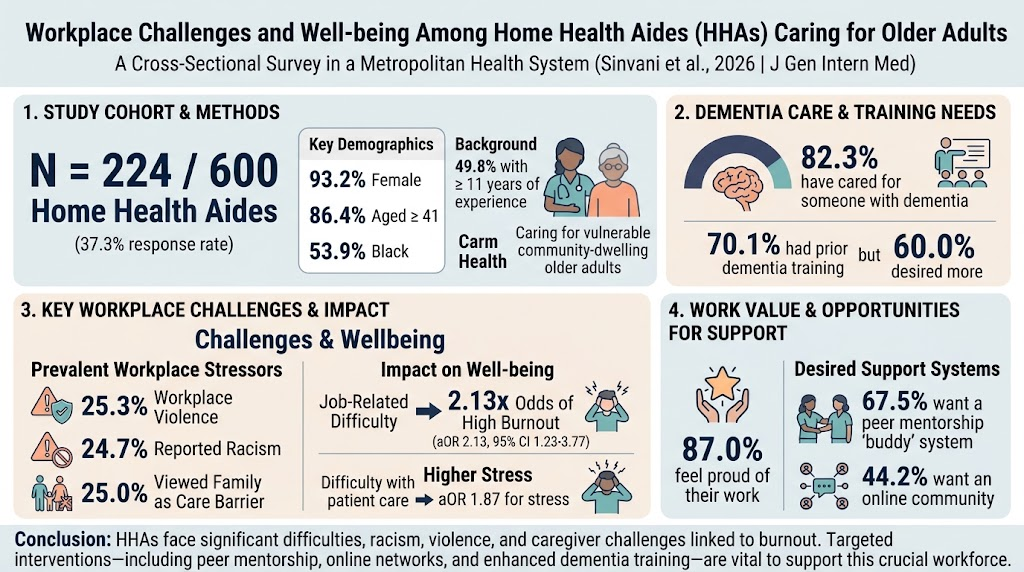
Home health aides (HHAs) represent a critical and rapidly expanding workforce providing frontline care for vulnerable community-dwelling older adults, many of whom suffer from chronic conditions including dementia. Despite their essential role in promoting adult well-being, HHAs often face significant occupational hazards and psychosocial stressors that remain inadequately characterized in research. These challenges may undermine their capacity to deliver quality care and negatively impact their own health and job retention. Understanding the extent and nature of HHAs’ workplace experiences, particularly in urban health systems, is vital to developing supportive strategies and policies.